Get Full Government Meeting Transcripts, Videos, & Alerts Forever!
Get email alerts on the Student Assessment topic
No spam. Unsubscribe anytime.
GBAPS highlights assessment changes as DPI report card nears public release
Summary
District leaders told the board the state report-card formula has changed and previewed locally reported gains; district staff highlighted the growing use of Lexia Core5/PowerUp and Canvas/MasteryConnect interim assessments to give teachers near-real-time student data.
The Green Bay Area Public School District on Monday outlined how new state-reporting rules and local assessment tools are shaping school accountability and classroom practice.
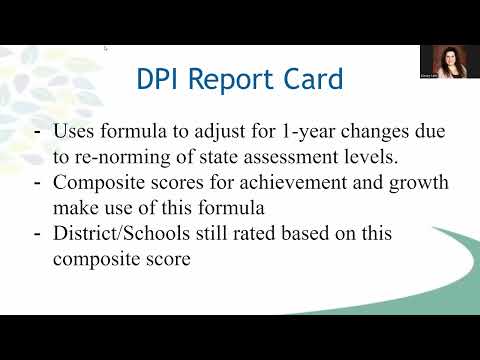
David Johns, presenting a district update on academic accountability, told the Board that the Wisconsin Department of Public Instruction adjusted its report-card formula this year to smooth a one‑year methodological change across the three‑year composite used for school and district ratings. Johns said that adjustment will be visible when DPI publicly releases school-level data and that the district’s composite score is at its highest point in four years.
Johns focused the board’s attention on two strands of local work: literacy platforms in elementary and middle grades and the district’s interim-assessment system in secondary classrooms. He said the district expanded Lexia Core5 and Lexia PowerUp after piloting Core5 in five elementary schools last year and reported that 7,470 students logged into Lexia on Sept. 30. “Usage matters,” Johns said. “We’re looking for routine engagement — about 60 minutes per week in Core5 and about 100 minutes for PowerUp in sixth grade — so teachers can track grade-level materials and growth.”
On secondary assessments, Johns showed how short interim tests are embedded into Canvas and reported through MasteryConnect. He said teachers can run a 20‑minute assessment during a class window and receive class- and student-level data the same day. The district has moved to nationally vetted item banks and a summer jury process to improve predictability and comparability across classrooms, he said.
Board members asked whether the district’s smaller, more frequent assessments will predict state-test results and how schools will avoid assessment overload. Johns urged alignment to grade‑level standards, saying, “The very best thing our staff can do is remain focused on grade‑level performance standards and their planning.” He also emphasized protecting teachers’ time for classroom‑created checks that answer the question, “Did students meet today’s goals?”
Johns demonstrated the district’s ability to filter interim data by subgroup, showing an example analysis isolating Black/African American students’ performance in middle‑school science. He said such disaggregation is integral to the district’s priority‑performance work to close gaps.
The board’s discussion closed with an exchange on how to translate data into family communication. Johns and other speakers said district platforms can generate parent‑facing reports and that staff are discussing ways to seed family conversations about what students are learning.
The board did not take action on accountability at the session; district leaders said the DPI report card will be public soon and that the district will revisit school-level results at a future work session.