Lifetime Citizen Portal Access — AI Briefings, Alerts & Unlimited Follows
South Bend lays out expanded Ignite summer program with targeted K–12 supports
Loading...
Summary
District leaders presented a comprehensive K–12 summer plan—Ignite—covering targeted K–1 literacy intervention, second/third-grade iRead supports, high-school credit recovery at LaSalle Academy, and EL/migrant centralized programs; trustees pressed presenters on transportation, site selection and virtual-course integrity.
The South Bend Community School Corporation presented a multi-part plan for summer 2025 that aims to expand targeted instruction, credit recovery and extended-day supports across kindergarten through 12th grade. Superintendent-level staff introduced Ignite, a districtwide set of summer programs that includes a five-site K–1 model focused on early literacy, a nine-day testing cycle tied to iRead retesting for grades 2–3, and high-school credit-recovery sessions at LaSalle Academy.
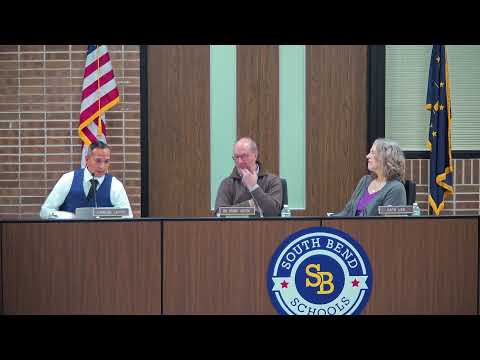
Tim Richardson, media instructor for South Bend Schools, opened the recognitions portion of the meeting and introduced student honorees; district staff then shifted to program details. The district said K–1 sites will emphasize foundational literacy to reduce the number of students at risk before third grade. A staff presenter explained that K–1 programming will be offered at five elementary sites, with special provisions for exceptional learners and transportation provided for K–8 initiatives.
Dorese (presenter) described the second- and third-grade iRead-focused offerings, noting the summer sessions run for nine instructional days followed by reassessment; makeup testing days are scheduled at the end of June and a July 1 celebration will recognize attendance and assessment participation. Jeremy Tucker, who outlined high-school plans, said high-school summer sessions will be split into two blocks (June 8–July 2 and July 8–28) with in-person instruction 8 a.m.–noon and virtual options 12:30–4:30 p.m., designed to support credit recovery and flexible scheduling for students with summer employment.
District staff emphasized partnerships and equity: the Boys & Girls Club will operate two partnership sites serving about 100–200 students each for kindergarten through eighth grade, and the EL and migrant programs will be centralized at Lincoln Elementary with bilingual staff and targeted language instruction. Julia, who leads EL/migrant programming, said migrant services include an extended-day schedule (8 a.m.–4 p.m.) to accommodate farm-worker family schedules and busing from five surrounding counties.
Trustees asked detailed questions about transportation and site selection. Board member Mark Costello and others asked why certain neighborhoods (for example, Clay) were not hosting sites; administration said site assignment reflects natural attendance boundaries, past on-time routing success, storage of resources, and facility availability. On virtual courses, staff described fidelity measures for the online platform—camera-on proctoring during test windows (12:30–4:30 p.m.), teacher monitoring, and daily attendance checks—to reduce opportunities for academic shortcuts.
The district also confirmed assessment practices: pre- and post-tests (including CKLA benchmarks and iRead for qualifying grades) will measure summer learning gains. Staff said targeted outreach, including bilingual calls from building specialists, will encourage family participation and convey the program’s benefits. The board did not take a vote on the summer program at this meeting; presenters said they will return in the fall with outcomes and data.