Get Full Government Meeting Transcripts, Videos, & Alerts Forever!
Get email alerts on the Municipal Budget Exercise topic
No spam. Unsubscribe anytime.
Missoula Local Government Academy participants run a budget simulation and confront trade-offs between public safety, parks and services
Summary
Participants in the City of Missoula’s Local Government Academy used a simulated FY2027 budget to prioritize requests, proposing a range of tax increases, targeted raises for police and road funds, and reserve use to cover shortfalls; staff stressed these were hypothetical choices to illustrate trade-offs under statutory caps.
Local Government Academy attendees in Missoula took part in a hands-on budget exercise that forced choices among competing priorities and demonstrated how statutory caps and valuation rules constrain municipal spending.
Facilitators explained the exercise rules: for the simulation the general fund was capped at a modeled allowance (50% of the three-year inflation average, per the exercise rules), special districts were handled with simplified rules, and participants were shown a fiscal-year 2027 worksheet with baseline totals. The facilitators noted that, under the exercise assumptions, fully funding all department requests would exceed forecasted tax revenues, so groups had to choose whether to raise taxes (within exercise limits), cut programs, use reserves or reallocate funding among districts.
Group reports varied. One table reported a simulated $1,320,000 of new tax revenue (8.8 mills), a 1-mill road levy, and selective general-fund spending for Kevlar vests and Meals on Wheels; that group initially included staff reductions in parks and cemetery in the simulation but later adjusted to use reserves and avoid firing. Another team said it used excess reserve funds to cover a parks shortfall and prioritized public-safety hires. Presenters emphasized these were classroom choices, not city actions.
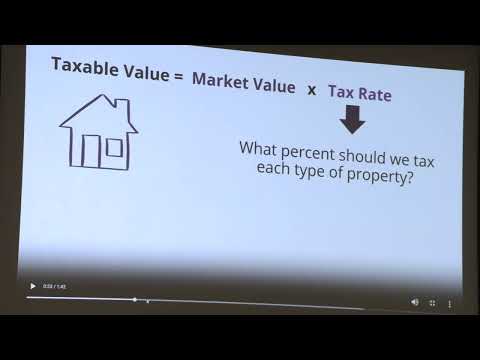
Organizers and staff used the exercise to explain common real-world constraints: the city’s allowable tax increase often flows first to contractual obligations and wages (Bickle said roughly 80% of a typical tax-increase allocation is absorbed by those costs), new construction contributes to tax base growth but does not automatically pay for all added service needs, and statutory mechanics can force mill adjustments when valuations change.
After presentations, facilitators asked groups to reconvene and compare choices; organizers said materials and a recorded video of the session would be posted and encouraged continued neighborhood engagement with council and the mayor’s office.
Context and figures cited during the exercise materials included a projected FY2027 general-fund total of $60,715,000 (if all requests were funded), a road district forecast of $8,000,000, a parks district total of $9,150,000, and an example of total tax collections used in the exercise of $74,250,000—numbers presented for simulation and discussion, not formal city adoption.