Mayor Andrea Davis and city staff outline how property taxes fund Missoula and what recent state changes mean for homeowners
Loading...
Summary
At a Missoula Local Government Academy session, Mayor Andrea Davis and city staff explained how property taxes are calculated, why they disproportionately affect lower-income residents, and how 2025–2026 state changes altered residential and rental tax treatment; staff encouraged residents to use online tools and attend budget hearings.
Mayor Andrea Davis opened the Local Government Academy session by saying the evening’s purpose was to connect earlier departmental conversations to a central question: “How do we pay for all this?” City staff then walked attendees through how property taxes feed Missoula’s budget and recent state changes that reshape who pays and how much.
Jessica Miller, the city’s website and digital engagement administrator, explained that Montana relies more heavily on property taxes than many states and that, by design and effect, property taxes are regressive—lower-income households pay a larger share of income on property taxes than higher-income households. Miller said residential properties’ share of the local property-tax base rose from roughly 40% 25 years ago to about 64% in 2024, driven by business closures, a tourism-driven economy, and rising home values.
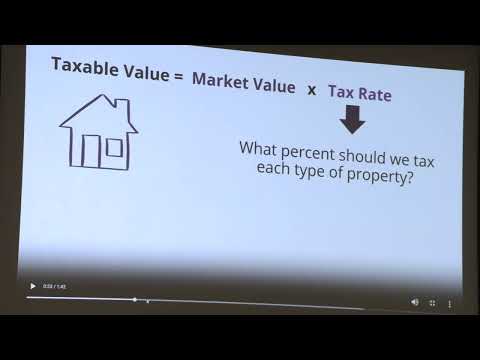
Miller described the basic formula: taxable value (based on the Department of Revenue’s market-value appraisal) multiplied by a jurisdiction’s mill rate. She noted appraisals are updated on an odd-year schedule and property owners have a short, roughly 30-day, window to appeal valuation notices. Using Department of Revenue figures, Miller said the county median market value used in tax calculations was about $399,000 in 2024 and rose to about $507,000 in 2025; she added that many homeowners nonetheless saw city-tax decreases in 2025 because of legislative changes to taxable values.
On state policy, Miller summarized 2025 legislation that reduced the rate applied to many owner-occupied residential properties (the prior baseline cited in the presentation was 1.35%) and noted a drafting error in the initial implementation excluded some multifamily properties from the lower rate in 2025. She said the 2026 tax roll includes provisions to extend lower rates to qualifying long-term rentals and owner-occupied homes, while short-term rentals and second homes will generally be taxed at higher rates unless they meet long-term criteria and are registered.
Chief Administrative Officer Dale Bickle put the tax discussion into budget context, saying Missoula’s tax-supported operating budget is roughly $120 million and that police and fire comprise the largest shares of those tax-funded operations (over 40%). Bickle emphasized that most new tax revenue typically funds wage and contractual increases—he estimated roughly 80% goes to existing obligations—leaving a single-digit share available for new programs or staffing increases.
Miller and Bickle encouraged residents to review the city’s online materials, use the tax lookup tools included with the session materials, and participate in upcoming budget hearings so they can see where trade-offs are made.
Closing the presentation, the mayor and staff pointed attendees to a recorded video on the city website and distributed handouts with step-by-step guidance for reading tax bills and finding property-specific information.