Get Full Government Meeting Transcripts, Videos, & Alerts Forever!
Get email alerts on the Opm Selection topic
No spam. Unsubscribe anytime.
MSBA invites Marguerite E. Small project into feasibility study; committee readies OPM selection
Summary
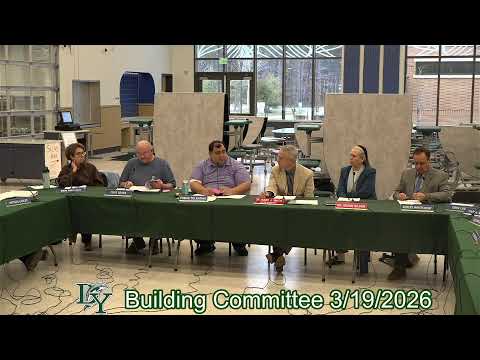
The Marguerite E. Small Building Committee reviewed an MSBA letter admitting the project to the feasibility phase and began drafting the Owner’s Project Manager (OPM) request for services, setting internal deadlines, legal review steps and a recommended August MSBA panel target.
The Marguerite E. Small Building Committee on March 19 said the Massachusetts School Building Authority (MSBA) has invited the project into the feasibility study phase, a procedural milestone that allows the district to begin preparing an Owner’s Project Manager (OPM) selection process.
Staff member (S2) told the committee the official MSBA letter in the meeting packet “just basically says you’ve been accepted into the next phase,” and outlined the MSBA-driven schedule the district must meet to get an OPM advertised and considered by an MSBA panel. S2 said the district must finalize a draft of the request for services (RFS) for OPMs, run it by legal counsel, submit it to MSBA for approval and then place it in the centralized registrar for public advertising.
Why it matters: Acceptance into the feasibility phase is a prerequisite for state technical review and later funding steps. Choosing an OPM and defining the RFS will shape how bidders are evaluated, what expertise is sought and when construction management can begin.
S2 walked members page-by-page through the MSBA RFS template (29 pages in the packet), noting which sections are boilerplate and which require district-specific input. S2 flagged a few passages that will need legal advice and asked committee members to review redlined changes and return edits. The staff member gave example deadlines tied to MSBA meetings: a complete draft by April 23 is needed to reach the registrar by May 7 and advertise by May 13 so proposals could be in by May 27 for a June 17 MSBA panel; the committee agreed a more conservative target of the August 3 panel meeting would provide extra runway.
Committee members asked procedural questions about what the RFS should include. One committee member asked whether consolidation options (for example, Station Avenue Elementary or other town-owned sites) must be enumerated in the OPM scope or can wait for the feasibility study; S2 said they will consult MSBA to confirm the required approach. Members also debated language on student services; following discussion S2 agreed to change a sentence that said a new design would “need to consider” special-needs services to stronger wording reflecting that those services must be included in the design.
On procurement procedure, S2 emphasized the MSBA templates for evaluation and said the district can assign point weightings to evaluation criteria (the total should sum to 100) but will seek MSBA clarity about adding new criteria. S2 explained that required attachments to proposals will include the certified enrollment letter from MSBA and that the scoring sheets used by evaluators will be kept internally and not submitted to MSBA.
Next steps: the committee will review member edits to the RFS, S2 will route the draft to legal counsel, and the group planned a follow-up meeting on April 30, 2026 at 17:30 to continue RFS refinement and advance toward the August MSBA panel target.