Get Full Government Meeting Transcripts, Videos, & Alerts Forever!
Get email alerts on the Urban Forestry topic
No spam. Unsubscribe anytime.
Pacifica council directs staff to add Adopt-a-Tree subcommittee to Beautification Advisory Committee charter
Summary
After hearing BAC and resident testimony on pilot results and canopy goals, the council directed staff to implement the BAC's Adopt-a-Tree recommendation at a limited scope and update the committee charter; staff cautioned about workload and alignment with the city's forthcoming urban forestry plan.
Pacifica's City Council heard a presentation on an Adopt-a-Tree program and on a proposed amendment to the Beautification Advisory Committee (BAC) charter and directed staff to implement the BAC recommendation at a limited scope. The direction, restated by Interim City Manager Yulia Carter, asked staff to amend the charter and add the pilot program to the Public Works work plan for FY26-27.
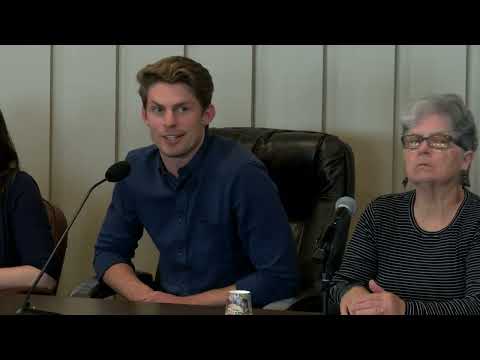
The BAC presentation, delivered by member Taylor Seba, laid out the problem and the proposed volunteer-driven solution. "Today, we're seeking approval from the city council to go ahead and revise our charter to add this subcommittee," Seba said, describing a three-arm program that would cover city-initiated plantings, Arbor Day street plantings, and resident-initiated plantings with watering and liability agreements.
Why it matters: Council and public commenters framed the proposal as an inexpensive, community-driven tool to help Pacifica meet the Climate Action and Resilience Plan's canopy goal of increasing tree cover from about 19% to 25%. Proponents pointed to local pilot results and outside examples as evidence the model improves survival of newly planted street trees.
Staff cautioned that the program will require staff time and should align with a citywide urban forestry management plan now being restarted. "Staff capacity and work plan impacts should be considered," Public Works Director Melissa Tigbau told council, noting the city currently has a constrained workload and that the management plan will set standards (root barriers, spacing, irrigation, and species selection) the program should follow.
What supporters said: Dozens of residents and members of Tree City Pacifica urged immediate adoption. "The Adopt a Tree program is one of the most direct, cost-effective tools. We have to reach that goal," resident Deirdre Martin told the council, invoking the CARP canopy target and urging action rather than more study. Paul Toda, also speaking for Tree City Pacifica, said the city already plants new trees yearly and "there is no need to gather additional data" from the West Sharp Park pilot because older Parkview Circle adopt-a-tree plantings continue to thrive.
Technical evidence cited in the debate included two local pilots: Parkview Circle (eight trees planted and reported surviving in follow-up) and Fairmont Park (eleven planted, with three surviving). Seba and public commenters used those local survival differences to argue that resident adopters materially increase tree survival after planting.
Decision and next steps: The council directed staff to proceed with option 1 as presented by the BAC but limited in scope to city-planted trees tied to existing projects (for example Arbor Day plantings and trees required as part of 2-for-1 replacement obligations). Interim City Manager Yulia Carter summarized the direction: the city will "proceed with option 1 and approve BAC recommendation for the program at the limited scope," revise outdated charter language, and return to council with the updated charter and program framework.
What remains unresolved: Council members asked staff to identify how much additional staff time will be needed, how the program will address infrastructure conflicts (sidewalk uplift, underground utilities), whether recycled water can be incorporated into watering plans, and how the urban forestry management plan will inform long-term species selection and maintenance responsibilities. Staff said the urban forestry plan RFP process could start this summer and that a master plan typically takes six to nine months to complete.
The council did not take a formal ordinance vote that night; it provided direction to staff to prepare the charter amendment and program materials for a future return to council.