Lifetime Citizen Portal Access — AI Briefings, Alerts & Unlimited Follows
Malverne board reviews proposed 2026–27 budget, proposes 2.29% tax levy and $230,000 library transfer
Loading...
Summary
At a March 24 workshop the Malverne Union Free School District reviewed a proposed 2026–27 budget that closes a prior gap, includes a proposed 2.29% tax levy, a $230,000 capital transfer for the Maurice W. Downing library, and highlights rising transportation, special-education and benefit costs.
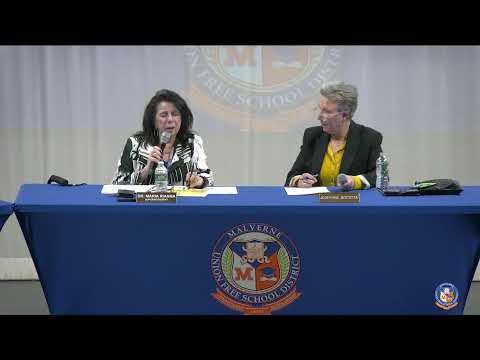
The Malverne Union Free School District held a March 24 board workshop focused on the proposed 2026–27 budget, with district staff presenting non-instructional line items, outreach dates and cost pressures that drove the budget proposal.
Chris Caputo, the district presenter identified in the meeting as Mr. Caputo, told the board that ‘‘as of this evening, the updated budget gap has been eliminated, so we have been able to reduce expenses to meet the revenue.’’ Caputo said the district projects a revenue increase of a little over $1,100,000, or about 1.54 percent, for the coming year.
The presentation said the district intends to propose a tax levy increase of 2.29 percent for next school year, the percentage generated by the New York State tax-cap calculation. ‘‘The tax levy for next school year is going to, is going to be proposed at 2.29 percent,’’ Caputo said. The presenter noted the current year levy was 2.44 percent.
Why it matters: the board and administration framed the proposal as an effort to maintain instructional quality while responding to lower state foundation aid, declining enrollment and rising costs in key areas. The presenters listed district priorities as maintaining rigorous academics, athletics, music and arts programs while keeping the levy at the allowable tax cap.
Key cost drivers identified - Charter-school tuition and placements: presenters said charter enrollments are up and that the district must pay tuition to charter schools, increasing expenses. The transcript described the state foundation-aid formula as ‘‘broken’’ and said only a modest (about 1 percent) increase in foundation aid was indicated in preliminary state figures. - Transportation: Caputo said districtwide transportation costs are projected to increase about 16.9 percent next year for charter, in-district and nonpublic students; at another point a board member noted some private-school routes had seen projections up to 25 percent. Caputo described the district’s participation in BOCES and a Southwest Nassau County Transportation Cooperative to seek bidding efficiencies but cited driver shortages and a constrained market. - Special education and related services: presenters reported significant increases in tuition and contracted services (OT/PT, speech, related services) and noted a roughly 20 percent increase for a two-month summer special-education program. - Employee benefits and insurance: the benefits and insurance cluster was said to be rising a little over 7.5 percent for the next school year; unemployment insurance rates were described as having increased significantly. - Energy: a board member said electric costs were projected to rise ‘‘almost 14 percent’’; presenters pointed to rates and continuous building use as contributing factors and cited past energy-performance contract (EPC) measures (lighting, cogeneration, solar at Davidson Avenue and Howard T. Herbert) as past mitigation steps.
Capital transfer and reserves Caputo introduced a proposed transfer to capital for 2026–27 of $230,000 earmarked for reorganization of the Maurice W. Downing (MWD) Library, with the work anticipated in the 2026–27 school year. The presentation also noted the district plans to use just over $1.6 million in fund balance toward the budget and that auditors have recommended reducing reliance on reserves in future years.
Enrollment and projections District staff reported a projected districtwide enrollment decline of 59 students from the current count. Board members discussed the impact of a large graduating cohort and charter-school movement on year-to-year projections; presenters noted charter schools do not have the same notification or reporting requirements, which complicates forecasting.
Public outreach and next steps Caputo outlined public outreach and meeting dates: PTA and PTSA budget-review meetings beginning April 15, additional meetings in April (dates and times in the presentation), the annual budget hearing and public discussion on May 12 at 8 p.m., a High School PTSA budget review on May 14, and the district’s annual trustee and budget vote scheduled for May 19 from 7 a.m. to 9 p.m. at the middle school gymnasium.
Meeting actions The board approved the consent agenda at the start of the meeting and later approved a motion to adjourn. No formal vote to adopt the proposed budget occurred at the March 24 workshop; the presentation materials described proposals and projections rather than final board action.
What’s next: district staff will present additional budget information at the April board meeting and again during the May public hearing cycle before the May 19 trustee and budget vote.