Get Full Government Meeting Transcripts, Videos, & Alerts Forever!
Get email alerts on the Town Budget topic
No spam. Unsubscribe anytime.
Cheshire manager proposes $157.5 million operating budget; Stonebridge TIF will divert most new taxes to repay developer obligations
Summary
Town Manager Sean Kimball presented a $157.489 million fiscal 2026–27 operating budget that would raise the mill rate to 32.4 mills (a 2.66‑mill increase) and rely on $2 million of fund equity; Kimball said 75% of new taxes on the Stonebridge Crossing TIF parcels will be diverted to repay a $7.0 million credit‑enhancement agreement.
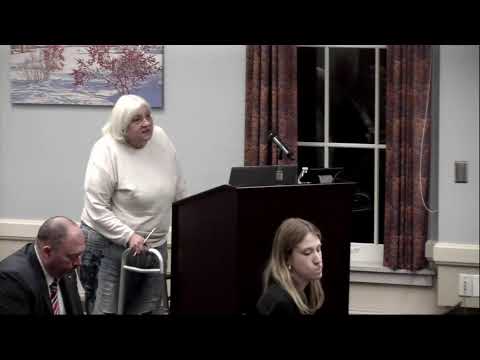
Town Manager Sean Kimball presented the Town of Cheshire’s proposed fiscal 2026–27 operating budget and projected a 32.4 mill rate at a public hearing March 11. "Tonight, I'm presenting the fiscal 27 town manager proposed, operating budget," Kimball told a packed council chamber as he outlined revenues, expenditures and calendar deadlines.
Kimball said the proposed operating budget totals $157,489,000, with the board of education request and rising debt service as the largest drivers. He described three revenue pressures: a projected $200,000 reduction in building‑department revenue, a fall in investment income of roughly $2.0 million because of lower interest rates and slower state reimbursement timing, and continued reliance on $2.0 million of fund equity supported by a projected fiscal 26 surplus.
On the North End development known in the presentation as Stonebridge Crossing, Kimball said new real‑estate growth drove roughly $93 million of grand‑list growth this year and that 83% of that increase came from the development. However, because those parcels lie in a tax‑increment financing (TIF) district tied to a credit enhancement agreement (CEA), 75% of the taxes on the CEA parcels are diverted to pay the town’s obligation under the CEA. Kimball said that diversion equals about $3.0 million for fiscal 27 and that $2.5 million of the $7.0 million CEA obligation would likely remain after fiscal 27.
The diversion reduces what the general fund receives from the development, a point several residents raised during public comment. Tom Rocco, a Cheshire resident, urged the council to use North End revenue specifically to pay down school debt, saying, "the revenue that you realize from the North End development really should be used ... to pay down debt service." Other members of the public pushed for restraint in spending and sharper review of Board of Education line items.
Kimball said the proposed mill‑rate result of the revenue and expenditure package is 32.4 mills — about a 2.66 mill increase — producing an average residential tax increase he estimated at about 8.9%, or $856 for the year for the average taxpayer. He also described a projected fund balance remaining above the council’s 10% policy (estimating a 12.1% level if the budget uses $2.0 million of fund equity as proposed).
Kimball outlined other items included in the operating budget: restored and new town positions (including police, library and finance), increased costs for snow and ice control and solid waste, and a debt service increase largely tied to financing for two new elementary schools. He encouraged residents to review the ClearGov digital budget book posted on the town website and reviewed the schedule for workshops, public information sessions and a possible adoption vote at the end of April.
The council closed the public hearing and moved into a special council budget meeting; no adoption vote occurred that night.