Get Full Government Meeting Transcripts, Videos, & Alerts Forever!
Get email alerts on the Municipal Budgeting topic
No spam. Unsubscribe anytime.
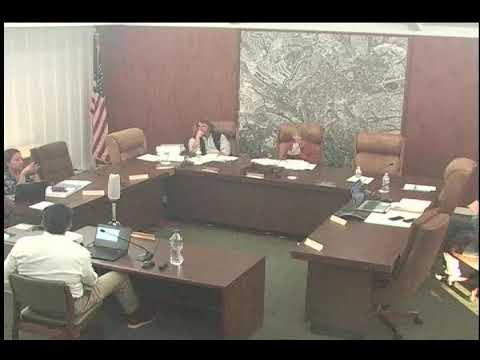
Rolling Hills Estates committee hears preliminary budget projections, discusses replacing county building services
Summary
The Finance & Budget Audit Committee received an informational presentation showing a preliminary $93,000 surplus projection and slower property-tax growth linked to recent landslides; members also discussed an RFP to replace county plan-check services and raised liability and revenue-timing concerns.
The Rolling Hills Estates Finance & Budget Audit Committee received an informational budget kickoff presentation from Robert Samaro, the city's finance operations lead consultant, that projected a preliminary surplus of about $93,000 for next fiscal year and outlined revenue uncertainties driven by recent landslides.
Samaro told the committee the report is “just an informational item” and the first step in the budget process ahead of a formal adoption in May or June. He said staff based next-year estimates on midyear collections and conservative assumptions while planning a third-quarter review to refine numbers.
The consultant outlined three drivers of property-tax growth — the Prop 13 annual assessment cap, supplemental assessments from property sales, and reassessments when properties sell or undergo major improvements — and said reassessments historically produce the largest gains. He said landslides in late September reduced sales and supplemental assessments, which led staff to model a 3% property-tax growth assumption for the projection period.
Samaro provided transfer-tax data showing $23,500 in transfer-tax receipts in the July–Sept period before the landslides and $19,300 in the following nine months; midyear receipts in the current fiscal year were about $35,000. He said the city budgeted $62,400 for transfer-tax revenue this year, is projecting roughly $60,000 in the short term, and is conservatively assuming about the same for next year.
On building revenues, Samaro noted prior-year receipts of about $354,000 and $273,000 through November of the current year, with a large portion attributable to work issued through Willdan, the city's contracted building and planning provider. “If you just kinda annualize five months of revenues at $273,000 for the rest of the year, we will achieve more than $600,000,” Samaro said, while adding that staff are conservatively using $600,000 for this year and $500,000 for next year’s planning.
On the expenditure side, Samaro described a status-quo approach that adjusts the current amended budget only for known nondiscretionary increases. He identified roughly $66,000 of such increases — including a 3.5% cost-of-living adjustment assumed under the MOU — and told the committee the city moved a part-time contracted code-enforcement allocation into a full-time in-house code compliance officer, which staff estimate will net about $10,000 in annual savings when benefits and payroll taxes are included.
A committee member pressed staff about the county’s role in plan-check and whether the county will continue to provide those services. Staff said they are preparing an RFP to replace county services if the county withdraws; potential private providers mentioned include Willdan and TransTech. Committee members raised technical and liability concerns about shifting plan-check, geotechnical and hydrology reviews to private providers, and whether contractors’ insurance and reinsurance would cover large-scale landslide claims. Staff responded that liability generally lies with the permit issuer and that final contractual and insurance details will be evaluated during the RFP process.
Committee members also discussed timing of tax receipts. Samaro said property-tax collections are uneven across the fiscal year — roughly 55% of annual property-tax receipts are typically collected by midyear — so midyear figures alone can understate year-end totals.
After questions, a committee member moved to receive and file the informational report; the motion was seconded and approved by voice vote. Staff will bring updated revenue projections and a proposed line-item budget to the committee on April 27 and to the full council on May 11 for further review and adoption action.
The committee adjourned and prepared to convene the full council meeting later the same day.