Get Full Government Meeting Transcripts, Videos, & Alerts Forever!
Get email alerts on the Avonlea Pud topic
No spam. Unsubscribe anytime.
Commission advances Avonlea PUD major amendment amid resident concerns about flooding and environmental impacts
Summary
The commission transmitted a major PUD amendment for Avonlea Parcel 11 to a second reading after staff presentations and public opposition citing traffic, flooding and habitat loss; commissioners asked for drainage and sheet‑flow information before final action.
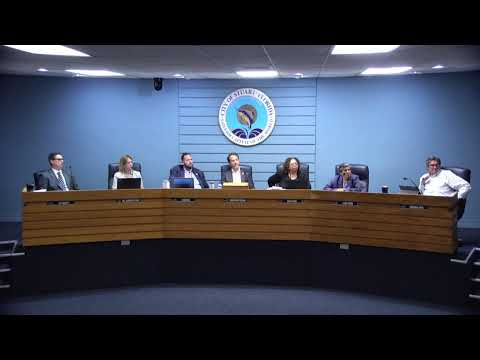
The City of Stuart commission voted to transmit Ordinance 25‑50‑2026 (a major amendment to the Avonlea Planned Unit Development for Parcel/Lot 11) to second reading after a public hearing on March 9.
Staff presented the application for Avonlea Commercial Corners East (Lot 11), a 0.9‑acre commercial parcel at the intersection of NE Dixie Highway and Cardinal Avenue. Staff said the applicant proposes a 6,827‑square‑foot single‑story commercial building with mixed uses (retail, office, medical, restaurant, personal services), 35 parking spaces (including one ADA space), and 50% open space. The proposal reduces previously approved intensity; staff and the Community Redevelopment Board recommended forwarding the amendment subject to conditions.
Applicant representatives described a design with landscaping, pedestrian sidewalks, and architectural elements; they stressed the project footprint is smaller than what the PUD originally allowed and that the development conforms to code.
A resident, Emily Lanthier, spoke in opposition and listed four concerns: traffic congestion at nearby signalized intersections, existing flooding and the parcel’s role as part of the local drainage system, environmental impacts and habitat loss (noting wetlands and bird species in the area), and the city’s pattern of rapid development. "This land currently serves as a natural drainage basin," Lanthier said, urging denial of the development and urging preservation or park use.
Commissioners focused questions on drainage and sheet‑flow, in some cases asking staff to provide historical drainage and flow diagrams for the next hearing. Staff explained that the PUD includes preserved wetlands and that development review requires engineered on‑site drainage measures, state and regional permits, and final certifications by licensed engineers before construction. Commissioners discussed adding clearer language in the ordinance title to indicate this is a "major amendment."
Outcome and next steps: The commission voted unanimously to transmit the ordinance to a second reading; commissioners asked staff to prepare additional drainage documentation and to clarify the ordinance title and CRB minutes or summary for the record ahead of adoption.
The commission and applicant agreed to return with the requested technical materials at the next hearing.