Get Full Government Meeting Transcripts, Videos, & Alerts Forever!
Get email alerts on the Class Size topic
No spam. Unsubscribe anytime.
Wayne board asks administration to study moving grades to relieve overcrowding
Summary
After extensive public comment about rising class sizes, the Wayne Board of Education approved a motion directing the administration to study the feasibility of moving fifth grade to middle school and eighth grade to high school, including educational impacts, facility capacity, staffing and transportation.
The Wayne Board of Education voted to ask its administration to study whether shifting grade configurations — moving fifth grade to middle school and eighth grade to high school — could ease rising class sizes districtwide.
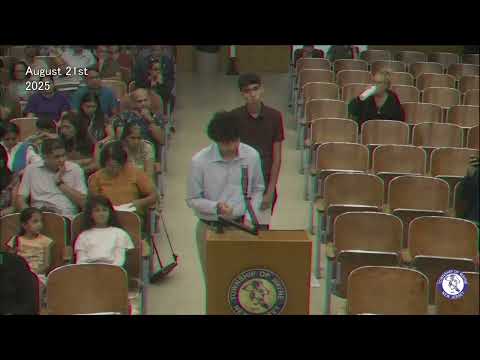
Board member Mr. Faber moved the proposal, asking the administration to analyze educational impact, developmental appropriateness, facility capacity, staffing and transportation and to report findings back to the board. "I request that the administration explore the feasibility and implications of moving fifth grade from elementary school to middle school and eighth grade from middle school to high school," Mr. Faber said during the meeting.
The motion was seconded and carried in a roll‑call vote after members debated timing and resource implications. One board member voiced opposition on timing; supporters argued the study is a low‑cost first step that can surface options before more costly actions are considered. The sponsor told the board the study should be done by district administration rather than by an outside consultant.
Administrators and parents told the board that pressure is already apparent at specific schools. An administrative speaker noted that "as it stands right now, the plan for Fallon enrollment hasn't changed in the last 3 weeks. It's been exactly the same in the last 3 weeks — so it's about 28 to 29 students in each of the classes." That administrator said the district provides additional support when classes exceed caps and that small‑group pullouts reduce effective class size during math and ELA instruction.
Parents and teachers had urged the board to pursue short‑term and long‑term solutions. At the meeting, parents described fourth‑grade classes rising from 24 to 28 students and projected incoming classes of 29–30, and raised concerns about impacts on students with IEPs and on shared paraprofessionals.
Board discussion touched on likely costs if structural changes follow the study. One member warned transportation and staff costs could be significant; others pointed to a pending demographic study and ongoing redistricting work that will provide data needed for any boundary or grade‑configuration changes.
The motion included no deadline. Mr. Faber characterized it as "a proactive task" intended to put the study on the board's agenda; he said any resulting changes would be considered only after review. The superintendent and staff will continue conversations with principals and parents about short‑term mitigations while the study proceeds.
The board also heard an update that the district is to receive a $5,000,000 preschool facility enhancement grant to expand space at Preakness, an item several members said could help near‑term enrollment pressures.
Next steps: the administration will prepare the requested feasibility assessment and report back to the board for further consideration.