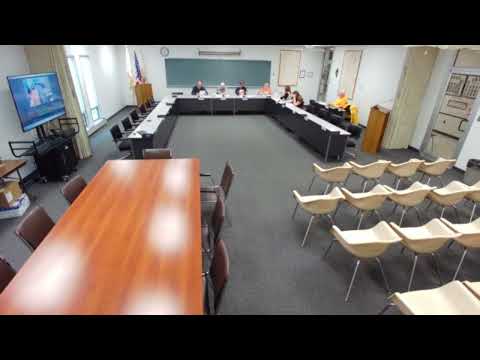
Iroquois County Zoning Board of Appeals recommends one-year moratorium on new data centers and warehouses
Loading...
Summary
On March 31, 2026, the Iroquois County Zoning Board of Appeals voted to recommend adoption of an ordinance establishing a temporary 365-day moratorium on new data center and warehouse applications in unincorporated Iroquois County to allow study of impacts on water, the electrical grid, noise and local employment.
The Iroquois County Zoning Board of Appeals voted on March 31, 2026, to recommend adoption of an ordinance establishing a temporary moratorium of up to 365 days on the acceptance, review and approval of new data center and warehouse development applications in unincorporated Iroquois County.
Staff member read findings of fact supporting the proposed moratorium, citing statutory authority and a set of infrastructure and public-welfare concerns: "the county finds that current electrical infrastructure may be insufficient to support projected growth without impacting residential reliability," staff said, and noted that high-density data centers can require substantially higher power densities than typical industrial uses.
The staff presentation also raised water-use concerns, saying high-density centers often rely on evaporative cooling and that "the cumulative impact of such water withdrawal ... has not been sufficiently studied." A resident who asked questions during the hearing asked: "Where does the water go after they've used it?" and staff replied some systems are closed-loop but that evaporation and leakage occur and replacement water would be required.
Other concerns cited in the staff findings included noise from cooling equipment and backup generators, potential effects on nearby residential property values, and a low jobs-to-acreage ratio for many data center projects. Staff said the county's existing zoning ordinance, last updated in 2014, "did not contemplate the scale or technical requirements of modern hyperscale data centers," and recommended a temporary pause of up to one year to complete impact studies and draft zoning standards.
During public comment and discussion, participants emphasized protecting local groundwater resources and questioned the number of permanent local jobs data centers would bring relative to the land and water they would consume. One participant said the county must "have a good show of faith" that staff will produce ordinance language and supporting studies within the moratorium period; staff acknowledged an extension would be possible if studies were not complete after 365 days.
Motions: Board members moved to accept the staff findings of fact and to recommend that the county adopt the moratorium ordinance. The transcript records a roll-call-style vote with affirmative responses recorded at the hearing; the final recorded 'yes' responses in the transcript are Wayne Wagner, Steve Raff, Steve Anderson and Gary Bennett. The transcript also contains inconsistent spellings of member names between the earlier roll call and the final vote (see audit). The chair then adjourned the meeting.
Why it matters: Board staff and speakers said the moratorium would give the county time to study electricity and water impacts, set appropriate zoning classifications and design mitigation standards before accepting new large-scale data center or warehouse projects. The moratorium would not prohibit other forms of industrial or commercial development while the county updates its ordinance.
Votes at a glance: - Approval of minutes: motion made and approved (recorded as aye during the meeting). - Acceptance of findings of fact (Exhibit A): motion made; board moved to accept for recommendation to the planning and zoning committee. - Recommendation to adopt temporary moratorium (up to 365 days): recorded yes votes in the transcript: Wayne Wagner; Steve Raff; Steve Anderson; Gary Bennett. The transcript shows inconsistent name spellings between the roll call and final vote (see audit).