Get Full Government Meeting Transcripts, Videos, & Alerts Forever!
Get email alerts on the Solid Waste Fee topic
No spam. Unsubscribe anytime.
San Diego Council sets Proposition 218 hearing on proposed trash fee, approves process 6–3
Summary
After a lengthy staff presentation and extensive public comment, the council voted 6–3 to authorize a Proposition 218 public‑hearing process for a proposed solid‑waste management fee, shortened the proposed duration from five years to four, and asked the IBA to present mitigation options at the June hearing.
San Diego City Council voted 6–3 to advance a proposed solid‑waste management fee under Proposition 218, directing staff and the Office of the Independent Budget Analyst (IBA) to present mitigation options ahead of a scheduled public hearing in June.
City staff described a multi‑year plan to shift trash collection to an enterprise fee model and presented cost drivers including an aging container fleet, vehicle reliability issues, and landfill capacity constraints. Staff cited current operating costs of about $99 million and a FY2026 cost package in the roughly $155 million range. Presenters said the city identifies roughly 233,000 properties eligible for service and more than 1.4 million containers citywide.
In the presentation, staff outlined a per‑container fee model, an implementation timeline (starting container deliveries mid‑July, container swaps in October, and a possible weekly recycling launch in Year 3), and several program costs and pilots: one‑time customer‑identification startup costs (staff cited several million dollars), a proposed $3 million financial‑assistance fund to help low‑income households, and a $2 million electric‑vehicle pilot. Staff also emphasized operational goals including improving driver safety and fleet reliability.
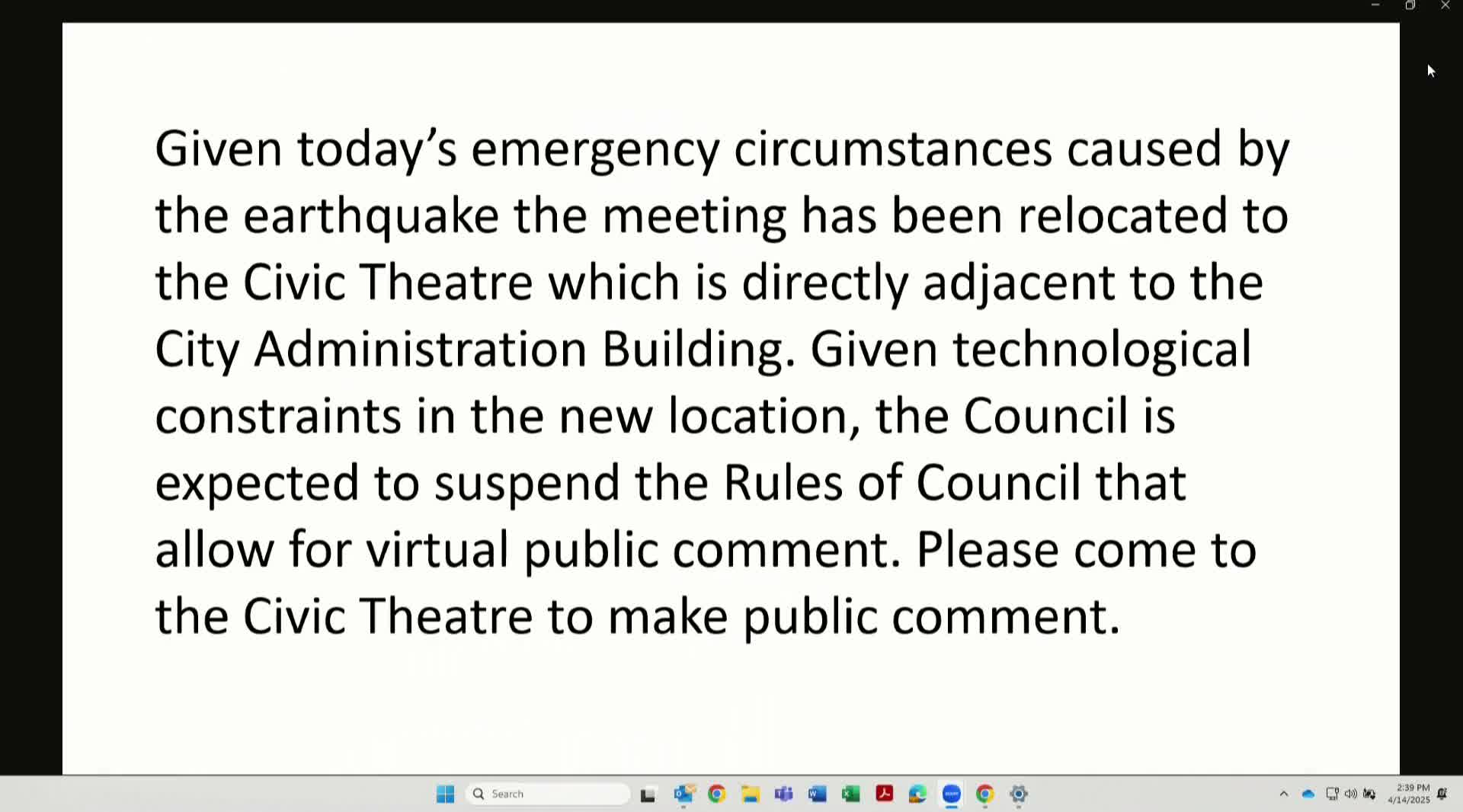
Public comment was extensive and split. Dozens of speakers attending in person and remotely criticized the process and the scale of the proposed fees, saying the proposed amounts exceed what supporters saw on the ballot and warning that placing fees on tax bills could risk foreclosure for households on fixed incomes. Other residents, union affiliates, and sanitation staff urged funding to maintain reliable service and to replace worn containers. Multiple callers and in‑person speakers also said early audio and virtual‑participation failures hindered public review of the presentation and asked for additional notice.
Council Member Ilo Rivera moved to authorize the Proposition 218 noticing and hearing process, to adopt protest procedures, to reduce the proposed fee duration from five years to four years, and to direct the IBA to work with city departments to present mitigation options for the June hearing. Council President Lacava seconded. The clerk called the roll and the motion passed 6–3 (yes: Campbell, Whitburn, Foster, Pro Tem Lee, Elo Rivera, Lacava; no: Campillo, Moreno, [one vacancy recorded as a no per roll call]).
The council did not set a final fee amount; it authorized the Proposition 218 procedure required for voter protections and asked staff and the IBA to return with options and technical clarifications before the public hearing. Staff repeatedly emphasized the timeline needed for a 45‑day notice period under Proposition 218 and said a June hearing would fit the schedule to allow, if approved later, collection on the tax roll the following fiscal cycle.
The council also asked for additional district‑level data on customers and for further outreach to seniors and other vulnerable groups about financial assistance options. The IBA told the council it would present alternative scenarios and recommended careful review of assumptions before final adoption.
Next steps: staff will issue Proposition 218 notices according to the timeline approved by the council, the IBA will work with departments to develop mitigation options for the June hearing, and a public hearing is expected in June per the schedule discussed on the record.