Get Full Government Meeting Transcripts, Videos, & Alerts Forever!
Get email alerts on the Municipal Finance topic
No spam. Unsubscribe anytime.
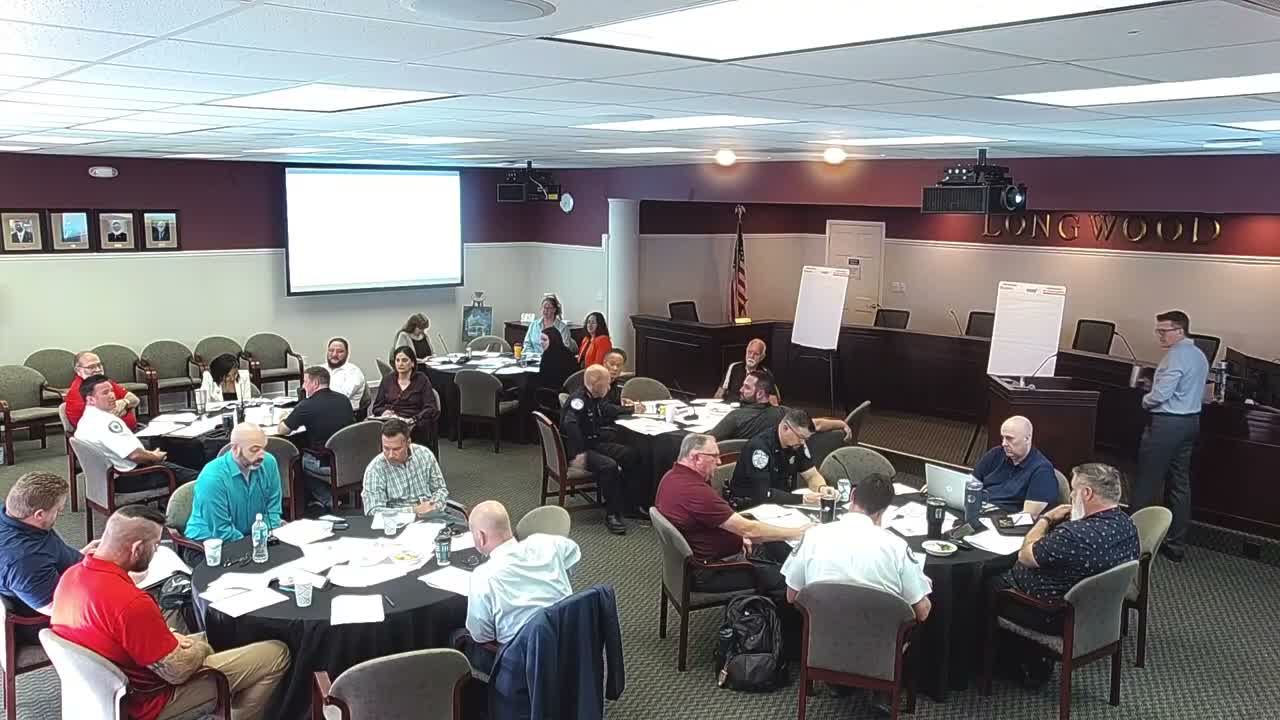
Longwood workshop prioritizes financial sustainability; commissioners weigh fees, annexation and targeted assessments
Summary
After staff modeling showed a potential $3.2M revenue shortfall under a proposed state property‑tax change, commissioners directed staff to prioritize a five‑year financial stability plan that includes fee and rate evaluations, grant strategy expansion and consideration of dedicated public‑safety assessments.
Longwood’s strategic-workshop elevated financial sustainability to the commissioners’ top five‑year priority after staff warned of steep fiscal risks tied to proposed state reforms and rising capital costs.
Finance Director Dustin Willbright told the group the city ran a What‑If analysis on recent state proposals and found it "would have lowered our taxable income by about $3,200,000." Commissioners and department heads discussed a menu of options to reduce vulnerability to property‑tax reform, including diversifying revenue through user fees and utility‑rate adjustments, more aggressive grant seeking, targeted annexation to expand the tax base and potentially dedicated public‑safety assessments.
Several speakers cautioned about the political and distributional trade‑offs of fees. Mayor Sackett said residents reacted strongly when the stormwater fee was first introduced and warned that layered new fees could disproportionately burden fixed‑income households. Finance and public‑works staff noted certain fees — stormwater, utility rates and right‑of‑way or telecommunication application fees — are small today and could be reexamined to better align costs with service delivery.
Commissioners asked staff to model a revenue path that preserves essential services while testing revenue diversification scenarios and capital‑funding sequences. The group asked that any recommended special assessments or dedicated taxes include clear, audited use and communication to residents so taxpayers can see what each charge pays for.
Next steps: staff will develop a five‑year financial stability plan, conduct fee/rate evaluations, expand grant‑writing efforts and model capital sequencing for the commission’s review during budget development.