Get Full Government Meeting Transcripts, Videos, & Alerts Forever!
Get email alerts on the Stormwater Masterplan topic
No spam. Unsubscribe anytime.
Milton seeks watershed master plan and DEP urban‑infill permit to ease downtown development
Summary
City staff said a watershed master plan and a 20‑year DEP conceptual permit for urban infill would let new developments ‘piggyback’ on a city stormwater permit, reducing permitting cost for developers and enabling planned downtown infill and a regional stormwater park.
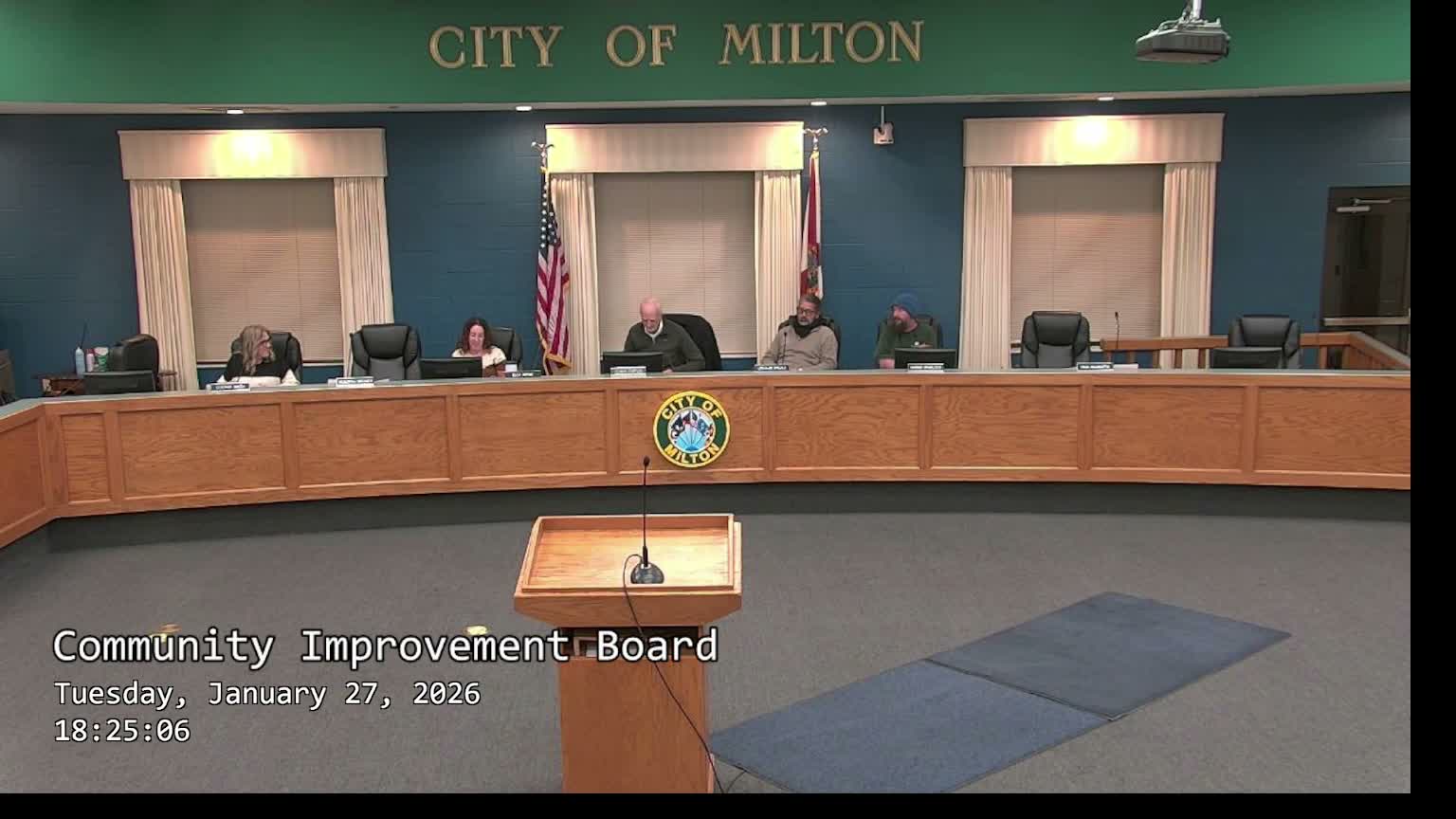
City of Milton staff told the Community Improvement Board that they are pursuing funding and technical work to support a watershed master plan, an updated stormwater master plan and a DEP conceptual permit for an urban infill overlay intended to streamline future development.
Jacob (city staff) explained that the DEP conceptual permit allows the city to define how stormwater will be treated in a defined redevelopment area for the next 20 years so developers could rely on the city’s calculations rather than each hire a separate stormwater engineer.
“We’re allowing a certain amount of impervious surface to exist in the area...and as long as their pollutant load doesn't go over those values...they can piggyback off of our stormwater permit,” Jacob said, describing savings for developers and potential to make infill more financially feasible.
Staff said the city applied for a Florida Department of Emergency Management watershed master plan grant (closes Feb. 28) and scored highly with the Local Mitigation Strategy; University of West Florida civil engineering will assist and Michael Baker International has provided consulting estimates.
Why it matters: board members and staff tied the permit concept to economic development goals — reducing red tape for small businesses, enabling infill projects such as Sweet Greek Cafe to expand without expensive individual stormwater plans, and helping implement a riverfront master plan. Staff cautioned that covering a larger overlay area increases up‑front engineering costs for the city and that public input and board approvals will be required before any overlay is adopted.
Next steps: staff said they will pursue grant awards, solicit engineering bids if funded, and coordinate public input and board review before any DEP permit or overlay district is finalized.