Get Full Government Meeting Transcripts, Videos, & Alerts Forever!
Get email alerts on the Housing topic
No spam. Unsubscribe anytime.
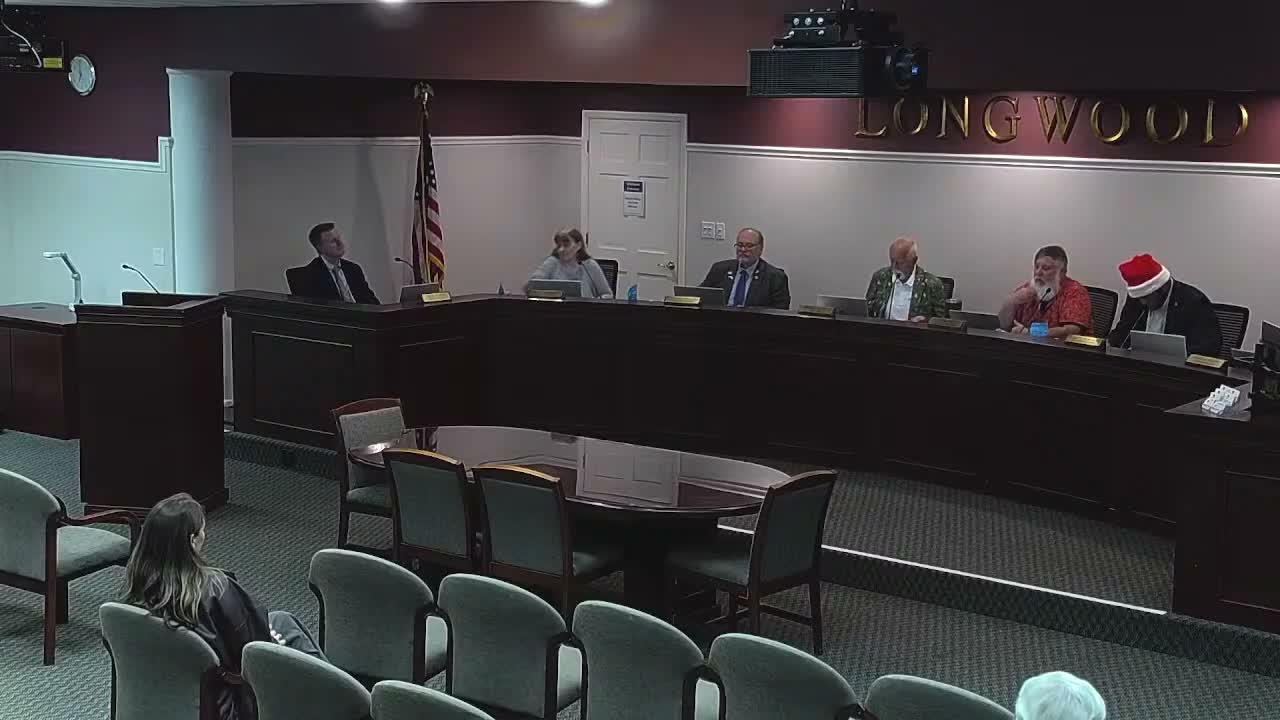
Longwood adopts ordinance regulating certified recovery residences, defers location list to state
Summary
The Longwood City Commission unanimously adopted Ordinance 25-22-75 to establish rules and a reasonable-accommodation process for certified recovery residences, with staff clarifying that the state—not the city—maintains lists of recovery residences and managers.
The Longwood City Commission unanimously adopted Ordinance 25-22-75 on Dec. 15, 2025, amending the development code to establish procedures for certified recovery residences, including an application and reasonable-accommodation process required by state law.
City Attorney (reading the ordinance text) said the measure provides definitions, application requirements, review procedures and revocation and reinstatement processes designed to align the city code with federal and state law. Staff said there were no substantive changes since the ordinance’s first reading.
Mayor Brian Sackett and commissioners asked whether the city or police would maintain a map of recovery residence locations. City staff responded that the state identifies recovery managers and maintains that information, and that the city would not keep a public map of private residences: “We would not see them. The state identifies managers for them, recovery managers, so they would have that list but we would not maintain it,” a staff member said.
The ordinance drew no public opposition at the hearing. After a motion and a second, the clerk called the roll; the ordinance passed on unanimous vote.
The ordinance will be codified into the Longwood Development Code and is intended to provide a clear local review process for requests for reasonable accommodation related to recovery housing while respecting state-level confidentiality and program administration.
The commission also agreed to bring related questions back to staff if residents or commissioners seek additional public information about how state oversight and local enforcement will interact.