Get Full Government Meeting Transcripts, Videos, & Alerts Forever!
Get email alerts on the Mac Fees topic
No spam. Unsubscribe anytime.
Signal Mountain council to set fees, oversight after town assumes Mountain Arts Community Center operations
Summary
Council discussed a new ordinance giving the town authority to set and collect fees at the Mountain Arts Community Center after taking over operations Jan. 1; members agreed to post a fee schedule online, retain a portion of instructor fees (currently 20%), and hold a special meeting to advance the ordinance.
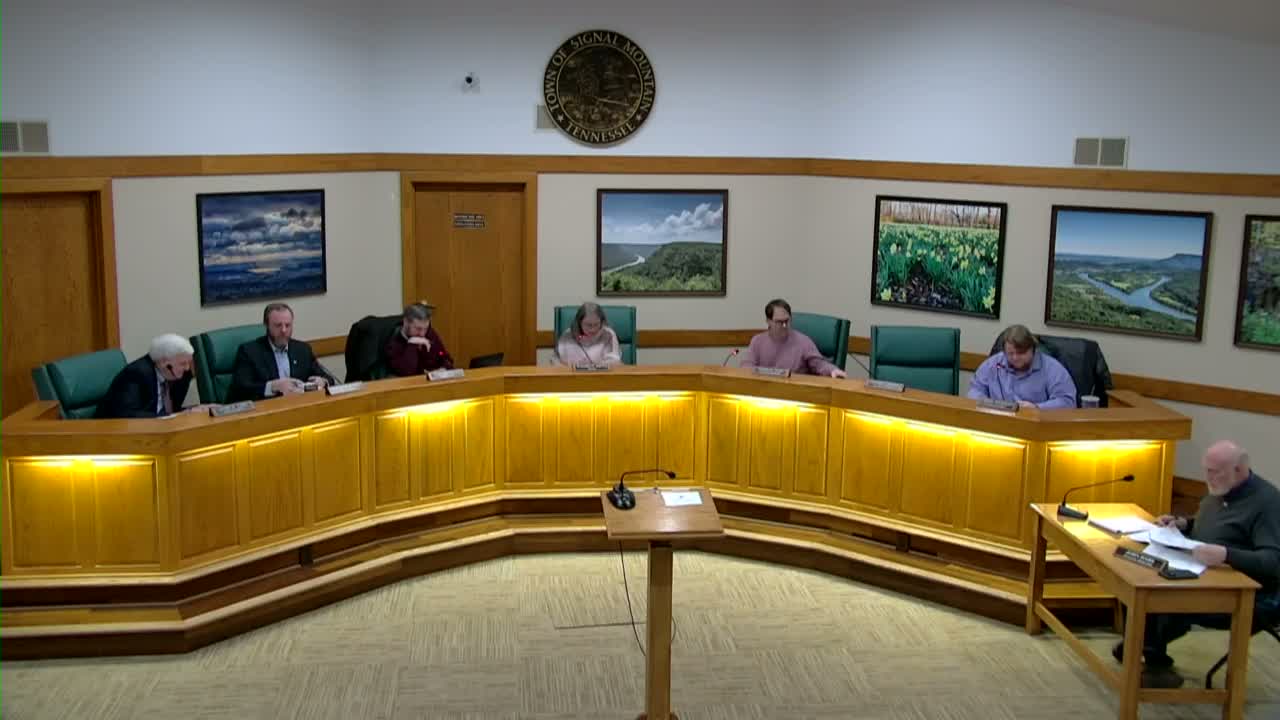
Signal Mountain’s town council on Jan. 12 debated how the town will manage fees and payments now that it assumed operational responsibility for the Mountain Arts Community Center (MAC) on Jan. 1.
Town Manager Matt Justice told the council the proposed ordinance would grant the town authority to set and charge fees for classes, rentals and events at the MAC. “This ordinance was written so that it sets and gives the town the ability to set and charge fees at the Mac,” Justice said, explaining the language does not prescribe exact rates but creates a mechanism for staff to establish and publish them.
Councilors focused on three practical issues: how instructor-run classes will be handled, whether the town will retain a percentage of those class fees, and how the town will collect and report revenues. Justice said current practice is that instructors set their advertised class rate and the town retains a portion; he told council the intent is to keep that arrangement while being transparent about the town’s share. “It is 20% right now,” Justice said when asked about the portion the town retains.
Vice Mayor Clay Crumbleus and other council members urged posting a fee schedule and the mechanics for collection online. Councilors discussed using a separate MAC bank account to receive payments and disburse instructor shares, and staff said instructors who are independent (Form 1099 contractors) would be paid via accounts payable to enable tracking. Finance staff described plans to account for gross receipts and expense reimbursements through a designated MAC category and separate account.
Councilors also emphasized balancing revenue goals with disruption to instructors’ livelihoods. One member asked that the town avoid heavy-handed rate-setting that would make it difficult for new or low‑fee instructors to operate; Justice said staff will initially observe existing arrangements and build a fee schedule with community input.
Because the town needs formal authority to collect fees for January receipts, councilors scheduled a special called meeting to conduct a first reading of the ordinance on Jan. 15 at 8 a.m., and to complete the second reading at the next regular meeting if necessary. Council directed staff to draft a posted fee schedule and recommended language clarifying the town’s percentage and disclosure practices.
The council did not adopt the fee ordinance at the Jan. 12 meeting; instead it gave staff direction to finalize the fee schedule, to post it online, and to bring the ordinance up for reading at the special session.