Get Full Government Meeting Transcripts, Videos, & Alerts Forever!
Get email alerts on the Land Use topic
No spam. Unsubscribe anytime.
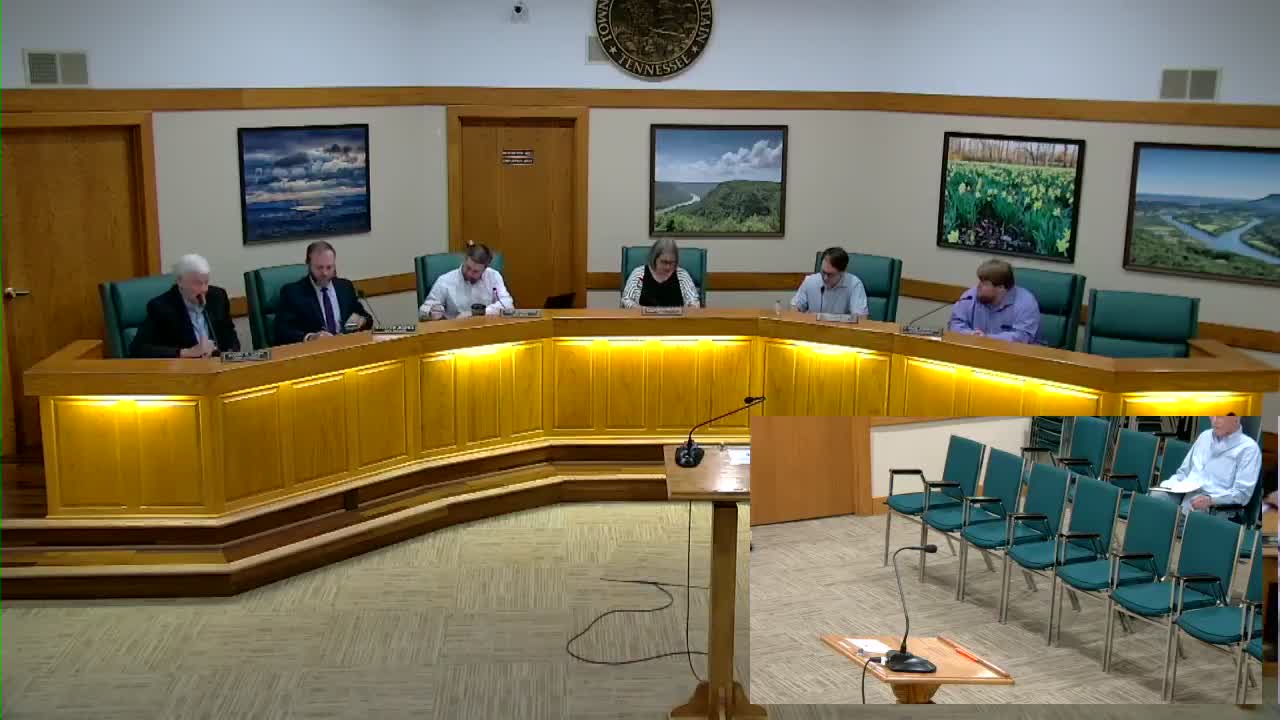
Signal Mountain council unanimously adopts resolution opposing Plan Hamilton density proposals
Summary
The Signal Mountain Town Council on Sept. 5 adopted a resolution opposing density provisions in Plan Hamilton, citing public-safety, traffic, stormwater and school-capacity concerns and asking the RPC and county commission for area-specific land-use policies for Walden Plateau.
Mayor Elizabeth Baker read and the Signal Mountain Town Council approved a resolution on Sept. 5 expressing strong opposition to the density provisions of Plan Hamilton and asking the regional planning commission (RPC) and Hamilton County Commission to adopt area-specific land-use policies for Walden Plateau that prioritize residents, property owners, taxpayers and the environment.
The resolution, moved by Mayor Elizabeth Baker and seconded by a council member, passed after public comment and council discussion. Baker framed the resolution as an advisory statement, saying the town cannot direct county policy but wants to speak "on behalf of our residents" and to offer solutions that the RPC could adopt at its upcoming meeting.
The vote came after two public commenters and several council members raised safety and infrastructure concerns tied to potential higher-density development in the unincorporated area. Tom Gavin of Hidden Brook told the council he attended a packed planning commission meeting about Spangler Farm and highlighted expert warnings about runoff and impacts to adjacent preserved land. "Planning is the critical key in this whole process," Gavin said, calling for careful review of lot sizes, runoff and traffic implications.
Resident Wynn Cook, who said he has lived on the mountain for 38 years, warned that Signal Mountain effectively has "one serviceable road up the mountain" and urged the town to draw "a pretty firm line" on development because of public-safety risks. Council members repeated those concerns in debate, citing limited egress, increased traffic down Taft Highway and strains on emergency responders.
Council members and the mayor also criticized removal of certain policy language from the county plan and RPC materials. Baker said the county had removed geotechnical, environmental, traffic and stormwater report requirements and excised appendices containing citizen feedback and an emergency-readiness plan. She said the town is asking the RPC and county commission to reinstate those elements so the state's review will reflect public input.
The council described proposed alternative place-type and density recommendations for the ridge top, suggesting a "mountain-top residential" place type for areas above an elevation threshold and proposing lower densities than those in the current county recommendations (the resolution packet sets example densities as 2 dwellings per acre with centralized sewer, 1 dwelling with a decentralized system and 0.55 dwellings on septic, and Baker said a printed typo about "centralized/decentralized" was corrected on the signed version).
Baker urged residents to attend the RPC meeting scheduled for 1 p.m. the following Monday to voice concerns. The council voted in favor of the resolution with all members responding "Aye" when the motion was called and recorded no opposition on the record.
After completing business, a council member moved to suspend the remainder of the agenda and adjourn; the motion carried and the meeting ended.