Get Full Government Meeting Transcripts, Videos, & Alerts Forever!
Get email alerts on the Uninsured Vehicles topic
No spam. Unsubscribe anytime.
Committee backs bill to allow impoundment of out‑of‑state uninsured vehicles, members warn verification challenges remain
Summary
Lawmakers reported a substitute to House Bill 174 favorably on March 18, allowing police to impound out‑of‑state vehicles when operators lack required bodily‑injury insurance; members pressed law enforcement on verification systems and exceptions for motorists who can produce proof.
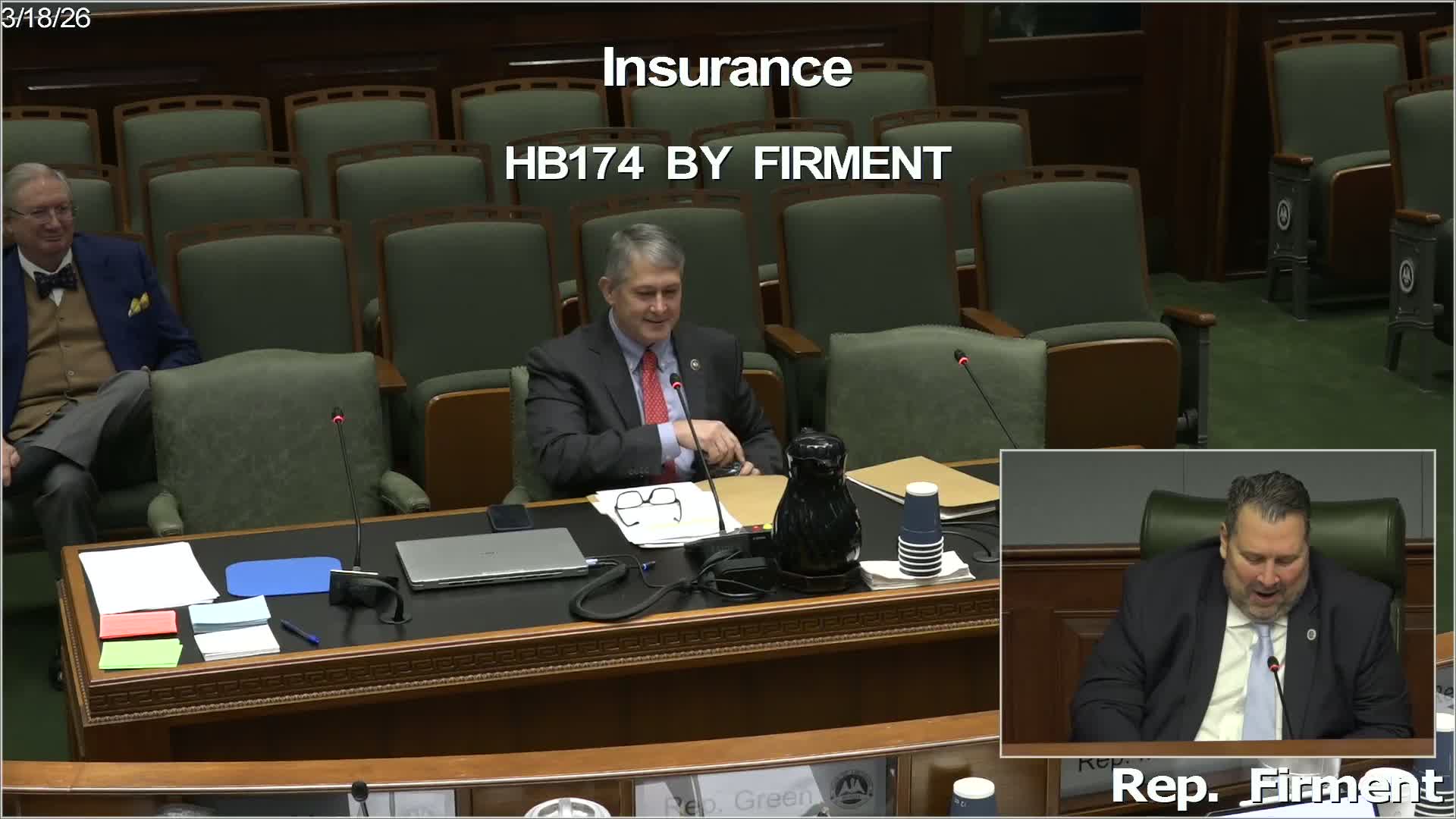
The House Insurance Committee on Wednesday moved House Bill 174 by substitute, a measure that would allow Louisiana law enforcement to impound vehicles registered outside the state when the driver cannot show required bodily‑injury insurance while operating the vehicle in Louisiana.
Chairman Furman and Representative Fermitt said the intent is to treat out‑of‑state drivers the same as Louisiana drivers. "If you're operating a vehicle without insurance, that vehicle is subject to be impounded," the chairman said when introducing the substitute.
Captain Lansky of the Louisiana State Police told the committee current practice is generally to issue a hard‑copy citation for out‑of‑state drivers lacking proof of insurance and not tow the vehicle; passage of the bill would authorize towing in some circumstances. "Currently... if it's an out‑of‑state vehicle with no insurance, the vehicle is not towed," Captain Lansky said, adding that if HB 174 becomes law, impoundment would be possible under the bill’s posture.
Members pressed witnesses about how officers will verify out‑of‑state coverage. Representative Jordan asked, "How are you actually verifying that?" Witnesses described a national electronic verification database that some states opt into but said participation is not universal. The Office of Motor Vehicles (OMV) representative said states can choose to participate in the information‑sharing system and that local agencies' access varies.
Lawmakers also discussed exceptions and safeguards. Representative Glorioso noted statutory discretion for officers: when a stop involves young children, a disabled occupant, or an unsafe location, officers may choose not to impound and instead seize the license plate and issue a temporary sticker. Committee members urged caution about mistaken impounds where a motorist may have valid coverage that cannot immediately be verified.
Representative Fermitt asked for favorable passage; the committee reported the substitute bill favorably after support was indicated on witness cards from state police, OMV, the PIA, chiefs of police and Farm Bureau representatives.
What it means: If enacted, HB 174 would give law enforcement another enforcement tool to reduce the number of uninsured vehicles on Louisiana roads, which supporters say could help reduce insurance premiums. Critics and some members asked the department of motor vehicles and law enforcement to ensure verification tools and safeguards are in place to prevent wrongful impounds.
Next steps: HB 174 was reported by substitute and will proceed to the next legislative steps for consideration.