Get AI Briefings, Transcripts & Alerts on Local & National Government Meetings — Forever.
Committee advances omnibus election bill after lengthy debate on voter access and procurement
Loading...
Summary
HB 842, a 45‑page omnibus election code update, was reported favorably by the committee as amended after extended debate and public testimony on changes affecting voter registration deadlines, assistance for voters with disabilities, absentee ballot cure rules and procurement authority for large voting‑system purchases.
The House Governmental Affairs Committee voted to report House Bill 842 favorably as amended following an extended hearing that ranged across deadlines, voter assistance, nominating petitions and procurement rules for election systems.
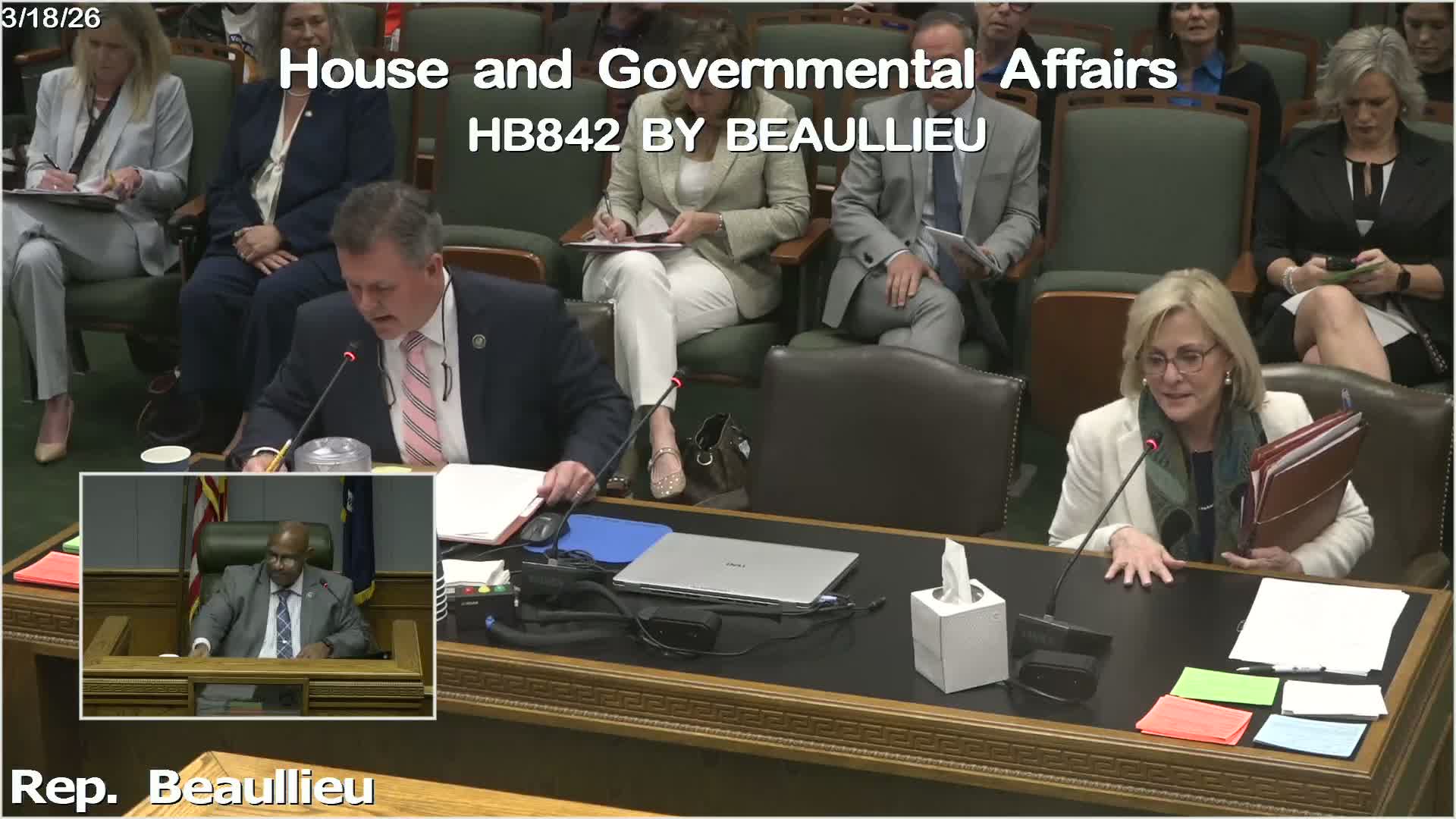
Chairman Beaulieu described HB 842 as a package of technical updates and modernization measures requested by the State Board of Election Supervisors and the Secretary of State’s office. Committee staff and department deputies walked members through amendments that remove an unnecessary update to section 134 and clarify the effective time of registration changes (amendment set 17‑05). The committee adopted those amendments.
A major focus of the hearing was a new provision (referred to as 106.2 in committee discussion) intended to clear a legal gap for voters who are physically unable to sign or make a mark. Secretary of State deputies and disability‑rights staff said the change would allow a voter who cannot sign to designate someone to sign on their behalf for absentee or registration updates after the voter files a form or produces qualifying documentation; for in‑person voting on election day the deputies said an election official can already sign for a voter who verbally expresses consent. Representative Walters and others expressed concern about requiring medical documentation and potential HIPAA implications; the secretary’s office said the provision was discussed with the disability rights advisory council and is intended to increase access.
Other contested topics included cross‑references to general petition requirements (RS 18:3), rules for curing absentee ballots when a witness omitted printed name/address, timing for challenges to placement of constitutional amendments on ballots, and language governing state procurement of drayage and voting system contracts. Chris Alexander of the Louisiana Citizen Advocacy Group warned that language in the bill vests broad discretion in the Secretary of State’s procurement process and urged amendments to require public disclosure of vendor negotiations and escrow of source code for independent audits. Election officials and registrars countered that clarifying procurement language preserves emergency procurement options required to move machines on short notice.
After public testimony and staff responses, the chair called the motion to report HB 842 as amended. A roll call produced 8 yeas and 5 nays and the committee advanced the omnibus bill to the next step in the legislative process.
Next steps: HB 842 will move forward as reported to the floor; several members signaled intent to pursue technical fixes or follow‑up language concerning procurement transparency and disability documentation.