Get Full Government Meeting Transcripts, Videos, & Alerts Forever!
Get email alerts on the Portable Benefits topic
No spam. Unsubscribe anytime.
Committee advances voluntary portable‑benefits bill for contractors despite labor objections
Summary
HB301, a voluntary portable‑benefits framework for independent contractors, was reported out of committee (6–5) after proponents said it gives gig workers options for health and retirement stipends while opponents warned it could encourage misclassification and shift costs away from employer‑coverage systems.
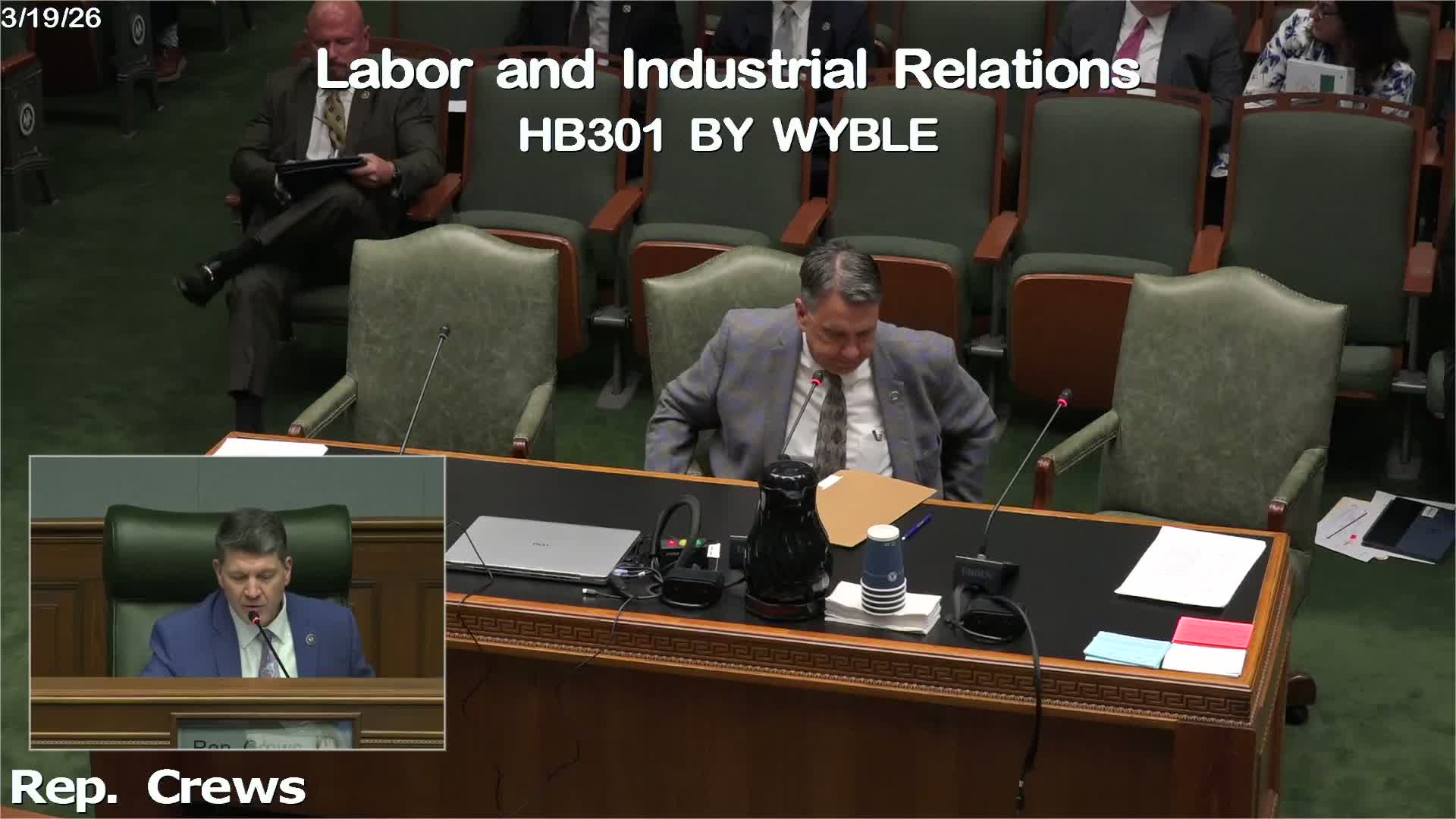
The House Labor Committee on March 19 reported House Bill 301 with amendments, after a contentious hearing that split supporters and labor advocates.
Representative Weibel, sponsor of HB301, said the bill establishes a voluntary framework allowing independent contractors and contracting parties to contribute to portable benefit accounts for health, retirement or other benefits. "It creates a voluntary benefits framework for independent contractors," Weibel said, adding the law would not reclassify workers and both contracting parties must agree.
Supporters — including Jim Patterson, testifying for a business group — said the measure responds to the growth of gig and contract work and provides a mechanism for portability and stability for workers. Opponents including representatives of injured‑workers groups, the AFL‑CIO and labor unions warned HB301 could incentivize misclassification and reduce traditional protections such as workers' compensation and unemployment insurance. "We're here to try to protect their rights," Steve Wanko of Injured Workers testified, saying independent contractors who lose workers'‑comp coverage would be left without timely wage or medical benefits.
Labor witnesses pointed to experiences in other states and cautioned that low‑income or unsophisticated workers could be pressured into opting into portable accounts that would not replace workers' compensation or unemployment protections. Peter Robbins Brown of the Louisiana AFL‑CIO said the bill could be misused by large platform companies and further weaken employer responsibilities.
After debate and a roll‑call, the committee reported HB301 with amendments by a recorded vote of 6 yes, 5 no. The bill proceeds to the House floor.