Lifetime Citizen Portal Access — AI Briefings, Alerts & Unlimited Follows
Panel backs bill letting officers consider credible third-party reports for protective custody with guardrails
Loading...
Summary
Lawmakers reported HB 546 favorably after testimony from law-enforcement and mental-health advocates that the bill would allow officers to rely on credible third-party information — while remaining permissive and tied to existing departmental practices — and speakers urged clearer guardrails to prevent misuse.
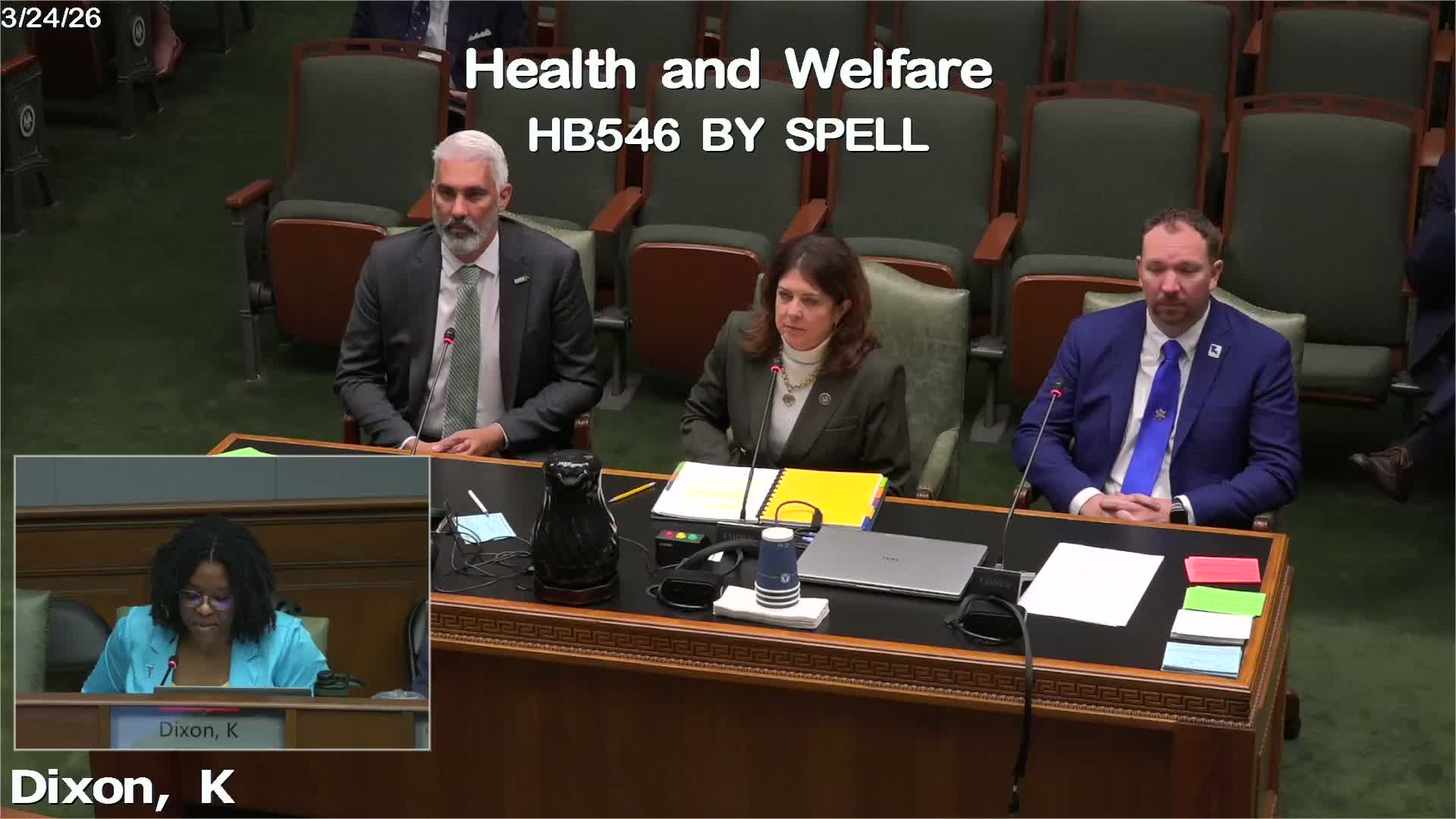
A Louisiana House committee on Tuesday advanced House Bill 546, which would amend the state statutory standard for taking a person into protective custody to allow officers to consider credible information from a third party when personal observation is not possible.
Representative Bridal, presenting for Representative Spill, told the committee the bill amends Revised Statute 28:53 to expand how a peace officer may respond to persons who present a danger to themselves or others or who are gravely disabled, and to add procedural guardrails that reference existing departmental practices. The bill uses permissive language — officers "may" act on credible third-party information rather than being required to do so.
Law-enforcement witnesses urged the change as a response to gaps in crisis response. James Guidry, who runs the crisis-intervention unit for the Jefferson Parish Sheriff's Office and serves as president of Louisiana Crisis Intervention Teams, said officers often encounter credible reports from family members or others but cannot act because they did not personally observe concerning behavior. "If we were able to take credible information... get that person help right at the onset, it could stop it from spiraling into a worse situation," Guidry testified.
Committee members pressed witnesses on how the bill protects against misuse and what guardrails are in place. Witnesses said the guardrails are referenced to existing departmental practices and procedures rather than spelled out in the bill text. Guidry and other witnesses noted the statute would remain permissive and that existing law requires officers to take persons who meet criteria for involuntary committal (danger to self, danger to others, gravely disabled) to an appropriate treatment facility.
Committee members also raised liability concerns. Witnesses said the statute includes protection for officers acting in accordance with the law: an officer acting as permitted would not be held criminally or civilly liable for those actions under the law as discussed in committee.
Mental-health advocates supported the bill as a targeted means to address response gaps. Nick Richard, executive director of NAMI Southeast Louisiana, said the change would not fix systemic failures but could fill immediate gaps and encouraged the committee to consider further refinement of guardrails before floor action.
The committee read a list of supporting cards from multiple law-enforcement organizations and mental-health groups. Representative Egan moved to report HB 546 with amendments; with no objection the committee reported the bill favorably.
What happens next: The bill moves from committee with a favorable report; sponsors and witnesses said further discussions about guardrails and transport logistics may continue before floor consideration.