North Kingstown advisory committee narrows cellphone policy: elementary and middle schools likely to ban phones at lunch; high school lunch favored
Loading...
Summary
At a March 9 Policy Advisory Committee meeting, members debated a district cellphone policy required by state guidance, weighing a ban during instructional time against allowing phones at high‑school lunch. The committee asked administrators for enforcement feedback and will return a revised draft.
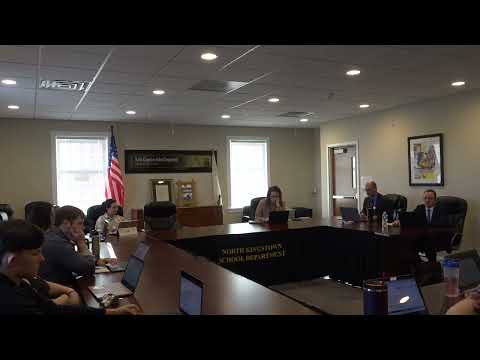
The North Kingstown Policy Advisory Committee met March 9 to refine a district policy on student use of personal electronic devices aimed at complying with state guidance and protecting instructional time. Members reviewed edits drafted by Assistant Superintendent Rob Esnathy and spent the meeting hashing out whether the policy should bar phones during all school‑day hours or only during instructional time.
Committee members said the updated draft should make clear the policy’s purpose is legal compliance and consistent student expectations. Esnathy told the group he had highlighted his edits in yellow and emphasized language clarifying that the policy’s goal is to ‘‘comply with the law’’ and to articulate enforceable expectations at the building level.
A central dispute was whether ‘‘school day’’ language in the draft should be interpreted as ‘‘instructional time.’’ Committee members and staff cited a Rhode Island Department of Education advisory saying lunch, recess, passing time, study hall and other non‑instructional periods are excluded from instructional time. Several members warned that wording the policy too broadly could lead to disproportionate discipline and urged that the draft specify which activities are covered.
Students and parents on the committee urged exceptions for caregiving responsibilities: one member quoted recent state survey results that ‘‘more than 1 in 3 middle and high school students are classified as caregiving youth,’’ and said lunch may be the only feasible time for those students to check on family members.
While several administrators argued for a clear, district‑wide standard that is easy to explain and enforce, others favored giving building principals discretion for non‑instructional periods. Committee members repeatedly returned to enforcement concerns: if cafeteria supervisors and building staff are not prepared to enforce a broad ban, the policy risks inconsistent application and parent complaints.
After discussion and an informal straw poll, the committee’s working consensus was: elementary schools should keep phones out at lunch; middle schools should generally not permit phones at lunch; and high schools could allow phones at lunch while prohibiting them during passing periods. Members emphasized this was a direction for redrafting, not a final district decision.
The committee asked Esnathy to refine the text to reflect the group’s direction, to solicit detailed feedback from building administrators and staff who manage lunch and passing periods, and to return a tightened draft. The group also recommended that any public rollout include explicit guidance for parents (for example, advising that non‑urgent messages go through the front office) and built‑in exemptions for clearly documented caregiving or emergency needs.
The committee deferred any changes to the AI policy to email discussion and further review.
Next steps: Esnathy will revise the policy language, consult administrators about enforcement and return the draft to the advisory committee before the item advances to the school committee.