Get Full Government Meeting Transcripts, Videos, & Alerts Forever!
Get email alerts on the Sidewalks And Drainage topic
No spam. Unsubscribe anytime.
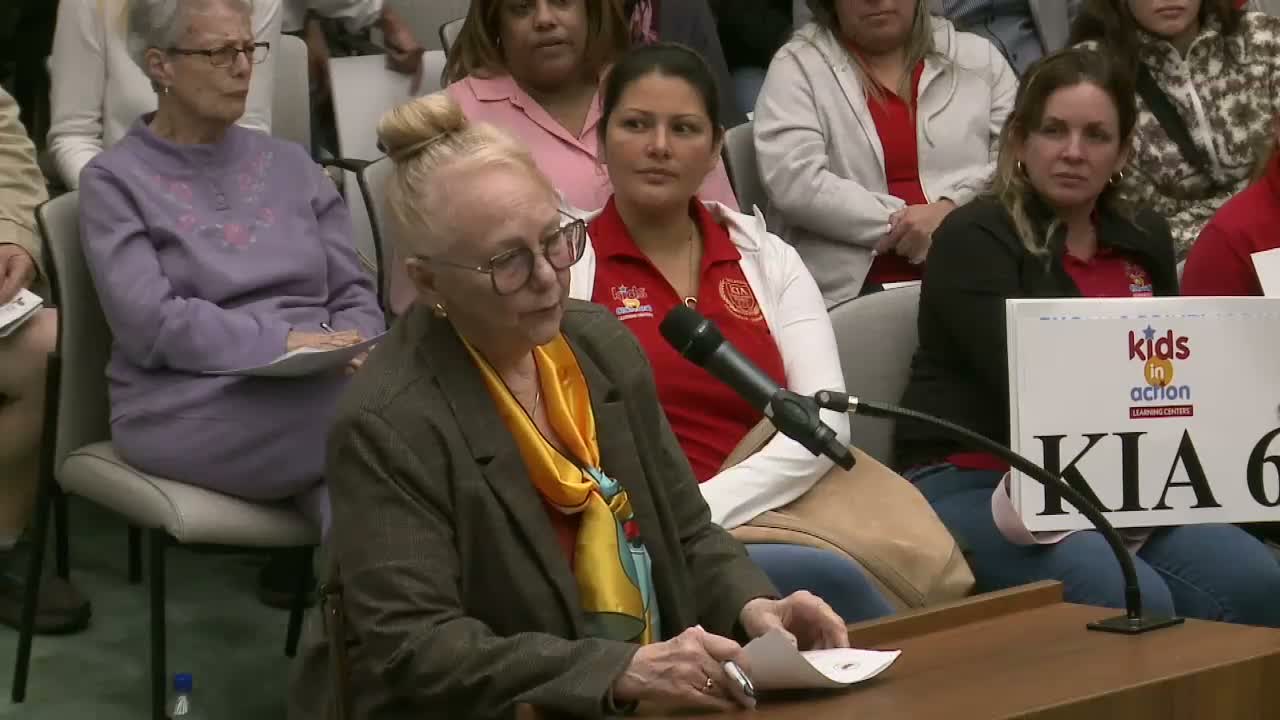
Residents urge Oakland Park to pause Northeast 13th Avenue sidewalk project, cite loss of parking and ADA risks
Summary
Dozens of residents at an Oakland Park City Commission meeting urged officials to pause the Northeast 13th Avenue sidewalk and drainage project, saying the design will remove driveway space, reduce lawful parking and create potential ADA violations. Speakers requested a parcel-by-parcel impact analysis and a tree mitigation plan.
Dozens of Oakland Park residents urged the City Commission to pause construction on the Northeast 13th Avenue improvement project, saying the planned sidewalks and swales will remove on-site parking, damage mature trees and place homeowners at legal and financial risk.
At public comment, Robin Badafore of Northeast 32nd Street told commissioners the project threatens to displace renters and force sales by removing parking spaces adjacent to multifamily dwellings and duplexes. "Come to my street, drive from 13th Avenue to 16th Avenue and you tell me where these people are going to park," Badafore said.
Several speakers gave property-level examples. Jim Hevert said the proposed sidewalk alignment would encroach on his driveway and leave insufficient depth for a parked car, creating "a literal federal ADA violation and a loss of my vested use." He asked staff and commissioners to seek a compromise that preserves functional parking for long-standing residents.
Telling similar stories, residents displayed images and parcel measurements they said show sidewalks will remove two to three parking spaces at some houses. "Under this plan, residents would be forced to park over sidewalks just to function," said Madeline Wichitaski, arguing that the design makes both sidewalks and driveways unusable and shifts liability onto homeowners.
Speakers also described construction activity that they said began with little notice. Scott Bittner and others reported contractors arriving and cutting dozens of trees and mobilizing heavy equipment without adequate resident notification, heightening calls for a pause. "Dozens of trees have already been cut down," said Jacqueline McNichols, who urged the commission to require a tree mitigation and canopy replacement plan consistent with the city's comprehensive plan.
Several commenters asked the commission to produce two analyses before further work: a parcel-by-parcel parking and ADA impact assessment, and a tree-mitigation plan. "Loss of a single space for parking is too many," McNichols said, noting homeowners bought and rented properties with certain parking expectations.
City staff answered questions during the meeting. Assistant City Manager Sierra Marrero reiterated the project's scope: the corridor is part of a comprehensive capital improvement program and some sections were funded by grants for drainage and lighting. Marrero acknowledged escalation in construction costs and said staff would review individual driveway configurations and work to coordinate notifications and mitigation where feasible. "As we have more information about what those resources look like, we'll be able to assess what the costs of the design are going to be," Marrero said.
City Manager Abel told the commission that some elements of the project are moving ahead while staff continues to evaluate impacts and seek grant opportunities. He said staff will continue outreach to affected residents and businesses and report back as solutions are developed.
Speakers representing neighborhood groups asked elected members to consider design changes, mitigation, or a temporary halt to irreversible work until the requested analyses are complete. Commissioners acknowledged the depth of resident concern and directed staff to work with the city attorney and engineers to return with more detailed information and recommendations at a future meeting.
The commission did not take an immediate vote to stop work; several members signaled they wanted staff to bring back analysis and potential mitigation measures for consideration at a subsequent meeting.