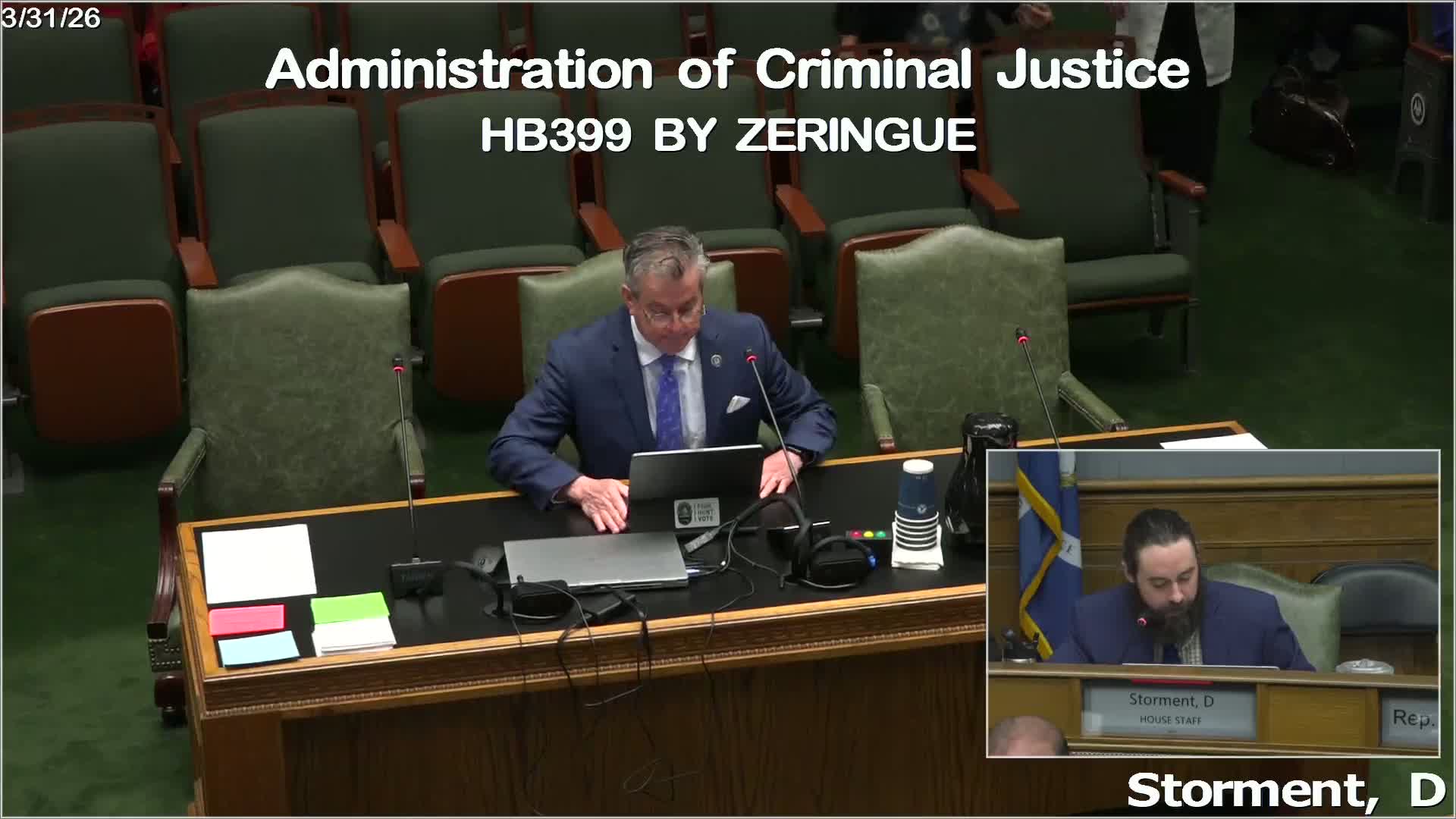
Committee extends window for terminally ill inmates’ temporary release, citing clinical and logistical needs
Loading...
Summary
The committee reported HB 399 favorably after testimony from the Department of Public Safety and Corrections and medical experts who urged extending the compassionate/terminal release window from 60 days to 120 days so placement and paperwork can be completed. Secretary Gary Westcott said releases remain supervised and are tightly vetted.
Representative Sarang told the committee HB 399 would increase the maximum life‑expectancy threshold for temporary release of terminally ill or incapacitated inmates from 60 days to 120 days to allow time for thorough medical assessment, placement and enrollment in Medicaid.
"Several states have 12 months; Louisiana currently has the shortest 60‑day requirement," Representative Sarang said, and argued a longer window aligns with hospice practice and reduces cases where applicants die before placement paperwork is complete.
Secretary Gary Westcott of the Department of Public Safety and Corrections described the vetting process and emphasized continued supervision: "These people are supervised by probation and parole on maximum supervision... If there's any change or improvement, they are returned back to custody." Westcott said the department had released a small number of incarcerated patients in recent years and that most releases are for people who are incapacitated and near death.
Medical witnesses and hospice professionals supported the change. Dr. Helen Pope, a board‑certified internal medicine physician, said clinical indicators can support a prognosis and that 120 days better accommodates placement and paperwork. Faith‑based groups and advocacy organizations framed the bill as consistent with dignity and mercy while preserving accountability.
Committee members asked about exceptions and whether death‑row inmates would be eligible; Westcott confirmed they are not. The committee voted to report HB 399 favorably for floor consideration; the transcript records the motion but not a roll‑call tally.
Next steps: HB 399 will advance to the House floor; committee testimony shows sponsors, corrections officials and medical witnesses expect the change to reduce cases where applicants die before the process concludes.