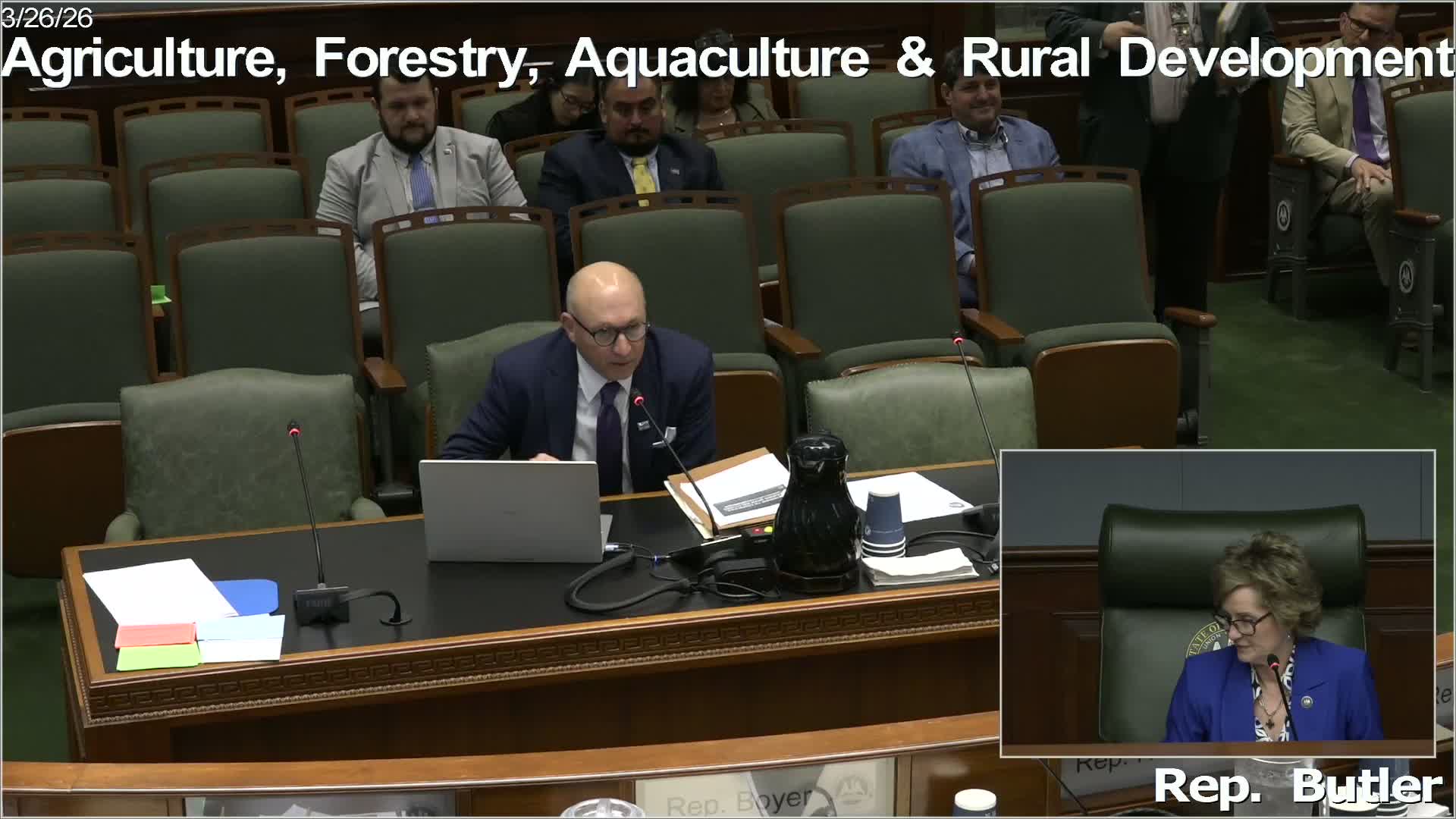
LSU AgCenter touts research gains, workforce programs and new aquaculture initiatives
Loading...
Summary
LSU AgCenter leaders briefed the House Committee on Agriculture on expanded research funding, economic impacts of new crop varieties, growth in extension and 4‑H contact, and investments in aquaculture and a seafood processing demonstration lab to support coastal producers.
LSU AgCenter leaders told the House Committee on Agriculture March 26 that sustained legislative investment has grown the center’s research portfolio and expanded outreach across Louisiana.
Matt Lee, senior vice chancellor for the LSU AgCenter and dean of the College of Agriculture, said research expenditures have risen to about $123 million annually and credited the investment with new crop varieties that boost farm gate value. He said more than 60% of sugarcane acreage uses varieties developed at the Saint Gabriel station and estimated a direct economic contribution from those varieties in the hundreds of millions of dollars.
Lee highlighted workforce and extension work: the AgCenter runs cooperative extension offices in every parish, maintains 14 experiment stations and approximately 21,000 acres for research, and reported large increases in pre-college youth engagement (4‑H and FFA), workforce certifications and student scholarships. He described new hires in aquaculture research and a planned rebuild of an aquaculture research station and outdoor crawfish ponds, plus a seafood-processing demonstration lab at the Iberia research station to help producers develop marketable, safe products.
Members asked about regional facilities, budget authority and whether the AgCenter’s state appropriation and ability to deploy funds would change under LSU system reorganization; Lee said the appropriation remains and university leadership supports the AgCenter’s mission. The presentation closed with committee thanks and no further action was required.
Takeaway: The AgCenter emphasized applied research and outreach as tools to increase farm competitiveness, support seafood and aquaculture sectors and provide workforce training for rural Louisiana.