Committee advances change to Grain and Cotton Indemnity Fund, raises assessment and caps
Loading...
Summary
Lawmakers advanced HB344 and HB370 to raise the cap on the Grain and Cotton Indemnity Fund (suspend at $25M, restart at $22M) and to increase assessment collections to roughly $1.25M per year. The move follows recent broker bankruptcies that created large farmer losses; the department said the changes protect producers and are backed by commodity commissions and Farm Bureau.
The House Committee on Agriculture reported favorably March 26 on bills that adjust the Grain and Cotton Indemnity Fund’s balance thresholds and increase annual assessments to build a more robust safety net for producers.
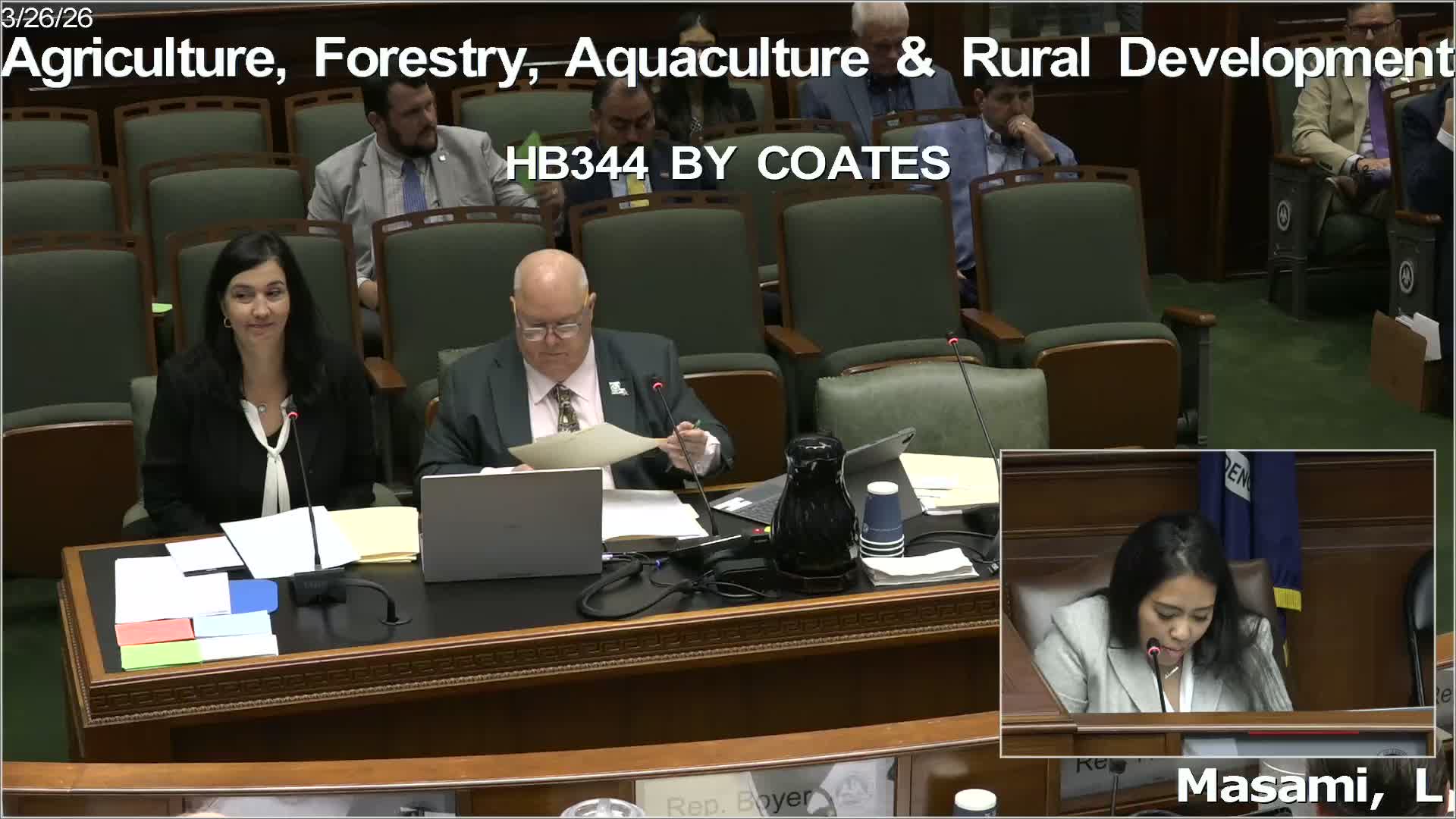
Representative Coates introduced House Bill 344 to raise the fund’s suspension threshold from $12 million to $25 million and the restart threshold from $10 million to $22 million, describing the change as protection for producers when an elevator or broker defaults. Commissioner Strain told members the fund is financed by an assessment (one-twentieth of one percent) on grain and cotton sales and that payouts from recent bankruptcies — including a nationwide broker failure — have stressed the fund. He said the department has paid farmers $5,512,298 on 22 claims to date in the recent bankruptcy matter.
Commissioner Strain explained that the fund operates like insurance paid by producers and is not backed by the full faith and credit of the state; it is held in a trust administered by the Agriculture Finance Authority. He said the department is also examining increased licensing scrutiny and the possibility of reinsurance, but that bonding requirements large enough to prevent broker risk could make brokerage service too costly.
House Bill 370, a related measure introduced by Chairwoman Butler, would raise the assessment rate on agricultural commodities; Strain said the change would boost annual collections from about $626,000 to roughly $1,252,000, increasing the fund’s capacity to respond to large defaults.
Several members raised concerns about timing and whether raising the cap could delay relief to farmers; Strain replied the adjusted thresholds allow the fund to grow to a safer balance and would only be revisited if farmers request changes. The committee reported both bills favorably with no objections.
Next steps: HB344 and HB370 advance to the next stage of legislative consideration.