Committee advances local‑option property‑tax exemption intended to spur rehabilitation of blighted properties
Loading...
Summary
Lawmakers approved on a favorable report HB 217 (and its constitutional companion HB 214) to allow municipalities and parishes to offer up to a 75% property‑tax reduction for rehabilitated properties for up to 20 years. Supporters called it a permissive tool to incentivize rehabilitation and homeownership; members urged guardrails to limit abuse.
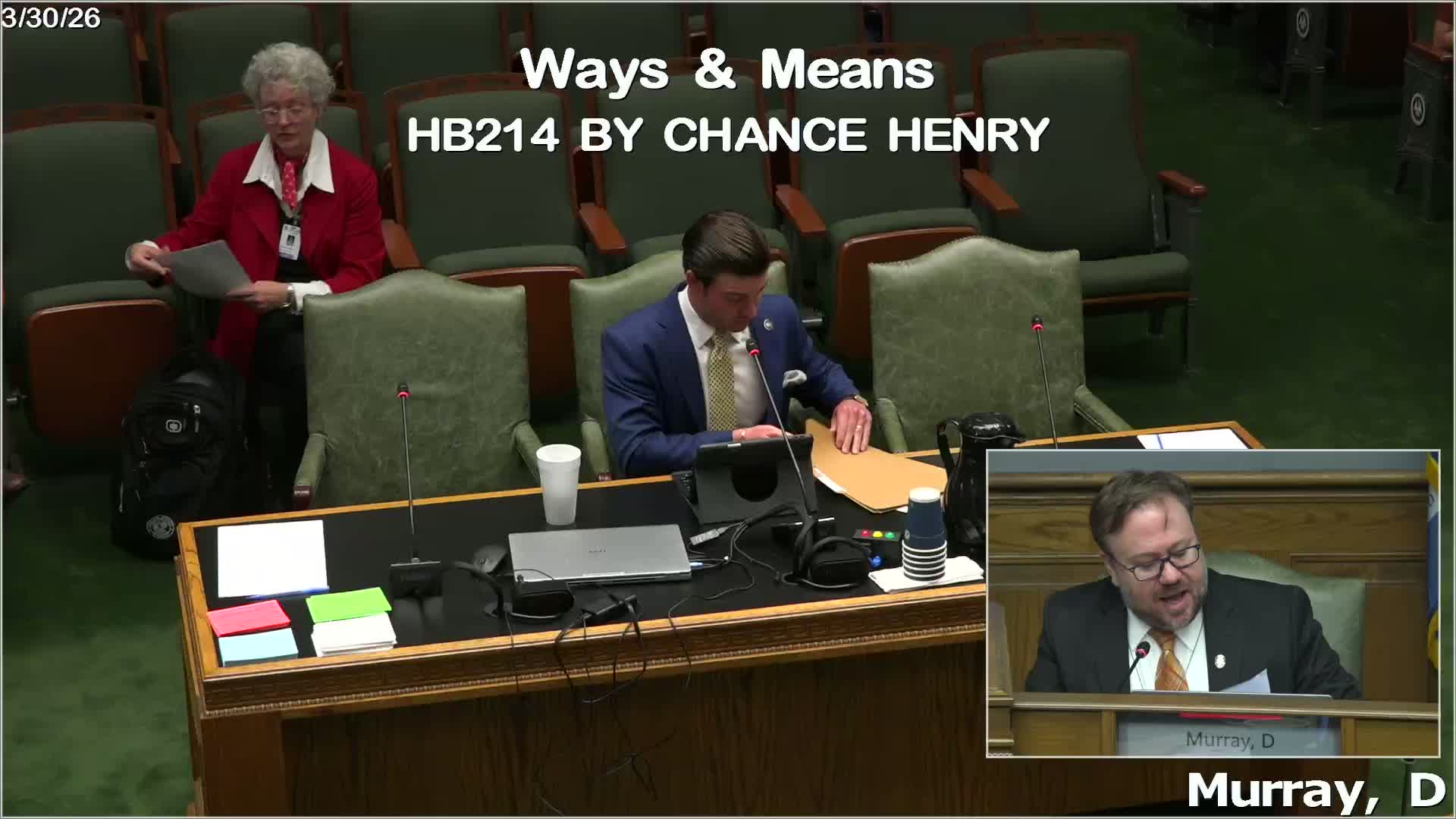
Representative Chance Henry introduced HB 217 and companion constitutional ballot language (HB 214), proposing an optional property‑tax exemption of up to 75% for 20 years for properties placed on a municipality’s blight list and subsequently rehabilitated. The exemption is permissive: local governing bodies must opt in by ordinance or resolution and the constitutional amendment would require voter approval.
"We can't tax our way out of blight — we need to give people a reason to invest in their community," Henry told the committee, describing the exemption as a tool to attract developers and lower purchase costs for young families.
Local government groups and parish associations supported the bills as a pragmatic carrot to restore neighborhoods. Debbie Hinton, executive counsel for the Police Jury Association of Louisiana, told lawmakers the measure provides municipalities a workable incentive to bring derelict structures back into commerce and relieve neighbors who live next to properties that attract vermin and crime.
Committee members probed transferability and potential for exploitation by professional flippers. Representative Farnham, citing local audit and collection experience, warned that some parishes had recovered large sums through local audits and delinquent collections that could be affected if local collection authority were diminished. Representative Lacombe and others asked how the exemption stays with property title and how municipalities would set conditions for continued eligibility.
The bill’s sponsors said municipalities would set local approval criteria, and the measure would include administrative rules to ensure properties remain inhabitable and up to code. Several members suggested a phased step‑down at year 10 so homeowners would not face a sudden tax cliff when the exemption expires.
Outcome: The committee voted to move HB 217 (as amended) forward favorably and also moved HB 214, the constitutional companion with ballot language, forward favorably. Both measures advance to the next stage with language requiring local adoption and voter approval where applicable.
Next steps: Sponsors said they will work with municipal associations on model ordinances and consider step‑down or anti‑abuse language as the bills proceed.