Lifetime Citizen Portal Access — AI Briefings, Alerts & Unlimited Follows
Senate transportation committee reports a slate of memorial highway namings, a fallen-heroes plate and a seat-belt clarification
Loading...
Summary
On March 11, the Louisiana Senate Committee on Transportation, Highways and Public Works unanimously reported multiple bills to name highways and a specialty Fallen Heroes license plate and approved a Louisiana State Police bill clarifying how seat belts must be worn; all reported items passed by voice votes.
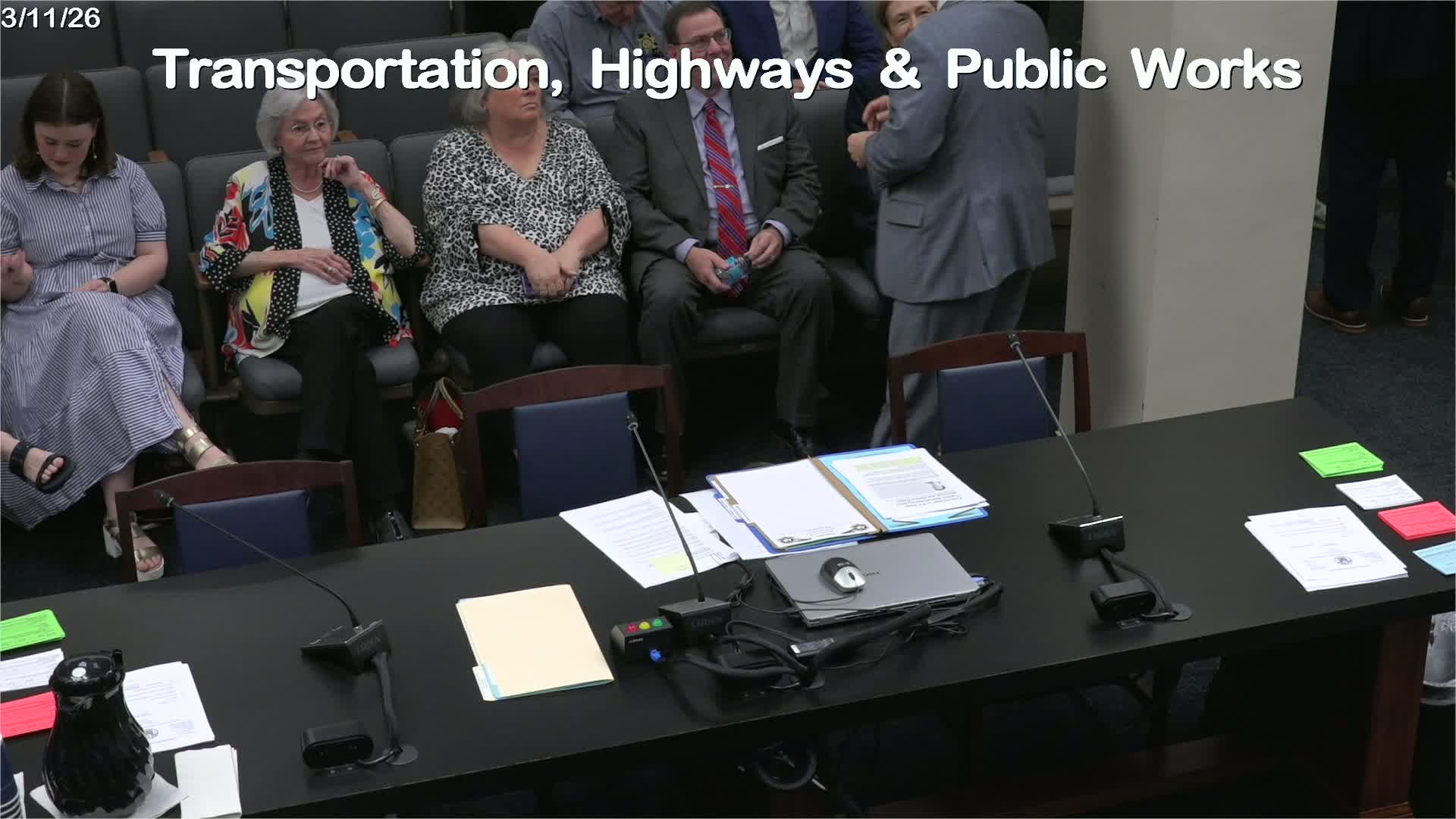
The Louisiana Senate Committee on Transportation, Highways and Public Works met March 11 and moved a package of routine memorial highway namings, a Fallen Heroes specialty license plate and a technical clarification to state seat-belt law.
Senator Seba introduced Senate Bill 160 to designate a portion of Louisiana Highway 171 as the Speaker Joe R. Salter Memorial Highway; the committee adopted an amendment to insert the word “Speaker” into the name and, with no objection, reported the bill favorably. Haley Salter, Joe Salter’s granddaughter, testified that the naming was "truly an honor," and Nancy Landry of the Secretary of State’s office urged passage, saying Salter was "quick with a kind word and slow to criticize." The committee recorded supporting witness cards and passed the bill by voice vote.
Senator Womack presented three similar naming bills: Senate Bill 182 would designate Highway 425 in Franklin Parish as the Mayor Billy Cobb Memorial Highway; Senate Bill 159 would name part of Highway 17 in Franklin Parish the Deputy Roy Gonzales Memorial Highway (reported as amended); and Senate Bill 103 would designate an entrance to Wisner as the Miss Gladys Edwards Highway. Senator Abraham offered Senate Bill 101 to name a portion of Highway 384 the Daniel Edward Didlio Memorial Highway; the committee reported that bill as amended. All were reported favorably by voice vote.
Senator Wheat brought forward Senate Bill 69, a redistricting-driven realignment of port commission appointments to reflect new senate-district boundaries; the committee reported SB69 favorably and deferred SB40 for one week.
Senator Fessy introduced Senate Bill 50 to rename a bridge the Elwood T. Brady Bridge; the committee reported it favorably. Senator Edmonds presented Senate Bill 96 to create a Fallen Heroes special prestige license plate; proceeds would fund protective equipment, including bulletproof vests, through the Capitol Area Law Enforcement Foundation. The committee reported SB96 favorably by voice vote.
A more substantive presentation came on Senate Bill 55, carried by the Louisiana State Police. Captain Lance Kennedy of the Louisiana State Police told the committee the bill does not add a new duty to wear a seat belt but clarifies existing law to require that a safety belt be worn "across both the lap and shoulder as designed," and not behind the body or under the arm, to reduce injury and improve enforceability. The language change was adopted and SB55 was reported favorably.
The committee approved minutes from meetings on June 4, 2025, and Sept. 19, 2025, and adjourned. Most items passed after brief presentations and voice assent; no roll-call tallies were recorded in the transcript.
Votes at a glance (committee action, reported by voice unless noted): - SB160 — Speaker Joe R. Salter Memorial Highway (amendment adopted; reported favorable). (Mover recorded in transcript: Senator Price.) - SB182 — Mayor Billy Cobb Memorial Highway (reported favorable). - SB159 — Deputy Roy Gonzales Memorial Highway (amendment adopted; reported as amended). - SB103 — Miss Gladys Edwards Highway (reported favorable). - SB101 — Daniel Edward Didlio Memorial Highway (reported as amended). - SB69 — Port commission appointment realignment following redistricting (reported favorable). - SB40 — Deferred one week. - SB50 — Elwood T. Brady Bridge (reported favorable). - SB96 — Fallen Heroes special prestige license plate (reported favorable). - SB55 — Clarification of seat-belt wearing (LSP presentation; reported favorable).
The committee made no recorded roll-call votes in the transcript; all actions in the record were reported by voice with no objections noted. The committee’s next procedural steps (floor referrals or additional committee hearings) were not specified in the transcript.