House approves workers' compensation bill aiming to restore coverage for some independent-contractor arrangements
Loading...
Summary
After prolonged floor debate about misclassification and coverage gaps, the House passed HB 185 70–28. Sponsors said the measure restores access to indemnity and medical benefits for manual‑labor workers who courts had recently excluded; opponents warned of unintended consequences and urged caution.
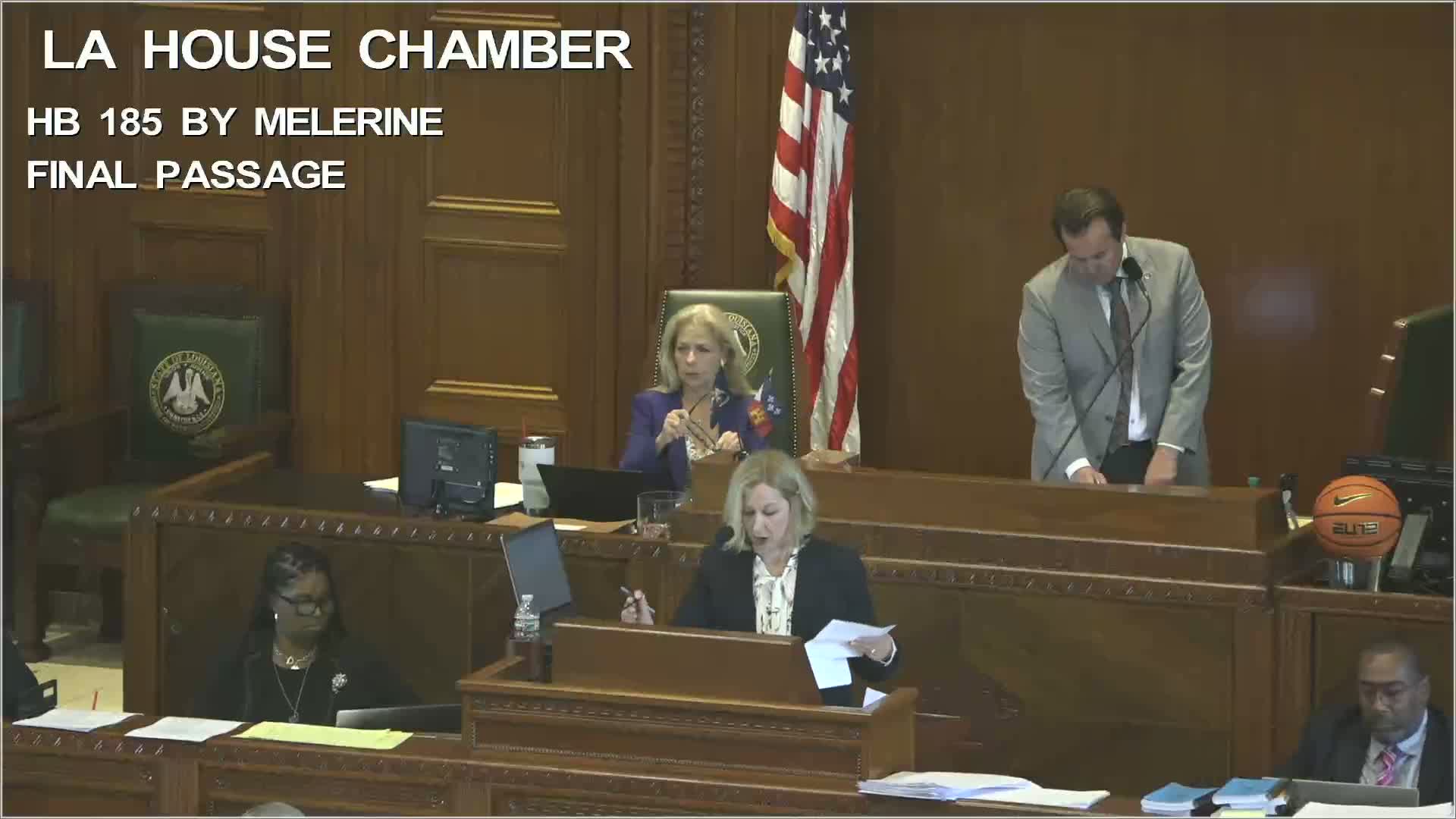
Representative Mellorin presented HB 185 as part of the attorney general's package and described it as a clarification returning Louisiana law to longstanding practice for manual-labor coverage. Sponsors said a 2025 Supreme Court decision narrowed coverage in ways that left some workers without access to workers' compensation, and the bill restores eligibility for employees of independent contractors and certain subcontractors performing manual labor.
Floor debate was intense. Opponents, including several members with legal and labor backgrounds, described scenarios in which employers might use independent-contractor designations to shift workers out of the compensation system. Representative Robbie Carter and others recounted cases in which workers who believed they were hired and treated as employees were later told they were independent contractors and found themselves without comp benefits after serious injuries.
Supporters said the bill is narrowly tailored to manual labor and includes clarifying language adopted in committee to limit unintended scope. Representative Mellorin said the change is intended to ensure injured workers receive indemnity and medical benefits rather than being left to protracted tort claims.
The House approved HB 185 on final passage by a 70–28 vote. Members flagged enforcement and misclassification penalties as continued concerns and asked sponsors to work with stakeholders to implement the change without creating new loopholes.
What this means: If enacted, the bill will change how certain workers and subcontracted labor are classified for workers' compensation purposes and may require clarifications in contracts and employer practices. The floor debate indicated further administrative and legal guidance will be necessary for consistent application.