Get Full Government Meeting Transcripts, Videos, & Alerts Forever!
Get email alerts on the Budget Reductions topic
No spam. Unsubscribe anytime.
West Contra Costa Unified board advances multi‑year plan to identify budget reductions tied to $105M in labor costs
Summary
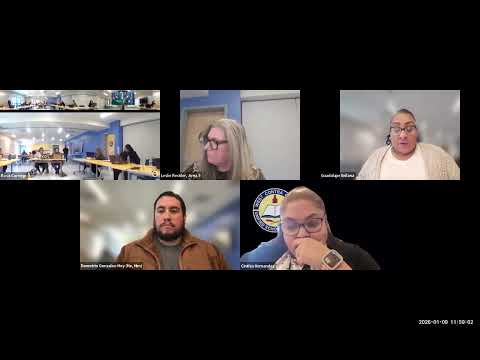
At a Jan. 9 special meeting, staff presented Resolution 2526‑48 asking the West Contra Costa Unified School Board to identify multi‑year budget reductions and revenue enhancements to cover roughly $105 million in projected labor costs; trustees approved the resolution with amendments requiring equity impact analysis, community feedback documentation and staffing protections.
At a Jan. 9 special meeting, staff presented Resolution 2526‑48 asking the West Contra Costa Unified School Board to identify budget reductions and revenue enhancements for fiscal years 2025–26 through 2027–28 to maintain fiscal solvency.
Staff told the board the district has reached tentative agreements with two large labor unions that add "a projected cost of approximately $105,000,000 over the next 3 years," and said the resolution would lay out required savings and revenue actions to cover those costs and preserve a minimum 3% reserve. "In order to meet those financial obligations, we will need to, again, engage in both, revenue enhancements as well as significant budget reductions," a staff member said.
The resolution as presented sets approximate multi‑year reduction targets: about $39,000,000 for 2025–26, $60,000,000 for 2026–27 and $27,000,000 for 2027–28, and asks the board to approve a formal plan no later than February 2026. Staff said the resolution would be forwarded to the Contra Costa County Office of Education to demonstrate the board's commitment to meeting its fiscal obligations under state law (the transcript cites "education code 42,127").
Trustees debated and amended the resolution to add procedural guardrails aimed at transparency and equity. One trustee proposed requiring an "estimated impact analysis prior to approval," an itemized list of proposed reductions (including staffing), documentation of community feedback and quarterly updates. Another amendment clarified staffing language so reductions would "include reducing to meet and not increase staffing allocations," intended to limit increases in staffing allocations while meeting required reductions.
Trustees and staff spent substantial time defining terms for the equity analysis. Board members asked staff to explicitly include Black/African American students as a group to be examined in equity impacts and to clarify what the resolution meant by "schools with high concentration." Staff identified the district's unduplicated pupil percentage (UPP) as the primary measure and described a two‑tier approach: a Tier 1 at about 80% UPP and a Tier 2 at roughly 50–55%, with staff noting about 23 schools met the 80% threshold last year.
Board members also discussed the cadence of reporting and oversight. Options included quarterly updates, aligning updates with the LCAP cycle and unaudited actuals, or relying on the district's interim reporting (first and second interim, and if required a third interim and estimated actuals). Trustees requested staff provide a summary report documenting community feedback from upcoming engagement meetings before the board approves specific reductions; staff agreed to provide summaries in advance of the board meeting when possible.
On procedure, trustees asked parliamentary questions about handling multiple motions and how to process friendly amendments; the chair and trustees confirmed the usual sequence for considering multiple motions and that proposed changes could be accepted by the original mover and seconder.
Following discussion and multiple motions and seconds on the floor, trustees indicated that the amendments were approved and a motion was made to approve Resolution 2526‑48 as amended. The transcript records trustees verbally saying "yes" in support during the meeting but does not provide a full roll‑call tally in the provided record.
The board meeting concluded shortly afterward; the transcript’s closing remarks put the meeting end around 12:40 p.m.
What happens next: staff will prepare and deliver the written summary reports of community engagement and an itemized impact analysis ahead of the board's formal plan approval; according to staff, the formal plan is to be presented by February 2026 for board action.