Get Full Government Meeting Transcripts, Videos, & Alerts Forever!
Get email alerts on the Public Comment Policy topic
No spam. Unsubscribe anytime.
Woodstock council tightens civility code language, adds three public‑comment slots
Summary
The council amended its civility code to clarify the public‑comment process, specifying three separate five‑minute comment opportunities per meeting (unique commenters) and approving language refinements to avoid loopholes.
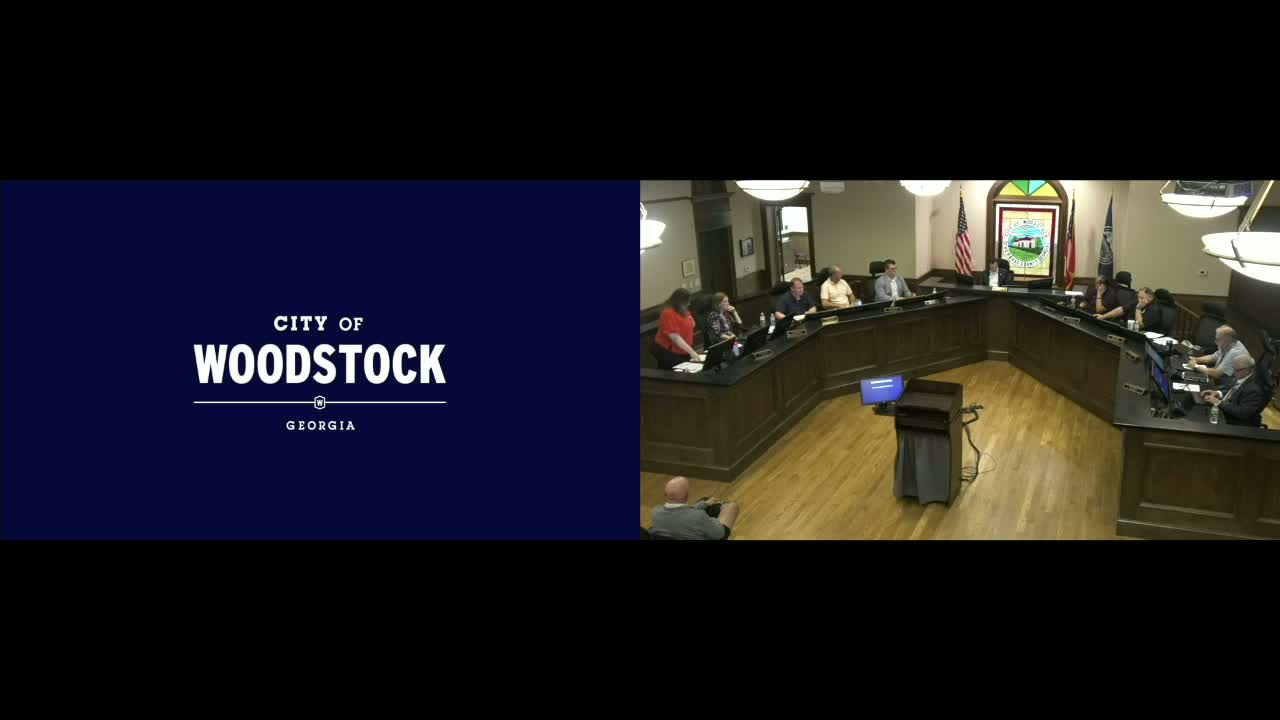
The Woodstock mayor and council voted March 23 to revise the council policy manual’s civility code to provide clearer guidance on public comments and to expand the ability for members of the public to speak on agenda items not set for a public hearing.
City Clerk Robin Adams walked council through a red‑lined policy packet that, among other changes, would allow up to three public‑comment "opportunities" per meeting for matters not subject to a public hearing, with each opportunity limited to five minutes and a maximum combined public‑comment time of 15 minutes. Council members debated the meaning of “opportunities” — whether it meant three people, three slots that could be shared by groups, or some other formulation.
After back‑and‑forth clarifications, council members agreed on language requiring three separate commenter slots up to five minutes each, with commenters to be unique (one slot per speaker or group) to avoid repeated sign‑ups for multiple slots. Councilman Aik moved to adopt the civility code as presented with that clarification; the motion carried unanimously (5–0).
Council directed staff to incorporate the clarified language and bring any final editorial tweaks back to a future meeting as needed. The change is intended to expand avenues for public input while preventing a small number of speakers from occupying all public‑comment time.