Get Full Government Meeting Transcripts, Videos, & Alerts Forever!
Get email alerts on the Zoning Buffers DPC topic
No spam. Unsubscribe anytime.
Woodstock council empowers staff committee to handle small buffer disturbances, cites enforcement backlog
Summary
The council adopted a zoning text amendment allowing the Development Process Committee to approve limited disturbances in interior residential buffers (for example, minor fences), aiming to reduce enforcement cases and formal hearings for older platted neighborhoods.
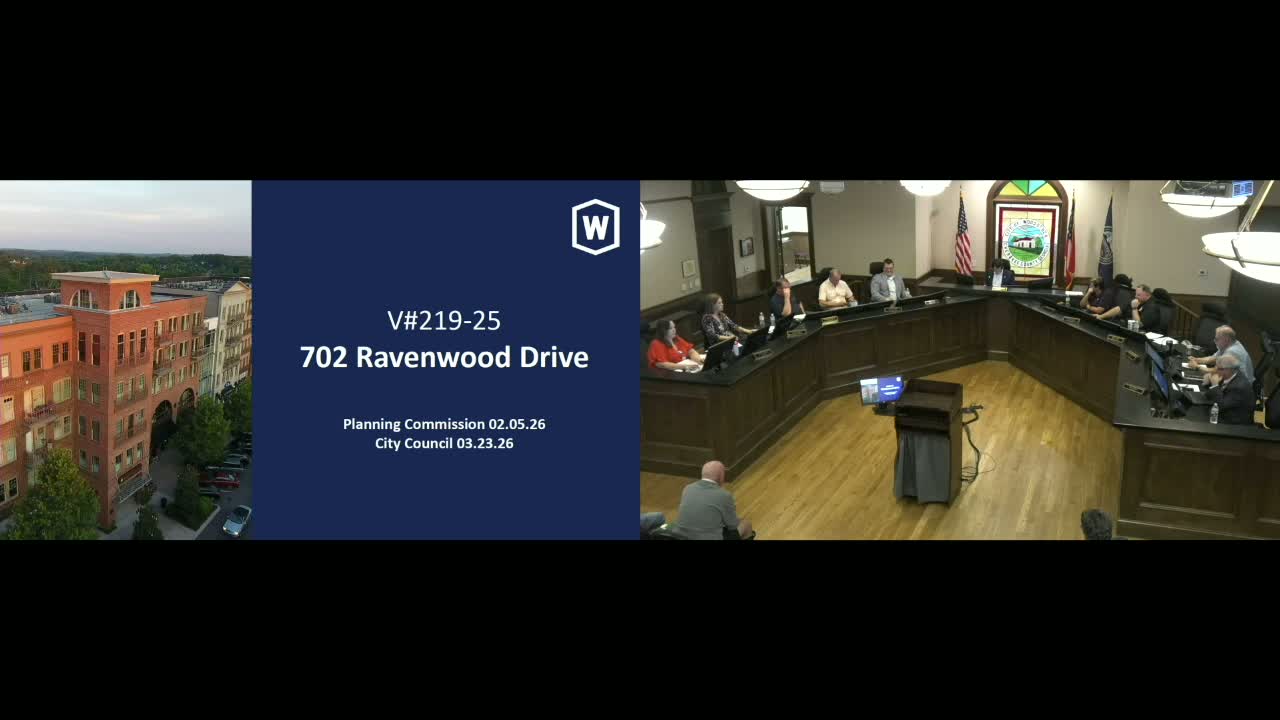
The City of Woodstock on March 23 adopted a zone text amendment that delegates limited authority to the Development Process Committee (DPC) to approve minor encroachments in interior residential buffers, such as low fences and similar small disturbances.
Planner Dunn told the council that a recent spate of zoning violations — largely homeowners unknowingly disturbing interior buffers created by earlier plats — created administrative burden and inconsistent remedies. The proposed LDO change would let staff approve minor, low‑impact requests administratively rather than forcing homeowners into a formal public‑hearing process.
Dunn said the change follows the city’s 2018 buffer ordinance update and that the DPC’s expanded powers are limited to modest encroachments; larger disturbances such as pools, accessory dwelling units or significant tree removal would remain subject to permitting and public review. No members of the public signed up to comment on the amendment.
Following discussion, council approved the amendment by voice vote (5–0). Mayor and councilmembers said they hoped the change would reduce compliance headaches for homeowners while preserving public notice and permitting for larger projects.
Next steps: the amendment is in effect and staff will apply the new administrative pathways to qualifying cases going forward.