Lifetime Citizen Portal Access — AI Briefings, Alerts & Unlimited Follows
Lawmakers Hear Pushback After House Changes to Maryland EV Infrastructure Council Bill
Loading...
Summary
Witnesses and stakeholders told the Education, Energy, and the Environment Committee that late house amendments to HB 451 would remove the council's sunset, narrow its scope by excluding hydrogen fuel-cell vehicles and make private-industry seats effectively permanent; sponsors say the extension and added reporting improve oversight.
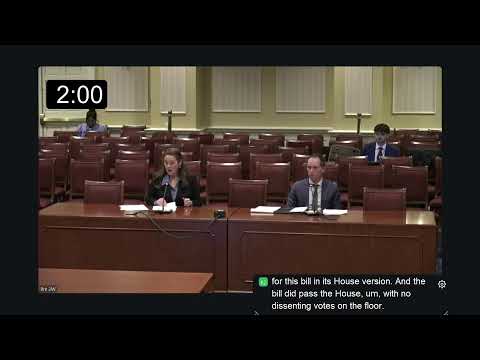
Delegate Fraser Dahlgren’s office presented HB 451 to the Education, Energy, and the Environment Committee as a measure to extend the Maryland Zero-Emission Electric Vehicle Infrastructure Council’s reporting schedule and sunset date. Anna, the sponsor’s chief of staff, told the committee the bill would extend ZEVIC’s statutory sunset to 06/30/2031 and create new interim and annual reporting deadlines intended to improve transparency and oversight.
Several proponents voiced support for extending the council so policymakers can monitor long-term charging-infrastructure deployment. Richard Reinhardt, representing turf and field-management stakeholders on related bills, said the council brings together state agencies, utilities, local government and private industry to coordinate infrastructure in an “equitable and cost-effective manner.”
But two witnesses who registered unfavorable raised substantial objections to language added in the house. Manuel Wagner, who said he serves on the Maryland Clean Cities advisory council and has experience with battery and fuel-cell vehicles, told the committee that the house amendments made three problematic changes: they (1) removed the statutory sunset so the council would effectively become permanent, (2) left private-industry seats in statute without defined member terms or periodic reassessment, and (3) narrowed the council’s scope by excluding hydrogen fuel-cell electric vehicles. “If that’s the case, it should be made explicit and transparently and not as an effect of a sunset extension bill,” Wagner said, urging restoration of the original bill language.
Roxanna Bek Mohammadi, founder and executive director of the United States Hydrogen Alliance, said excluding fuel-cell vehicles would be a missed opportunity, particularly for medium- and heavy-duty uses such as buses and freight. “Fuel cell electric vehicles are zero-emission vehicles with zero tailpipe emissions other than water vapor,” she said, and urged restoring fuel-cell language to the council’s charter.
Sponsors and supporters responded that the council remains valuable for tracking the evolving EV market and producing recommendations for infrastructure deployment. Committee members asked for clarification about the effect of the house amendments and whether restoring hydrogen to the council would be feasible; the record shows supporters are open to amendments but the witnesses emphasized the policymaking consequences of the current text.
The committee concluded the hearing without a recorded vote on HB 451. The primary outstanding issues are whether the legislature will restore the original sunset provision and whether hydrogen fuel-cell vehicles will again be explicitly included in the council’s scope.