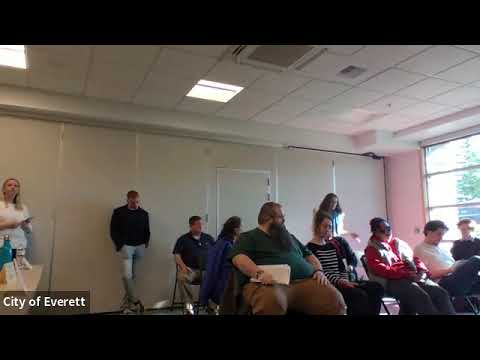
Residents urge protecting initiative process and consider 'rights of nature' after judge struck down watershed measure
Loading...
Summary
At a Charter Review Committee public hearing in Everett, residents urged keeping the city’s 5% initiative threshold, argued for equal repeal rules, and asked the committee to consider placing watershed protections or 'rights of nature' language in the charter after a recent court ruling struck down a city initiative.
At a public hearing of the Everett Charter Review Committee, several residents urged the panel to preserve and strengthen the city’s initiative process rather than shift key rules into ordinance language that could be changed later.
"It is a constitutional right to proceed first of an initiative," said Abby Ludwig, one of the speakers who described herself as a co‑founder of Standing for Washington and who urged the committee to resist moving initiative rules out of the charter. Ludwig also pressed the committee to consider embedding watershed protections or "rights of nature" language in the charter after a judge ruled against a local watershed initiative.
Jennifer Gregerson, the city liaison for the review process, reminded the committee and members of the public that the charter sets the city's structural rules while policy and operational matters are handled elsewhere. "The charter is basically the city's rule book, like our constitution," she said, describing the committee’s role in recommending changes to the City Council by June 1.
John Peoples, another commenter, urged the committee to retain Everett’s current 5% signature threshold for initiatives and proposed that if an initiative passes at 5%, a repeal effort should be allowed under the same threshold. "We don't want a situation in which an initiative is passed by 55% and then it's harder for others to get on the ballot," he said.
Speakers who supported keeping a low signature threshold argued it preserves citizen access to the ballot and acts as a check on the council. Others described the recent watershed initiative litigation: opponents challenged the initiative’s scope, and a county judge found aspects of it outside the initiative process, prompting questions about whether charter language can better protect future citizen measures.
The committee discussed several options raised by speakers and staff: inserting the policy intent or specific protections into the charter, having the city adopt equivalent municipal‑code language, or placing nonbinding intent language in a charter preamble (as San Juan County has done) to signal community priorities. Staff cautioned that legal outcomes can still be decided by courts and that certain matters are subject to state preemption.
The committee took no formal votes during the hearing. Members said they would review public comments, seek additional legal analysis where appropriate, and consider whether to recommend charter language that preserves initiative access or clarifies what can and cannot be done through citizen measures.
The committee said it will compile written comments received via email or a forthcoming web form and hold a second public hearing in another neighborhood before finalizing recommendations to the City Council.