Get Full Government Meeting Transcripts, Videos, & Alerts Forever!
Get email alerts on the Closed Session Litigation topic
No spam. Unsubscribe anytime.
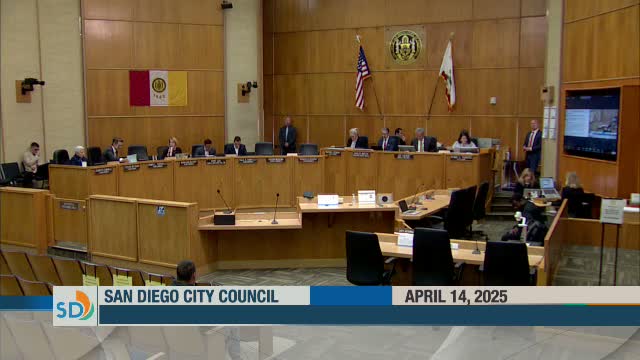
San Diego City Council recesses to closed session to consider four pending lawsuits
Summary
The San Diego City Council recessed into closed session to confer with legal counsel about four pending litigation matters listed under California Government Code section 54956.9(d)(1). The council said it would reconvene at 2 p.m.
The San Diego City Council recessed into closed session after reading four pending litigation matters into the record, the council clerk said.
The clerk identified the closed-session items as: “CS 1 McKinley, Kekona versus City of San Diego; CS 2 Michael Fox versus City of San Diego; CS 3 Rayquan Emmanuel Cook versus City of San Diego; and CS 4 USXRell Hendricks v j-hyphen-m Manufacturing Company, Inc., et al.,” and said the conference with legal counsel was held pursuant to California Government Code section 54956.9(d)(1).
The items are scheduled for discussion in closed session, which the council entered immediately after public comment. The council announced it would reconvene at 2 p.m. or shortly thereafter.
Because the matters were placed on the closed-session agenda under the statutory exception for existing litigation, the council did not discuss details of the claims in open session. The clerk’s reading of case names and the statutory citation constituted the public notice required before private consultation with legal counsel.
The council’s public meeting beforehand included routine opening proceedings — roll call, an invocation, a land acknowledgment and the Pledge of Allegiance — before the reading of closed-session items.
The council did not take or announce any formal votes in open session on these items before recessing. The closed session discussion is intended for the council and its legal counsel; any formal action or reportable decision would be disclosed in accordance with law after the closed-session process is complete.