Get Full Government Meeting Transcripts, Videos, & Alerts Forever!
Get email alerts on the Budget And Finance topic
No spam. Unsubscribe anytime.
Fayette County BOE reviews tentative 2026–27 budget, bonding capacity and $12.5M central‑office reductions
Summary
Board and staff reviewed the tentative 2026–27 budget, debt service and a recommended bond refunding that could yield about $2 million in savings; administrators outlined $12.5 million in central‑office reductions and asked the board for direction on potential food‑service and safety‑nickel adjustments.
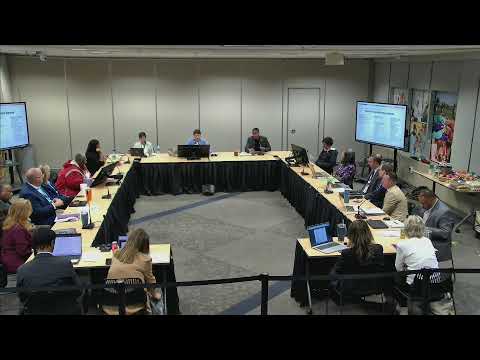
The Fayette County Board of Education spent its March 11 special meeting laying out the fiscal choices heading into the 2026–27 tentative budget and asking the board for policy direction rather than taking final votes.
Superintendent Liggins framed the workshop as an early, tentative review to shape the May tentative budget and a final working budget in September, saying the goal was "to make sure that when we do continue to bring items to you that we're going in the right direction" and to preserve a focus on student outcomes.
The board's financial adviser, Michael George of Compass, presented a detailed debt and building‑fund analysis. He said the district currently carries roughly $55 million in annual debt‑service obligations and that recent increases in property assessments and expected equalization raised the district's immediate bonding capacity to about $322 million. George also identified refunding candidates—2014 A/B, 2018, and 2019 bond issues—and said refunding could generate aggregate savings of "just above $2,000,000" under current market assumptions. He recommended the board approve a refunding resolution at the April meeting, contingent on meeting KDE refunding thresholds and final market timing.
Board members pressed on market risk and the effect of a recent Moody's downgrade. George said the Moody's move to a lower category equates to roughly a 10‑basis‑point increase in borrowing costs on new debt, "which equates to about $125,000 in interest cost on every $10,000,000 borrowed over 20 years." He noted that existing fixed‑rate debt would not change.
Administrators walked the board through the largest budget pressures: personnel costs remain the single largest expenditure, legal costs have been volatile year to year, and special‑education staffing has increased substantially. As part of balancing plans, staff said they have identified about $12.5 million in central‑office reductions through hiring freezes, position evaluations, reorganizations and other efficiencies; those cuts are intended not to reduce campus funding but to lower overhead.
The administration also raised several policy choices for the board to consider: whether to seek refinements to how the voter‑approved safety nickel is used (staff said the district currently spends roughly $6.3 million beyond that nickel and asked whether some costs should be shifted), whether to consider modest increases to paid‑meal prices to stop subsidizing food service indefinitely, and whether to include smaller repair projects in a single bond issuance for efficiency.
The workshop closed with staff promising follow‑up data on specific questions (including a more detailed list of central‑office reductions, potential lunch‑price options, and condition reports for surplus properties) and no formal votes on the budget itself. The board adjourned after a motion to adjourn carried 5–0.