Lifetime Citizen Portal Access — AI Briefings, Alerts & Unlimited Follows
Simsbury archivist showcases Ensign Bickford papers, asks for volunteer and grant support
Loading...
Summary
At a Simsbury Free Library continuing-education event, trustee Jim Flynn traced the town-making history of Ensign Bickford and archivist Sarah Neeboy described the library’s collection, access policies and a need for volunteer help and grants to digitize and process donations.
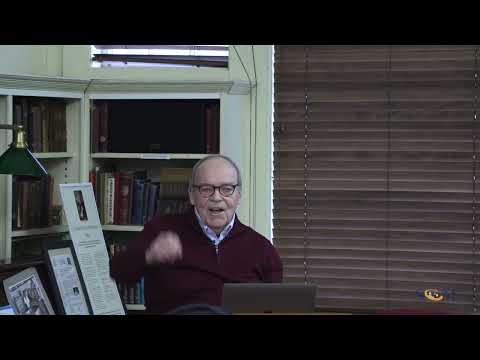
Jim Flynn, a member of the Simsbury Free Library board of trustees, opened a continuing-education talk on the library’s archives by tracing the town’s long ties to Ensign Bickford, the industrial firm that donated material and helped fund the library’s archival space.
Sarah Neeboy, the library’s archivist, told the session she has managed the archives part time for about 10 years and described how the repository preserves local primary sources — diaries, letters, photographs, ledgers and company scrapbooks — that researchers and residents use for genealogical and historical work. “We archive to provide connection to our common heritage,” Neeboy said, summarizing the mission that guides selection and preservation.
Flynn reviewed the company’s origins, saying William Bickford’s safety-fuse invention in England and Roger Bacon’s U.S. adoption in the 1830s helped spawn a fuse-manufacturing operation that evolved into Ensign Bickford. He recounted a fatal 1859 factory explosion that killed eight workers and said the firm later moved to purpose-built facilities in Simsbury with structures designed to vent explosions. Flynn also noted Ensign Bickford’s later work for wartime and aerospace programs and said the company and its foundation have been significant local benefactors.
Neeboy outlined how the library accepts and processes donations: staff interview donors, complete a deed of gift, assign manuscript and accession numbers, make container lists and develop a finding aid that describes series and subseries. She said the initial Ensign Bickford transfer came with a finding guide and roughly 134 boxes of material, including detailed ledgers, scrapbooks, photographs and technical drawings. “We put them in acid-free folders and boxes and create finding aids so researchers can locate material,” Neeboy said.
She described current priorities and limits: the library selectively digitizes fragile or high-use items but has not digitized its entire holdings because of resource constraints; scanned files are stored on the library’s network and Google Drive pending broader online publication. Neeboy said she works roughly five hours a week on archives processing, assisted by students and volunteers, and that some complicated collections — for example, the recent Mary Jane Springman accession of more than 20 boxes — require months or years to fully process and describe.
Audience members asked about collaboration with the Simsbury Historical Society, how company housing and factory-house records are organized, and whether research produced by patrons is retained. Neeboy said the library and historical society have complementary collections — the library focuses on documentary and research materials while the historical society holds more artifacts — and encouraged researchers to donate copies of their findings so future users can benefit.
Flynn closed by praising library staff and volunteers, inviting attendees to visit the archival room and view finding aids, and asking for donations or help with grant writing to expand digitization and processing capacity. The program ended with a short appeal from Simsbury Community Media for community support to sustain local broadcasts.
The library’s stacks and finding aids remain the primary public access point; Neeboy encouraged residents with boxes, diaries, letters or unique business records to contact the library to discuss donations and preservation needs.