Homestead charter team presents revised plan; district flags fiscal risk tied to 75‑student cliff
Loading...
Summary
Members of the 2 Rivers Homestead APC (now calling the school Homestead Charter) presented a revised K–8 charter emphasizing STEAD place‑based learning, a year‑round calendar and local partnerships. District finance staff estimated a roughly $1.0M allocation in year one and an ongoing net fiscal impact near $580K annually under current assumptions; administration recommended most requested waivers but not a waiver of the district's Oct. 1 deadline.
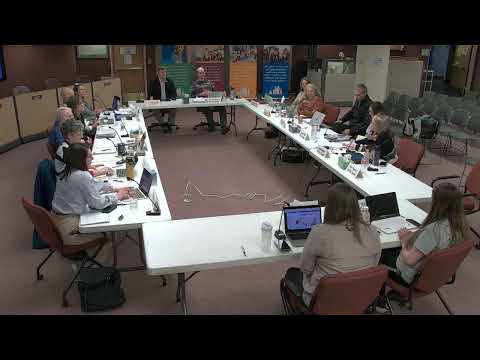
Members of the 2 Rivers Homestead APC presented a revised charter proposal to the Fairbanks North Star Borough Board of Education on March 30, laying out curriculum, governance, facilities and budget plans for a proposed K–8 Homestead Charter to serve the rural 2 Rivers area.
The APC leaders said they intentionally withdrew an earlier application and spent months revising the proposal with district staff. "We made the very intentional decision to withdraw our application," APC president Jasmine Wicks told the board, saying the group used the time to incorporate district feedback and finish missing details.
Why it matters: district financial staff told the board the charter could create a meaningful recurring cost to the district unless enrollment and state funding assumptions change. "Looking at a total projected fiscal impact on the expenditure side of about $1,100,000," finance presenter Mister DeGraw said during the administration presentation; he later described an ongoing net impact in the range of roughly $580,000 per year under the scenarios discussed.
What the APC proposed: APC vice president Summer McMillan and APC secretary Caitlin Freeman outlined a STEAD (science, technology, environment, agriculture, design)‑centered program with mixed‑grade looping classrooms, a proposed year‑round calendar and an initial operating model built for 100 full‑time students. Freeman said the APC's intent‑to‑enroll survey initially showed "116 interested families," and that removing pre‑K from the plan reduced the working estimate to about 98 prospectively enrolled students.
Curriculum and partnerships: presenters said the charter would adopt the district curriculum with supplemental homesteading materials and partnerships (including UAF resources), and cited specific curricular programs they plan to use, such as Wit & Wisdom for ELA and Singapore Dimensions math for K–8. APC members described community collaborations with Effie Cochran (the district charter high school), BEST homeschool programs and local conservation/agricultural partners.
Facilities and budget from the APC: the APC said they negotiated a lease and estimated facility and services expenses (including snow removal, trash and insurance) at about $180,000 in upfront or annual facility‑related costs; their draft operating budget assumes ~ $1.3 million for a 100‑student school with personnel the largest line item.
Administration's assessment and recommendation: district presenters framed the charter process under Alaska statute (citing House Bill 57) and reviewed contract language and requested waivers. Administration said many requested waivers were reviewed by FEA and were not deemed necessary; the APC said one waiver (policy 502, prep‑time flexibility) had been resubmitted to FEA.
Administration recommended approving the APC's requested waivers except for one: policy 9‑35.1, the district deadline tied to the Oct. 1 application window. "We are recommending approving all of them except for one," administration told the board, and administrators explained they do not recommend waiving the application/timeline policy because of the compressed timeframes and staffing and operational challenges for a midyear opening.
Enrollment risk and contract safeguards: DeGraw and administration stressed a sharp fiscal "cliff" at 75 students, saying a drop from 75 to 74 students would materially reduce the charter allocation (he estimated a $200,000 swing). In response, administration told the board it had added contract language that would allow the board to consider termination if the charter failed to meet the minimum average enrollment (75) during the first 20 days of operation or the October count period.
Board questions and concerns: board members asked detailed questions about logistics with BEST homeschool students, how field‑school Fridays would be staffed and supervised, the viability of the year‑round calendar for families, and the feasibility of a midyear (Jan. 1) opening. Several board members said they were reluctant to waive the district's Oct. 1 policy and emphasized the district's 90‑day timeline implications for state review and staffing.
Next procedural steps: the presentation was delivered in a work session; no formal board action or vote occurred during the meeting. Administrators said they support the application moving forward to board consideration but do not recommend waiving policy 9‑35.1. The APC said it is willing to adjust start dates and calendars to accommodate district processes while seeking options that preserve current family interest.
The board adjourned after extended Q&A; the application and contract language will be the subject of further consideration in future board business.