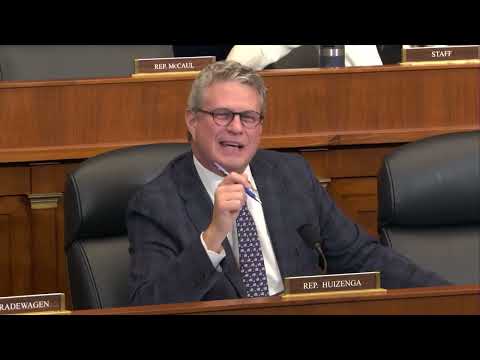
House lawmakers press for Chip Security Act after committee members cite about $2.5 billion in alleged chip smuggling
Loading...
Summary
Members of the House Committee on Foreign Affairs urged passage of the Chip Security Act, citing recent public disclosures and DOJ charges they say show roughly $2.5 billion in illicit exports of advanced AI chips to China and arguing the bill would tighten export safeguards without mandating specific technical solutions.
Members of the House Committee on Foreign Affairs debated the Chip Security Act, arguing the bill would strengthen export controls for advanced AI chips following recent investigations and Department of Justice actions.
A lawmaker who spoke early in the hearing said recent public disclosures suggest about $2.5 billion in illicit chip exports have been revealed and cited DOJ charges against three people allegedly involved in an export scheme. The lawmaker quoted Cybercom commander Joshua Rudd, saying, "China is aggressively seeking to acquire advanced AI chips to accelerate its development of AI enhanced weapons," and cited testimony from Commerce Department officials that chip diversion remains a top enforcement priority.
The bill, as described by the speaker, would direct the Department of Commerce to establish chip security mechanisms for exported advanced chips, scale up industry security practices and encourage innovative technologies. The speaker said the measure was informed by the administration's AI action plan and by industry feedback and emphasized the proposal is intended to be flexible rather than prescriptive: "it does not mandate any one solution or any specific way of doing this," the lawmaker said.
Responding to technical concerns circulating on social media, the same lawmaker stated the bill "explicitly rejects putting so called kill switches into our chips" and said the statute's rule of construction would prevent required mechanisms from affecting chip functionality.
A second lawmaker praised Representative Huizenga for leading the legislation and reiterated the scale of the problem, saying last week the DOJ announced charges connected to a scheme to smuggle about $2.5 billion in AI chips to China. That lawmaker also said, as part of remarks, that the DOJ action involved the cofounder and an executive of Supermicro (as described by the speaker).
Both lawmakers urged the committee to support the legislation and to provide the Bureau of Industry and Security (BIS) with sufficient resources; one speaker said the House had tried to add resources for BIS during appropriations that the Senate later removed and urged reversing that decision. Lawmakers framed the bill as a national-security measure intended to reduce the risk that advanced chips could be diverted to military use abroad.
The committee hearing did not record a formal vote on the Chip Security Act in the provided transcript. Speakers' references to companies and specific actors (including the names of firms and of those charged) are reported as stated in committee remarks and have not been independently verified in the transcript.