Get Full Government Meeting Transcripts, Videos, & Alerts Forever!
Get email alerts on the Transportation topic
No spam. Unsubscribe anytime.
SCDOT officials outline funding mix, maintenance priorities and I‑85 corridor study for Greenville area
Summary
Kelly Moore of the South Carolina Department of Transportation told the Greenville County committee how SCDOT funds and ranks projects, outlined the 40/60 federal‑state revenue split and a 28.75¢ per‑gallon gas tax distribution, and previewed an I‑85 corridor study for Exits 29–69.
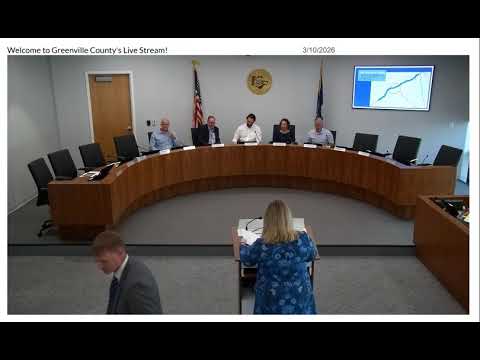
Kelly Moore, deputy chief of staff for the South Carolina Department of Transportation, briefed the Greenville County Communications and Government Affairs Committee on how the department funds projects, balances maintenance versus capacity work and plans a corridor study for I‑85.
Moore said SCDOT uses a mix of federal and state dollars—about 40% federal and 60% state—and programs those funds strategically to meet statutory ranking and planning requirements. "We use a mix of state and federal dollars, and we try to strategically program those dollars," she said.
The presentation outlined revenue sources and the statutory distribution of the state gas tax. Moore described the current per‑gallon rate as 28.75¢ for both gasoline and diesel and explained how those cents are allocated: 6¢ transferred to other entities (including county transportation committees and the state infrastructure bank), 10¢ dedicated to a gas tax trust for a 10‑year strategic plan, 10¢ for field maintenance and 2¢ reserved for federal match. She also described other state revenue streams, including a 5% car‑sales tax up to a $500 cap and DMV fees.
Moore said SCDOT receives roughly $1 billion a year in federal aid, disbursed by formula and program funds and authorized on five‑year cycles; those federal funds arrive on a reimbursement basis and require state matching as well as federal contracting and environmental requirements.
On spending, Moore gave SCDOT's recurring budget as about $2.76 billion (not including one‑time appropriations). "About half of our budget is put into maintaining the existing system," she said, with roughly a third going to system capacity and operational improvements and the remainder to operations. She also noted the department paid off its outstanding debt in 2023 so debt service is not part of the ongoing budget.
Moore warned that inflation and increased fuel efficiency have reduced how far a gas‑tax dollar goes for paving and maintenance. She also reviewed state population growth and projections—SCDOT cited continuing rapid growth that puts pressure on capacity planning—and said the department is updating long‑range plans and performance measures.
Brandon Wilson, SCDOT District 3 district administrator, described local conditions: District 3 covers Greenville, Spartanburg, Oconee and Pickens counties and maintains nearly 4,000 miles of roadway and about 1,400 bridges in the statewide system. Moore and Wilson previewed a planned I‑85 corridor study that will examine Exits 29 through 69 and connected roads to inform future projects and environmental work.
Committee members asked whether local "penny" sales‑tax programs yield better results; Moore said such programs can be effective local tools and do not displace SCDOT investments. Members also clarified that South Carolina charges the same per‑gallon rate for gasoline and diesel and asked how SCDOT adjusts its 10‑year plan as population growth accelerates; Moore said the plan follows state and federal workflows but SCDOT monitors trends and makes adjustments where funding allows.
The committee did not take formal action on the presentation; staff and SCDOT representatives left the meeting after questions.