DeSantis signs Florida bill creating state process to designate terrorist groups and restrict institutional ties
Loading...
Summary
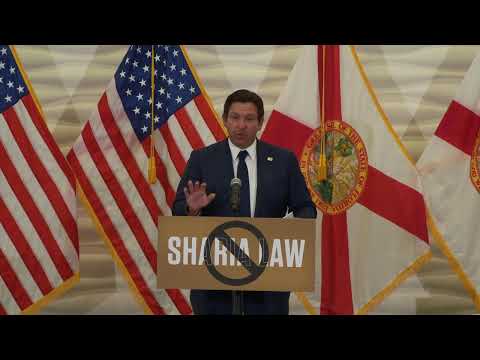
Gov. Ron DeSantis signed HB 1471 in Tampa, empowering Florida to designate domestic and foreign organizations as terrorist groups, limit state funding and university ties, and expand criminal penalties for material support; lieutenant governor, legislators and a USF student supported the measure at the signing event.
Gov. Ron DeSantis signed legislation known in the transcript as HB 1471 on April 6 in Tampa, creating a state process to identify and act against organizations the state deems terrorist groups and restricting public funding or institutional ties to those entities. DeSantis said the law will help protect public safety and taxpayer dollars and predicted legal challenges that the state will defend on appeal.
The governor framed the bill as a response to recent violent incidents and longstanding immigration and national-security concerns. He specifically referenced an attacker at Old Dominion University and argued that a naturalized citizen convicted of providing material support to terrorism should be denaturalized: “You should be denaturalized and sent back to where you came from,” he said. DeSantis said the legislation provides a statutory process similar to federal practice for identifying foreign and domestic groups and shielding state resources from organizations the state finds to be appendages of those groups.
Lieutenant Governor Jay Collins described the bill as drawing “a bold line in the sand,” said it bars public universities and private voucher schools from promoting organizations the state designates, and said material support to designated groups is a felony under the new law. “In Florida, we will designate, defund, and dissolve people who don't stand for our values,” Collins said, adding that the measure creates a state designation process with “real teeth.”
Riley Bridal, a senior at the University of South Florida, told the signing audience that an April 2024 campus protest escalated into violence on his campus, that law enforcement arrested 10 people and one individual was found carrying a firearm, and that clearer boundaries and accountability for groups that promote violence are needed to protect students. Bridal said the law will provide reassurance to campus communities.
During a question-and-answer period, reporters asked about First Amendment limits and the benchmarks FDLE (Florida Department of Law Enforcement) will use to designate groups. DeSantis said the constitutional bar is real but that the state is concerned with more subtle forms of influence or local ‘‘creep’’ and that FDLE will conduct analyses similar to federal law-enforcement practice. He said the Sunni Muslim Brotherhood is an organization his administration views as subject to designation and that FDLE’s review would likely ratify that assessment.
The governor acknowledged critics who warn the law lacks checks and balances and said the state will articulate benchmarks and rely on law-enforcement analysis; he also forecasted litigation, saying opponents will sue and the state expects to prevail on appeal. DeSantis closed by thanking legislators and citizens involved in drafting the bill and said other bills will be signed in the month ahead.
The event combined formal remarks from the governor and lieutenant governor, legislative expressions of support, and a student testimony describing campus unrest; DeSantis then proceeded to sign the bill as announced earlier in the program.