Lifetime Citizen Portal Access — AI Briefings, Alerts & Unlimited Follows
City attorney details proposed surveillance ordinance reopening rules, data limits
Loading...
Summary
City attorney Matt Roeschle walked council members through a discussion draft of a surveillance-technology ordinance (v8.1), proposing 12-month and material-change reopeners, limits on nondisclosure agreements, prohibition on selling city-held surveillance data, and definitions covering private remote-access cameras.
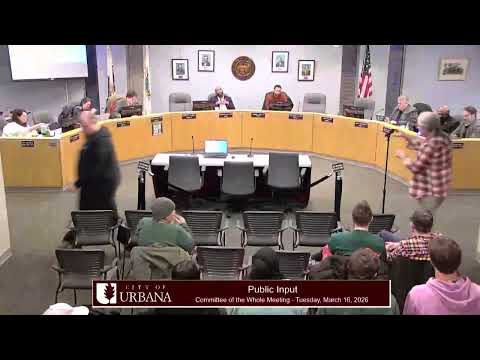
City Attorney Matt Roeschle presented a discussion draft of revisions to Urbana’s proposed surveillance-technology ordinance at the Committee of the Whole on March 16, laying out procedures for when the council could reopen prior approvals and clarifying limits on data sharing and nondisclosure agreements.
Roeschle said the draft sets two pathways for reconsidering an approved or denied technology: after 12 months (by request of one council member with a second or by the mayor) requiring a majority vote to reopen, or earlier if there is a demonstrable material change. Examples of material changes include evidence of discriminatory impact, a change in law, or a previously unknown functionality of the technology; reopeners for material changes would require a two-thirds vote of the corporate authorities to reopen the issue, Roeschle said, explaining the higher threshold by pointing to budgetary consequences of reversing prior approvals.
On transparency, Roeschle told the committee the city will not enter nondisclosure agreements that limit disclosure of records subject to FOIA and that trade‑secret or proprietary material remains subject to statutory FOIA exemptions. He also recommended language that would bar the city from entering contracts that facilitate sharing surveillance data with nongovernmental entities in exchange for money or other consideration; any prior agreements inconsistent with that policy would be terminated as contracts allow.
Roeschle proposed expanding the ordinance’s definition of surveillance technology to include video or audio monitoring that can be remotely accessed — for example, privately owned doorbell cameras when an owner enables ongoing back-end access — and said council regulation could cover systemic remote access by police. He emphasized a distinction between continuous remote access (which the ordinance would treat as surveillance technology) and a one-off instance in which a resident voluntarily hands footage to police for an investigation, noting the latter likely falls within police operational control and could raise legal issues if council attempts to categorically prohibit it.
The draft also identifies ‘‘sensitive surveillance technology information’’ (exact camera placement, vulnerabilities, operational tactics) that could be withheld from public reporting to protect security and infrastructure; council members asked for follow-up on who makes those determinations and how access would be controlled. Roeschle said he would return with clarifications and that a proposed new section on retention and destruction of improperly collected data would be held for a later meeting.
Council members asked clarifying questions about versioning (7.2 vs. 8 vs. 8.1), whether prior contracts might require amendments, and how oversight bodies such as the Civilian Police Review Board and Human Rights Commission might be given advisory or oversight roles — a change that would require amending those boards’ enabling ordinances. The committee did not adopt the draft at the meeting but signaled interest in further revisions and follow-up.