Get Full Government Meeting Transcripts, Videos, & Alerts Forever!
Get email alerts on the Capital Project topic
No spam. Unsubscribe anytime.
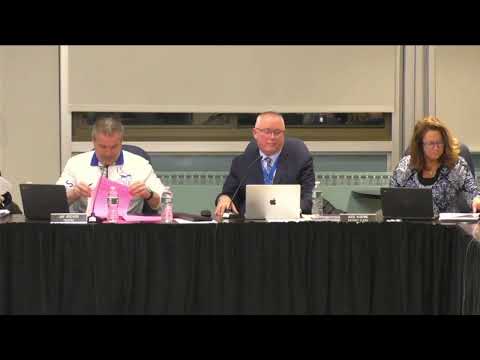
Superintendent urges clearer outreach after capital-project defeat; offers workshop plan
Summary
Superintendent Dr. Brian Graham summarized a survey of 346 residents and 141 handwritten paper responses, said many respondents rejected the district's framing of state aid, and proposed a public workshop and revamped communications to rebuild support for future capital projects.
Superintendent Dr. Brian Graham told the board that the district analyzed 346 community survey responses (141 paper surveys converted into a 1,300-page PDF) to understand why last year's capital-project proposal was defeated.
"Of the 141 paper surveys, that equates to 1,300 pages," Dr. Graham said, describing how staff used tools (NotebookLM and Claude) to process handwritten and digital responses and generate analysis. He said about 82% of respondents who replied digitally or on paper did not approve of how the district communicated the state aid ratio tied to the proposal.
Dr. Graham recommended improved early and repeated communications, more print outreach where needed, and a public workshop that would bring the board together with the district's financial advisers, architect and construction managers to refine a phased, evidence-based capital plan that could be more acceptable to voters.
"We need to do a better job in making sure the community truly comprehends why we need a middle school roof, why we need a high school roof," Dr. Graham said, noting survey comments that separated structural repairs from optional elements such as a turf field.
He proposed redlining future proposals, considering phased or tax-neutral options, and increasing the district's public-relations capacity if the board moves forward with another project. The superintendent also acknowledged taxpayer fatigue and called for clear, transparent messaging to combat misinformation.
Next steps: Dr. Graham asked the board to consider scheduling a workshop focused solely on capital needs, with the administration and external advisers present to answer technical questions and co-design a scaled project for the community.