Get Full Government Meeting Transcripts, Videos, & Alerts Forever!
Get email alerts on the Governance topic
No spam. Unsubscribe anytime.
Coalition flags sales-tax bills as Collegedale weighs bringing communications role in-house
Summary
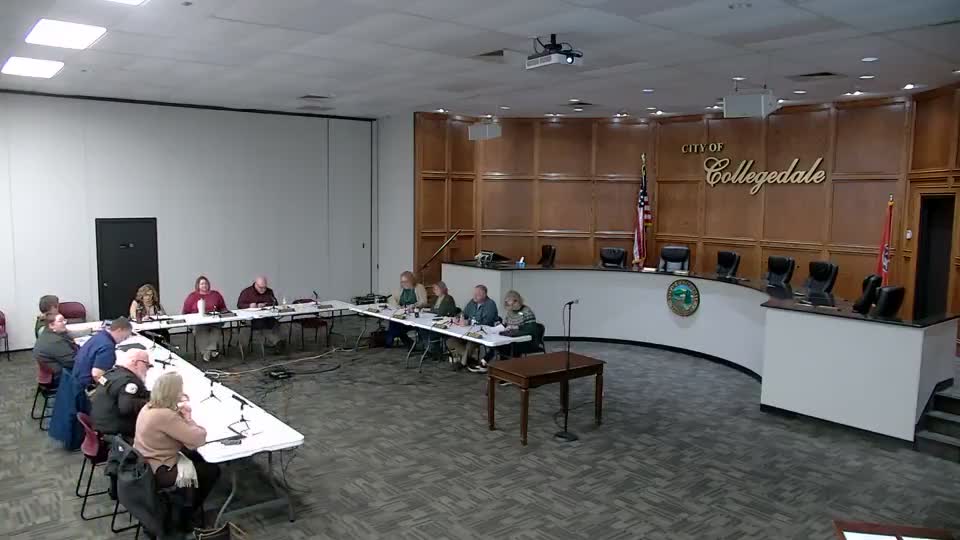
A coalition representative briefed commissioners that about 160 bills are being tracked, including sales-tax measures and SB 2074 (local revenue stability act); commissioners discussed whether to convert the shared communications strategist position to a dedicated city role as Bridget plans to retire.
A coalition representative told the Collegedale City Commission that the coalition is tracking roughly 160 bills this session and provided a compressed priority list of about 50 items the coalition will monitor.
"Sales tax bills are the biggest category we're following right now," the coalition representative said, noting bills on grocery tax exemptions and other sales-tax proposals. The representative said most sales-tax bills are being held behind the budget process because of fiscal notes.
The coalition rep highlighted SB 2074, described in the briefing as the "local government revenue stability act" that would create a 4% surtax. The representative said the senator had not secured a House sponsor and that the coalition had requested a meeting with Senator Watson to discuss those bills and other priorities.
Commissioners used the legislative update to frame a separate staffing question: whether Collegedale should continue funding a shared communications strategist through the Small City Coalition or hire a dedicated, full-time communications/project manager for the city as Bridget, the coalition strategist, plans to retire. The city manager described the value of the coalition but said commissioners could decide to move the strategist role into a city-funded position; commissioners generally supported allowing Bridget to stay through the end of the calendar year with a 90-day overlap to train a successor if possible.
Funding concerns were raised because member cities can change their participation: one city (Red Bank) was reported to be pulling out in June, and commissioners discussed whether the remaining cities would need to absorb that portion of cost or reallocate funds.
No formal vote was taken; staff said it would consult with the coalition and bring back options, including draft job duties, overlap plans and budget implications.