Get Full Government Meeting Transcripts, Videos, & Alerts Forever!
Get email alerts on the Natural Resources topic
No spam. Unsubscribe anytime.
Natural-resource coordinator Caitlin Bergstrom outlines restoration projects, grants and volunteer programs
Summary
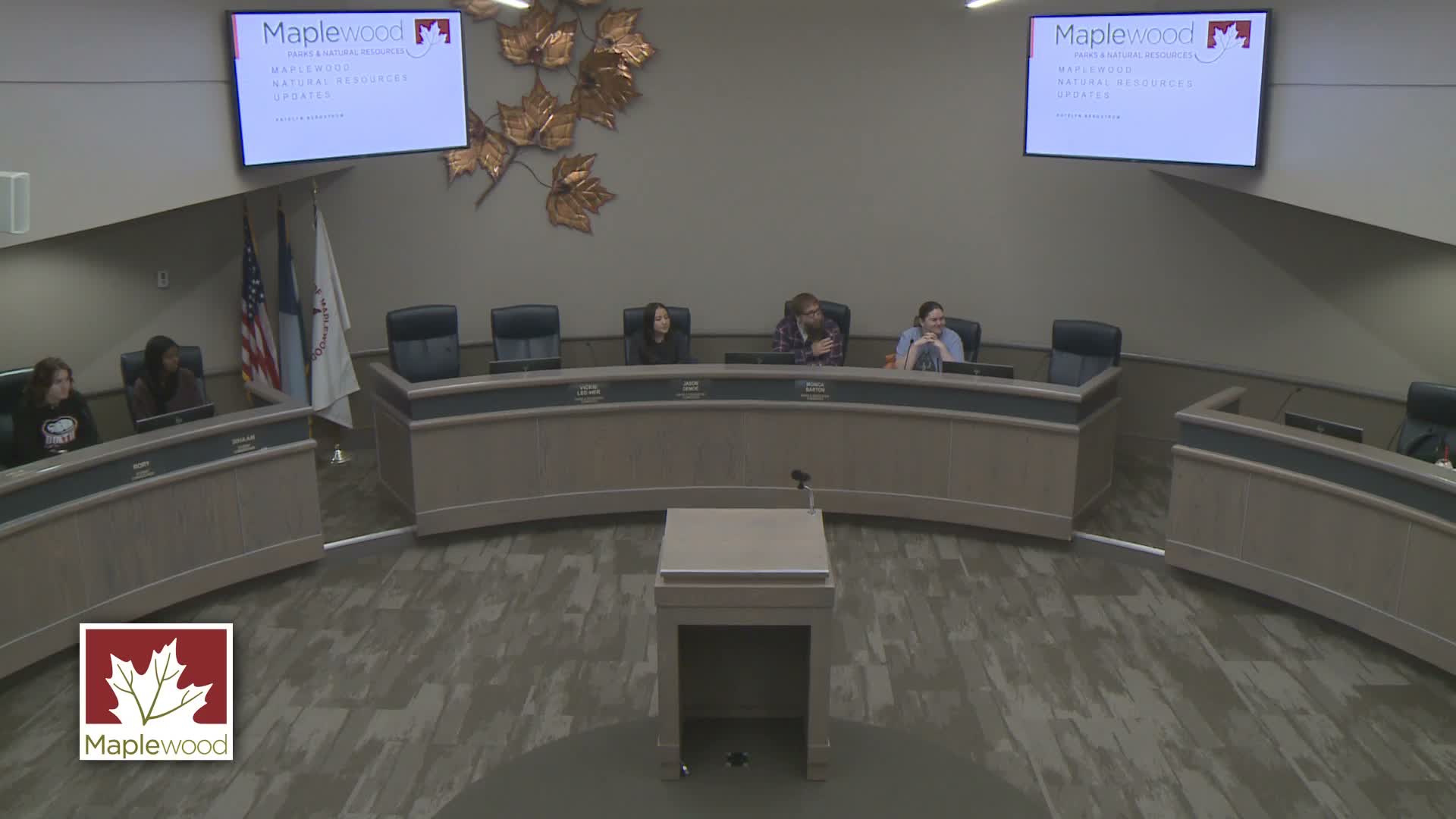
New Maplewood natural-resource coordinator Caitlin Bergstrom presented an end-of-year update highlighting restoration partnerships, volunteer programs, a mid‑May tree sale ("over 265" trees) and grant-funded plantings across city parks; she described multi‑year projects continuing into 2027.
Caitlin Bergstrom, Maplewood’s new natural-resource coordinator, used the Nov. 19 Parks and Recreation Committee meeting to summarize projects she has led since starting in June and to sketch priorities for 2026.
“I started back in June…5 months in and loving every second of it,” Bergstrom said, describing her background in Minnesota conservation work and then listing recent accomplishments. She told commissioners the city’s mid‑May tree sale sold “over 265” trees, and that a 2023 Sustainable Urban Forest resilience grant (referred to in the meeting as the “suffer” grant) helped increase sale capacity from roughly 150 to about 300 trees and funded planting of roughly 80 trees across Edgerton, Hazelwood and Robin Hood parks.
Why it matters: Bergstrom framed the work as both environmental stewardship and community engagement — combining grant funding, volunteer labor and academic partnerships to restore habitat and bolster long‑term monitoring.
Major projects and partnerships: Bergstrom described several restoration efforts. At Jim’s Prairie (about eight acres), staff are partnering with Great River Greening and contracting with Cannon (transcript also shows “Caton”) Valley grazers for winter buckthorn removal and restoration of about four acres. At Fish Creek the city is cooperating with the University of Minnesota on an oak‑sapling climate study that requires clearing invasive understory to monitor long‑term survival. Bergstrom said work at Carver Preserve and Applewood Preserve with Friends of the Mississippi River will continue through 2027.
Volunteers and education: Bergstrom highlighted volunteer contributions including two retirees—Mark Ernest and Craig Anderson—who logged more than 160 volunteer hours restoring Wakefield toward its oak‑savannah habitat. She praised a Century College partnership that brought 16 students for seven field lab sessions this fall on projects including seed spreading, buckthorn removal and tree‑guard installation.
Invasive‑species response: The coordinator described a Department of Natural Resources workshop on buckthorn identification and removal that drew residents, and reported more than 40 residents signed up for a city buckthorn pickup this year; city crews needed two days to collect material. Bergstrom said the city supplies 25% herbicide coupons from local vendors and is offering custom native‑seed mixes and discounts through Prairie Moon and Minnesota Native Landscapes to help with post‑removal restoration.
Nature Center and interpretive signage: The Friends of Maplewood Nature Center received a $7,300 charitable‑gambling grant to support new interpretive signage; staff plan to apply for an additional public‑art grant to expand environmental education signage at the Nature Center.
Next steps and staffing context: Bergstrom closed by emphasizing continued partnerships and multi‑year work into 2026 and beyond. In response to commissioners she said expanding citizen‑science monitoring beyond the established bluebird program is a goal, and that a graduate degree is increasingly the baseline for permanent conservation positions while seasonal roles may accept a bachelor’s degree.
The committee did not take formal votes on specific natural‑resources measures during the presentation; Bergstrom and staff said they will return with updates and grant outcomes as they develop.