Get Full Government Meeting Transcripts, Videos, & Alerts Forever!
Get email alerts on the Food Truck Regulation topic
No spam. Unsubscribe anytime.
Kissimmee commissioners direct workshop on food‑truck rules after hearing business and vendor concerns
Summary
After a long discussion that split restaurant owners and food‑truck operators, commissioners directed staff to hold a workshop to develop an ordinance balancing small‑business protection, public safety and statutory preemption, rather than adopting immediate restrictions.
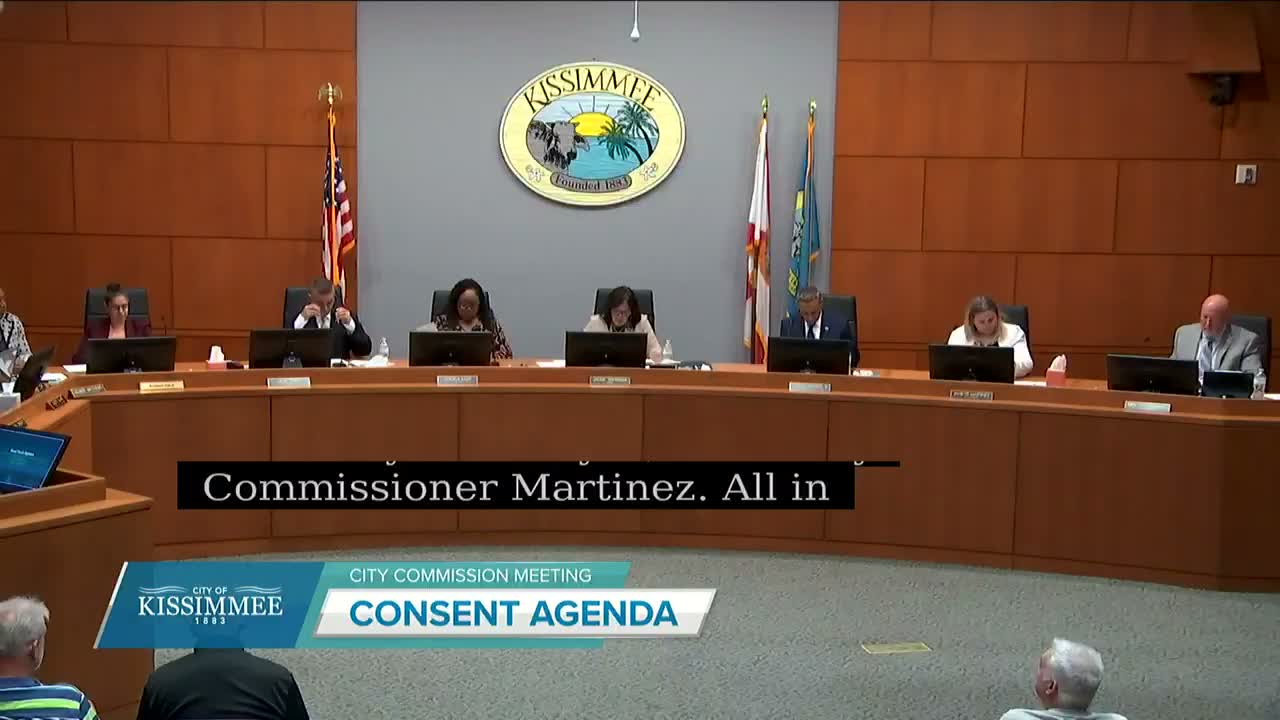
The commission directed staff Feb. 17 to hold a workshop to develop a revised food‑truck ordinance after hearing competing testimony from food‑truck operators, small‑business owners and staff about how to regulate trucks without harming established brick‑and‑mortar businesses.
Development Services Director Craig Holland summarized options ranging from a citywide prohibition to allowing food trucks only as part of special events, requiring conditional‑use permits, geographic restrictions (for example, 1,000‑foot buffers from restaurants), or combinations of those approaches. Several vendors and entrepreneurs told the commission their businesses depend on conditional permits and the ability to operate at approved locations; Lisandra Roman said her operations "follow the rules" and asked commissioners not to change rules retroactively. Food‑truck owners, including Commissioner Martinez (who stated she owns a food truck), described routine inspections and licensing and urged fair treatment.
Other speakers, representing brick‑and‑mortar restaurants, warned about unfair competition and suggested fees or limits to protect existing businesses. Commissioners noted statutory preemption limits on regulating individual mobile vendors and emphasized the city's ability to regulate the property owners who host trucks. A motion to allow food trucks at construction sites and all city parks failed on voice vote; commissioners then agreed by consensus to schedule a focused workshop to refine an ordinance that balances economic opportunity, health and neighborhood impacts.
Staff emphasized the need to address enforcement capacity, health and safety inspections, and grandfathering for existing approvals such as the Mill Creek Mall site, which is controlled by its zoning. The workshop will aim to translate the commission's direction into a draft ordinance for future hearings.