Get Full Government Meeting Transcripts, Videos, & Alerts Forever!
Get email alerts on the District Budget topic
No spam. Unsubscribe anytime.
LAUSD CFO details post‑pandemic rise in non‑labor spending, flags special‑ed and tutoring costs
Summary
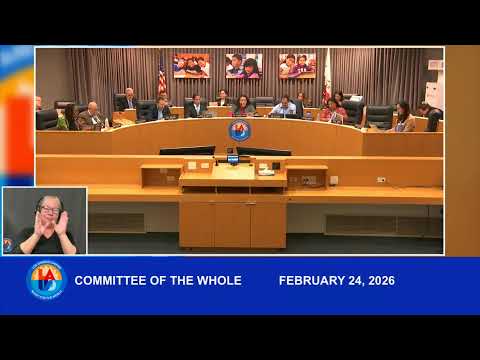
CFO Samad Karimi told the Committee of the Whole that LAUSD’s non‑labor spending spiked during the pandemic—largely for testing and restricted programs such as ELOP—and is reverting toward pre‑pandemic shares, while school allocations shift with enrollment declines concentrated at highest‑need campuses.
CFO Samad Karimi told the Los Angeles Unified Committee of the Whole that the district’s share of non‑labor spending rose sharply during the pandemic and remains above pre‑pandemic levels because of new restricted programs and lingering costs tied to COVID response.
Karimi said the district’s audited expenditure figures run through the 2024‑25 school year and that the spike was driven in part by pandemic needs such as COVID testing. “A really big example of that during the pandemic was COVID testing,” he said, pointing to 2021–22 as the high point for non‑labor outlays.
Why it matters: non‑labor categories — books and supplies, professional services, non‑capitalized equipment and similar costs — are carved out of personnel calculations but still affect how much money remains for schools. Karimi emphasized that some large new programs, notably the Expanded Learning Opportunities Program (ELOP), account for substantial restricted spending. He said ELOP’s annual revenues are about $470 million and that while it funds mostly labor to expand after‑school programming, portions pay for non‑labor services.
Key figures and categories - Karimi said roughly $954 million of non‑labor spending last year occurred at school sites out of about $2.3 billion total non‑labor spend; central administration accounted for hundreds of millions more in centrally administered or unavoidable costs such as utilities and insurance. - On professional and consulting contracts, the district saw a pandemic‑era peak and has since cut budgets; contract categories with the largest vendor spending include school transportation, high‑dose tutoring and after‑school partners, IT infrastructure and devices.
Board members asked for more disaggregation. Board member Carla Grego asked whether the shift in labor/non‑labor shares affects the state’s 55% classroom spending calculation; Karimi replied that non‑labor is not part of the 55% calculation but acknowledged non‑labor spending remains a factor in fiscal trade‑offs. Members also pressed for dollar breakdowns for books and supplies, analyses comparing budgeted versus actual expenditures, and program‑level evaluations of tutoring and other contracted services.
Special education and tutoring costs Karimi and staff described national and local trends driving higher special‑education costs: earlier identification, a growing number of students with moderate‑to‑severe needs and use of non‑public agencies (contracted NPS/NPA services). One staffer noted LAUSD special‑education enrollment has risen from about 65,000 to roughly 72,000 students since the post‑pandemic period, increasing demand for contracted services.
On tutoring, staff said ELOP funds and, earlier, ESSER monies supported high‑dose tutoring partners; the district is exploring transitions to more locally‑designed models where schools have staff to deliver services and providing principals more flexibility. Staff said evaluation work on tutoring provider impact (including principal feedback and assessment data) is underway and can be expanded.
Carryover, budgeting and transparency Board members pressed the administration on a recurrent source of public concern: the difference between what schools budget and what they actually spend (so‑called 'parked' funds often coded to books and supplies). Karimi explained how discretionary allocations, pending distribution codes and budget adjustments work and said past year‑end carryover assumptions were incorporated into the district’s fiscal stabilization plan; he also said reduced budgets this year should reduce the historical underspend variance.
Next steps Karimi said the district will present a second interim budget update to the board on March 10, expect the governor’s May revision, and return for budget and LCAP adoption in June. Board members requested follow‑up materials: school‑level dollar rollups, budget vs. expenditure comparisons, deeper special‑education contract detail and evaluations of tutoring and major vendor contracts.
The committee did not take formal votes on these items; staff committed to providing the requested disaggregations and evaluations.