Get Full Government Meeting Transcripts, Videos, & Alerts Forever!
Get email alerts on the Charitable Gambling Policy topic
No spam. Unsubscribe anytime.
Maplewood council discusses changes to charitable-gambling grants, keeps $7,500 cap and category tracking
Summary
At a Feb. 9 workshop, staff summarized options for Maplewood's charitable gambling grant policy; council members agreed to keep three tracking categories, require applicants to identify a category, retain a $7,500 maximum award and favor open allocation. Staff will return with revised policy within a month.
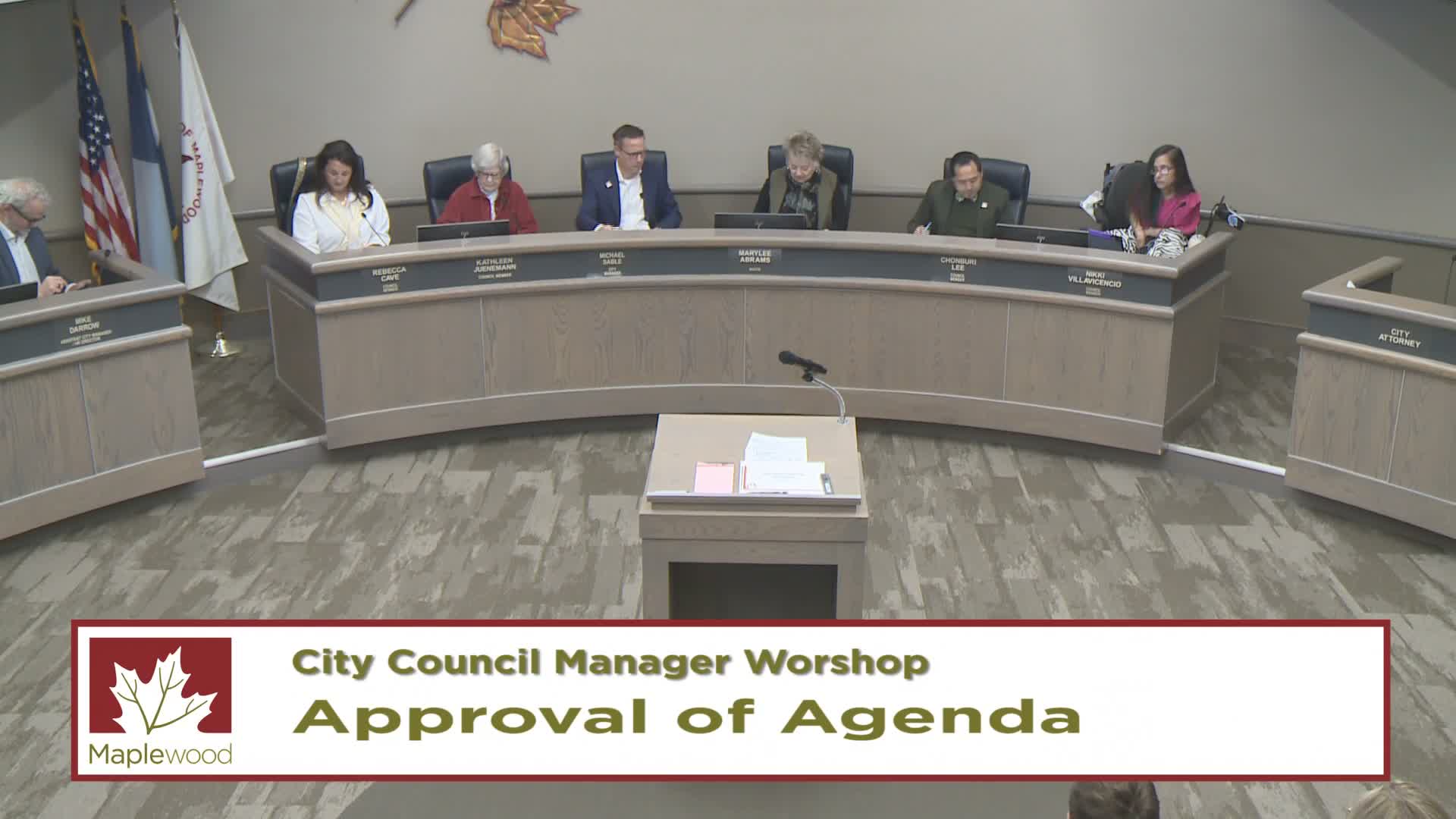
At a Feb. 9 Maplewood City Council manager workshop, senior administrative manager Lois Knutson reviewed the city's charitable gambling grant history and options for changing how awards are distributed.
"We had 32 applicants and only 16 received funding," Knutson said, summarizing this year's application pool and the variability in available funds, which she traced to receipts from local charitable gambling activity. She reminded the council that the city adopted a policy last August that split available funds into three equal categories and set a $7,500 maximum award.
Council members flagged an imbalance in applications across categories and warned against unintended consequences from an equal-split approach. "I have to say that one of my criteria in making decisions is to try to fully fund someone's request, so that they can actually have a meaningful result," said Council member Lee, arguing smaller partial awards can undermine program goals.
The council walked through several allocation options Knutson presented: retain the equal one-third split, use proportional allocation tied to application counts, return to an open allocation with category labeling for council tracking, or revive a rotating schedule. Members broadly agreed they wanted categories maintained for internal record-keeping but favored giving staff and the council flexibility when awarding funds.
On subsequent-year eligibility, members were divided over whether prior recipients should be barred from applying the next year or allowed to reapply under a different category. Council member Lee argued for a one-year pause to spread funding: "If we give them a grant this year, next year they're gonna write again... Next year, we have an opportunity to give it to someone else." Other council members said reapplication in a different category could be acceptable.
On specific policy points the council coalesced around: keep the three broad categories, require applicants to identify which category they are applying under so the council can track allocations, and retain the $7,500 maximum award for now (Knudson noted the highest award last year was $7,300). On allocation method the group indicated an informal preference for an open allocation model while keeping categories for council reporting.
City staff (Mr. Sable) said they would return with a revised policy draft within about a month and plan outreach and promotion for August–September ahead of the fall application cycle. "We will bring forward a revised charitable gambling policy to you at some future date—maybe within the next month," he said.
The workshop did not produce a formal ordinance or final vote on the policy; council feedback will inform the written revisions returned for later council action.