Lifetime Citizen Portal Access — AI Briefings, Alerts & Unlimited Follows
Committee advances bill limiting magistrate PR bonds for felony charges after contested debate
Loading...
Summary
The Senate Judiciary Committee voted to report House Bill 4606 to the full Senate after heated debate and testimony about whether magistrates should be barred from issuing personal-recognizance (PR) bonds for felony defendants; witnesses warned of increased pretrial incarceration and statutory confusion, while bill proponents said the change aligns conflicting code sections.
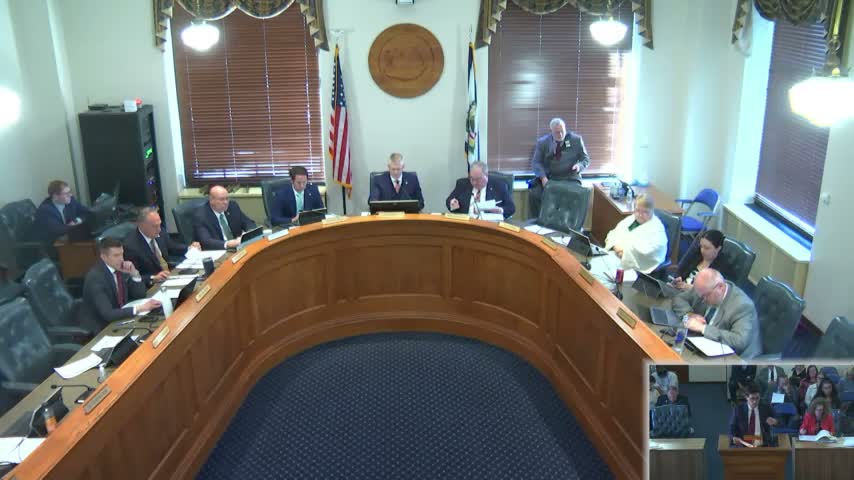
House Bill 4606 — a committee substitute that would require judicial officers to consider residency, community ties and flight risk when setting bail and includes a proviso that magistrates may not release defendants charged with felonies on personal recognizance — was reported to the full Senate by the West Virginia Senate Judiciary Committee after roughly three hours of discussion.
The bill’s sponsor, Delegate Hornby, told the committee the measure’s intent was to make residency a factor in bail decisions and to align magistrate practice with the jurisdictional structure of felony trials: “I voted for it, and I voted for the bill at the end of it, but I do understand … magistrates are not trying those felony cases,” Hornby said, adding the bill passed the House 92–2.
Opponents warned the magistrate provision could increase pretrial detention for low-income defendants. “This literally puts somebody in jail for a month if they’re poor,” said the senator from Marion, who offered an amendment to strike the proviso; that amendment was defeated on a voice vote. The senator added, “Bad things like that” can happen when people remain jailed while their cases proceed.
The committee heard from two witnesses. Keith Hoover, administrative director at the Supreme Court of Appeals, said the relevant code reads like a flowchart and that different subsections must be read together, producing confusion and inconsistent magistrate practice: “If you just jump into this section of code and start reaching individual lines … you’re gonna get an incorrect result,” he testified.
Kenneth Matthews, West Virginia economic justice associate for the American Friends Service Committee, provided county-level data and told senators magistrates statewide issue PR bonds in roughly 9.7% of felony presentments. He said PR bonds are a recognized "least-restrictive means" and warned that removing magistrates’ PR authority could raise pretrial incarceration and collateral harms such as job and housing loss: “That 60 days, I lost my apartment, the job that I was working,” he said of a personal example.
Proponents argued the change simply harmonizes code sections so that only the court that will try a felony—that is, a circuit court—would issue PR bonds in those cases. The chairman of the House Judiciary Committee explained the bill’s purpose was to align the current section with an older code provision that assigns the PR-bond decision for felonies to the trial court.
After extended debate and several members voicing procedural and policy concerns, the vice chair moved the bill to the full Senate with recommendation that it pass. The committee approved the motion by voice vote; a numerical tally was not specified on the record.
What’s next: HB 4606 will be placed on the full Senate calendar for further consideration.